Which Predictive AI Analytics Company Should You Choose?
Businesses have more data than ever, but having data and knowing what to do with it are two different things.
That’s where predictive AI analytics can help.
Instead of only looking at what already happened, predictive analytics uses historical and current data to estimate what could happen next. A business might use it to forecast demand, spot customers who are likely to leave, predict equipment problems, or identify potential risks before they become bigger issues.
Of course, getting useful predictions isn’t as simple as adding an AI model to your existing systems. Your data needs to be organized, the right infrastructure needs to be in place, and the results need to actually reach the people making decisions.
That’s why we looked at three companies taking slightly different approaches to predictive AI analytics in 2026.
Forte Group
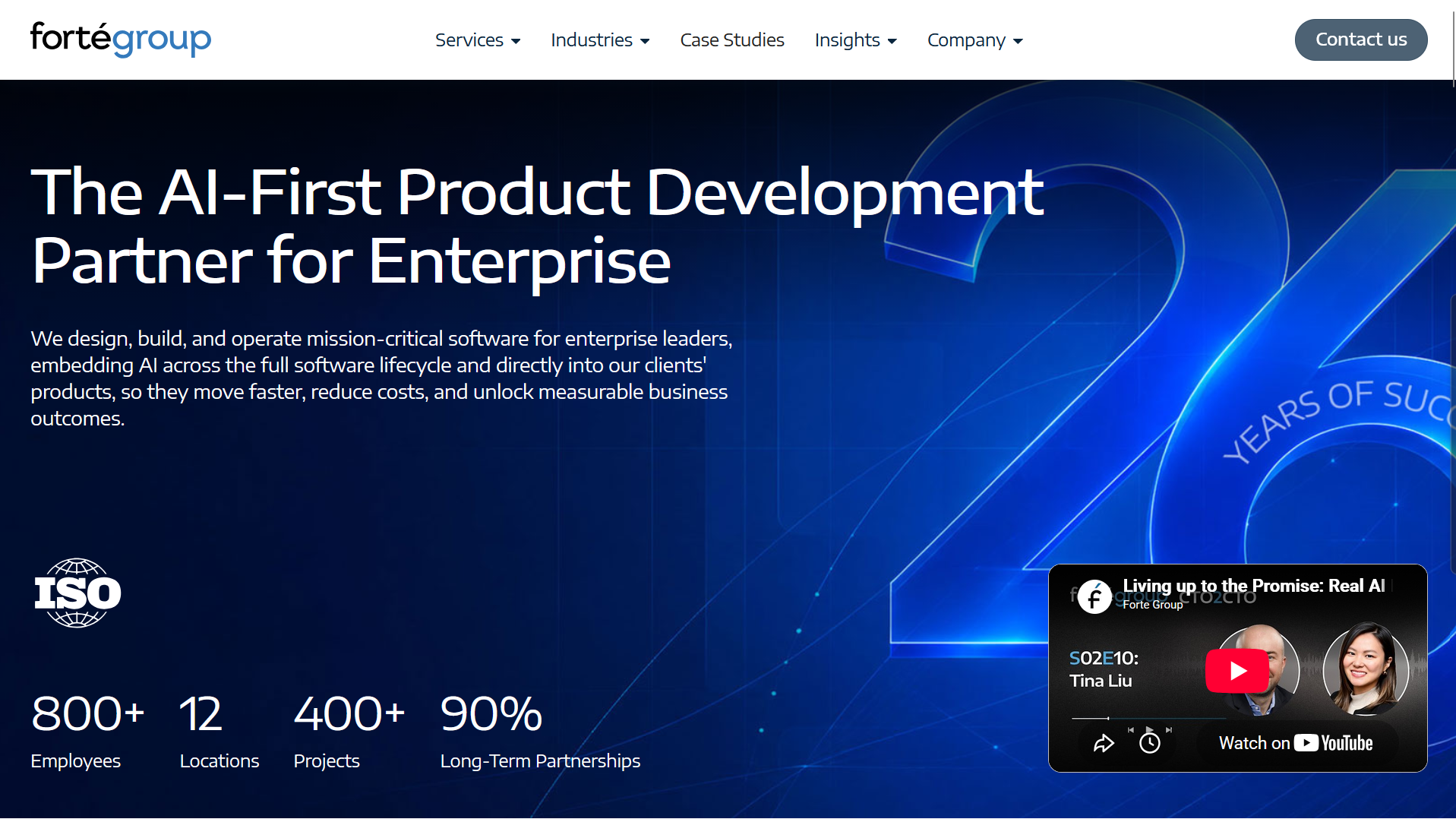
Forte Group is an AI-first product development partner that works with enterprises on AI, data and analytics, software development, and other technology projects.
For predictive analytics, Forte takes a broader approach. Instead of only building a predictive model, its team can also work on the data and infrastructure behind it and help connect the final solution to existing products and business processes.
How Can Forte Help With Predictive Analytics?
Forte offers AI analytics, predictive insights, and decision intelligence as part of its AI services. It uses machine learning and advanced analytics to help businesses understand what may happen next and make better decisions based on their data.
This can include use cases such as demand forecasting, patient arrival prediction, fraud risk scoring, and equipment failure prediction.
Forte can also handle the data work needed before predictive AI is introduced. Its data and analytics services include data strategy and architecture, data engineering and pipelines, migration, and modernization.
Once a model is ready, Forte's machine learning engineering and MLOps services can help deploy, monitor, and improve it over time.
Why Consider Forte?
The main advantage is that Forte can work across the whole project rather than focusing on just one part of predictive analytics. This makes it useful for companies that need to improve their data setup, build a custom AI solution, and then add it to an existing product or workflow.
Forte says it has more than 800 employees across 12 locations and has completed more than 400 projects. Its website lists organizations including NBCUniversal, Salesforce, Walgreens, Nasdaq, CVS, Zendesk, and KPMG among the companies it has served.
Best for: Enterprises looking for a custom predictive AI solution that can be built around their existing data, software, and business needs.
DataRobot
DataRobot approaches predictive AI differently.
Instead of mainly working as a custom software development partner, DataRobot offers an enterprise AI platform that companies can use to build, deploy, and manage AI models.
Predictive AI is one of the main areas covered by the platform.
A Platform for Building Predictive Models
DataRobot provides tools that help teams prepare data, create features, develop models, test them, and eventually put them into production.
It can also help with some of the less exciting but very important parts of working with data, such as dealing with missing information, removing duplicates, and preparing datasets for machine learning.
Teams can keep datasets, experiments, models, features, and deployments within the same environment instead of using completely separate tools for each stage.
There is also plenty of room for more experienced teams to customize how models are built. They can adjust areas such as preprocessing, feature engineering, evaluation metrics, and hyperparameter tuning.
Connecting AI With Existing Tools
DataRobot also integrates with many of the platforms enterprises already use.
Its integrations include AWS, Microsoft Azure, Google Cloud, Databricks, and Snowflake. AI workflows can also connect with tools such as Salesforce, Microsoft Teams, and Tableau.
DataRobot offers professional services as well, so businesses that don't want to handle everything internally can get additional help developing and deploying predictive AI use cases.
Best for: Companies with internal data or AI teams that want one platform for creating, deploying, and managing predictive models.
Quantiphi
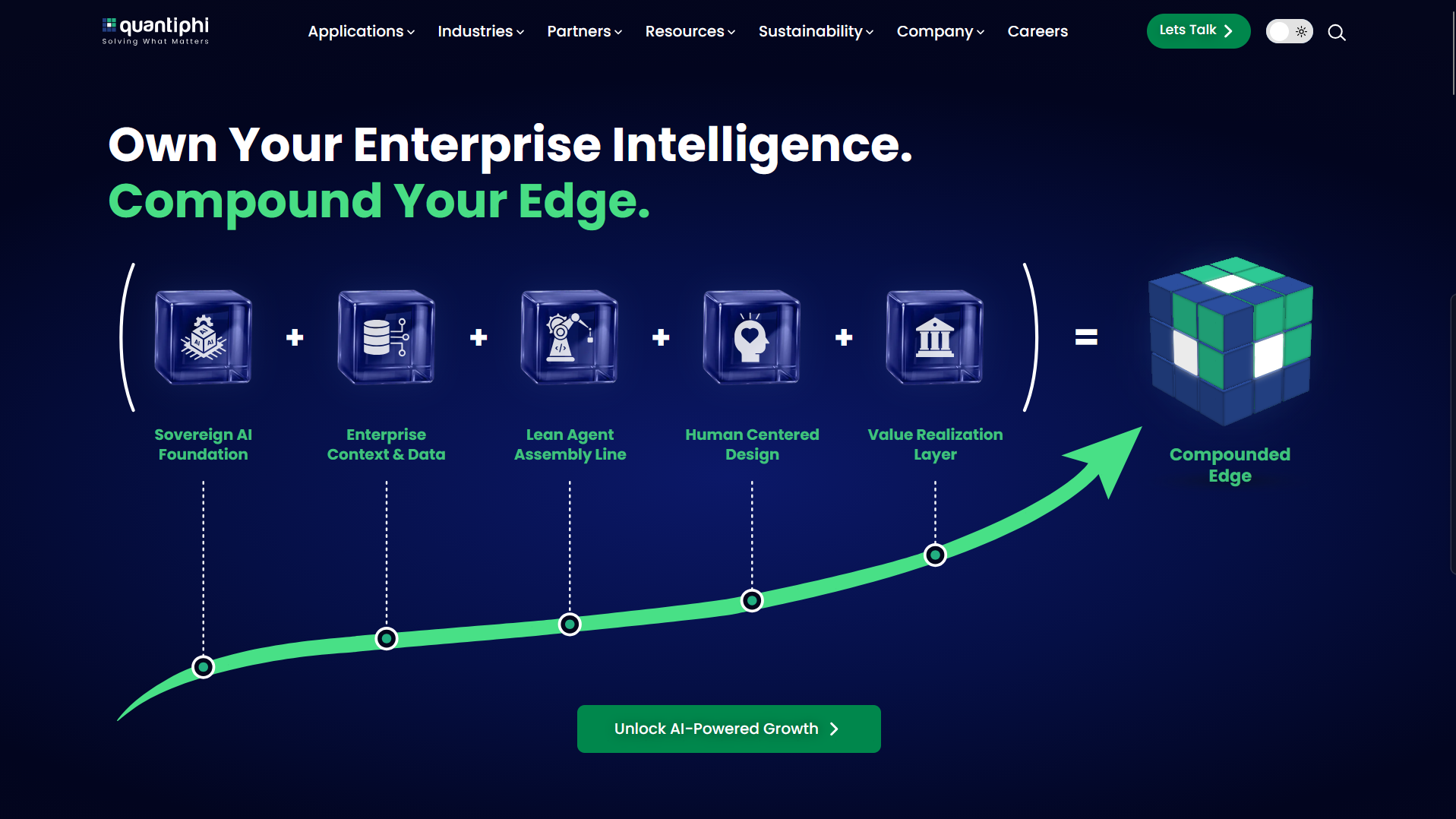
Quantiphi is an AI-first digital engineering company working across AI, data, cloud, and digital transformation.
Like Forte, Quantiphi takes more of a services-based approach rather than simply selling one predictive analytics platform.
Predictive Analytics for Specific Business Problems
One of the interesting things about Quantiphi is how it applies predictive analytics to specific industries and problems.
For retail businesses, its AI work includes demand forecasting, predictive analytics, recommendations, and supply chain applications.
For manufacturers, Quantiphi offers solutions around areas such as demand forecasting and predictive maintenance. Predictive maintenance can help companies identify signs that equipment may fail, giving them an opportunity to respond before it leads to unexpected downtime.
The company has also published examples of its forecasting work.
For one healthcare equipment manufacturer, Quantiphi developed a demand forecasting engine along with more than 10 dashboards for sales and operations planning. According to the company's case study, the forecasting model reached 80% accuracy.
In another project, Quantiphi built a forecasting system for a restaurant chain. It generated forecasts for sales, transactions, products, and ingredients. Quantiphi says the system eventually scaled from one store to more than 2,000 branches and produced around one million predictions per day.
These examples make Quantiphi particularly interesting for companies looking to solve a specific operational problem with predictive analytics.
Best for: Businesses looking for custom predictive analytics solutions for areas such as forecasting, manufacturing, supply chains, healthcare, or customer analytics.
Which One Should You Choose?
All three companies can help with predictive AI, but they are built for slightly different needs.
Forte Group is a good choice if you need more than just predictive analytics. They can help with your data, build custom AI solutions, and connect them to the software and systems you already use.
DataRobot is better suited to companies that already have data or AI teams and want a platform for building and managing predictive models.
Quantiphi is another strong option if you need a custom solution for a specific business problem, such as demand forecasting or predictive maintenance.
Before choosing, think about what you actually want to predict and how you plan to use those predictions. That will make it much easier to find the right partner.
Conclusion
Predictive AI analytics could be useful for companies looking to expand their knowledge not only regarding their historical performance but also what might be expected in the future. However, the appropriate choice would depend mostly on the business's data, technical capabilities, and needs.
The approach taken by Forte Group, DataRobot, and Quantiphi towards building predictive AI is quite different. While the former is concentrated on building customized solutions based on data, artificial intelligence, software development, and implementation, the latter offers an enterprise platform for organizations interested in developing and deploying predictive models. Quantiphi, in turn, specializes in developing custom solutions for various industries that could be used in demand forecasting, predictive maintenance, and supply chain analytics, among others.
Before choosing a vendor, a company should decide which issues it wants to address with the use of AI, examine its data capabilities, and see how knowledgeable its employees are when it comes to working with AI.
About the Author