Improve Customer Retention with Feedback & Surveys
Keeping customers today is often harder than getting them in the first place.
And it’s much more important in the long run.
Strong customer retention leads to more repeat purchases, lower marketing costs, better customer service, and a much higher customer lifetime value.
So, how do you actually improve it in practice?
It starts with understanding why customers leave and what you can do before they do.
One of the most effective and overlooked strategies is simple: consistently listen to your customers and act on their feedback.
That’s exactly where feedback forms and follow-up surveys come into play.
Why feedback is the key to customer retention
Customers rarely leave without a reason.
Most of the time, they leave because something didn’t meet their expectations or caused frustration. Customer satisfaction is crucial.
The real issue is that many businesses never take the time to find out what went wrong so that they can improve customer satisfaction.
This means customer feedback is not just data sitting in a dashboard.
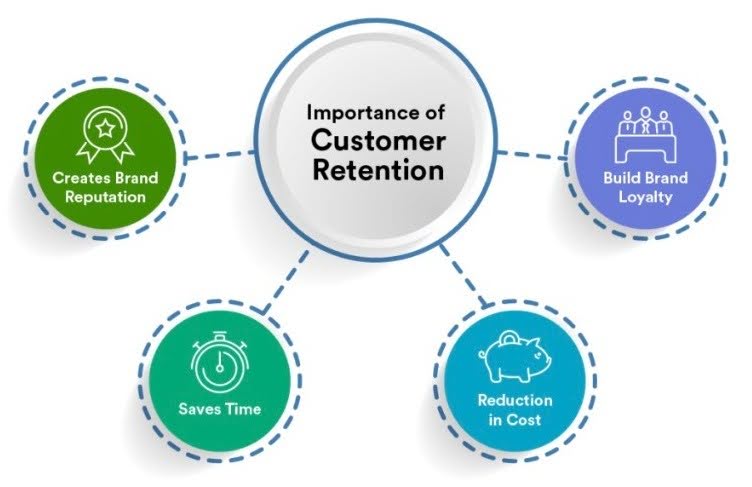
It is a powerful customer retention tool that builds trust and loyalty while maintaining high customer satisfaction.
It clearly shows customers that:
- You genuinely care about their experience
- You are open to improving your product or service
- Their opinions actually matter to your business
And that kind of transparency builds long-term relationships and improves customer service.
What are feedback forms and follow-up surveys?
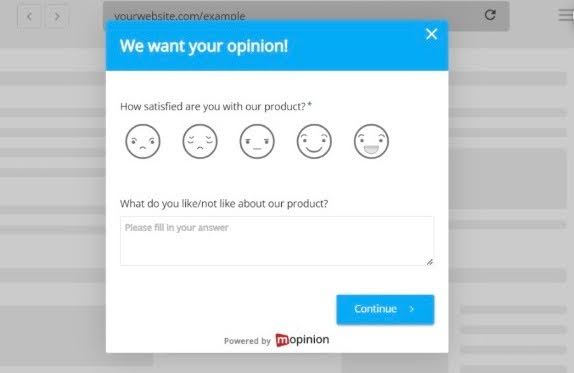
Let’s simplify the difference so it’s easy to understand.
Feedback forms are usually short and triggered right after a specific interaction, while the experience is still fresh in the customer’s mind.
For example:
- Right after a purchase is completed
- After a customer support chat ends
- After visiting a specific page or feature
On the other hand, follow-up surveys go deeper and are sent later, when customers have had time to use your product or service.
Both play a key role in improving customer retention by capturing insights at different stages of the customer journey.
Together, they give you a complete picture instead of just a snapshot. The next step is knowing exactly when to collect this feedback to maximize its impact.
When to send feedback forms for maximum impact
Timing is one of the most important factors when collecting useful customer feedback. You can use smart feedback form strategies to collect the data you need.
If you send a survey too early, the customer may not have formed a real opinion yet.
If you send it too late, they might forget important details about their experience.
Here are the best moments to collect feedback:
- Immediately after a purchase or checkout
- After a customer support interaction is resolved
- After product delivery or service completion
- After onboarding or first-time setup
Pro tip: Keep your forms short and focused. Around 3–5 well-crafted questions usually work best.
According to SurveyMonkey, shorter surveys tend to get significantly higher completion rates because they require less effort from users.
Better response rates mean better insights, which directly improve customer retention.
What questions actually improve customer retention
Not all questions are equally useful.
You need to ask questions that lead to clear insights and real action.
Here are some strong examples:
Satisfaction questions
- How satisfied are you with your overall experience?
- Did our product or service meet your expectations?
Problem discovery questions
- What almost stopped you from completing your purchase?
- What is one thing we could improve right now?
Loyalty questions
- How likely are you to buy from us again in the future?
- Would you recommend us to a friend or colleague?
That last question is especially important.
It’s known as the Net Promoter Score (NPS), and it’s widely used to measure loyalty.
According to Userflow, companies with higher NPS scores will grow more quickly than their competitors.
These types of questions directly support customer retention by revealing both risks and growth opportunities.
But asking the right questions is only one part of the equation. Timing and follow-up play an equally important role.
How follow-up surveys strengthen customer retention
While feedback forms capture immediate reactions, follow-up surveys help you understand long-term satisfaction. This brings you a step closer to customer loyalty and reduces customer churn.
They focus more on the relationship between your brand and the customer, which strengthens your customer communication strategy and customer loyalty.
You can send them:
- Around 30 days after a purchase
- After the customer has used the product regularly
- During subscription renewal cycles
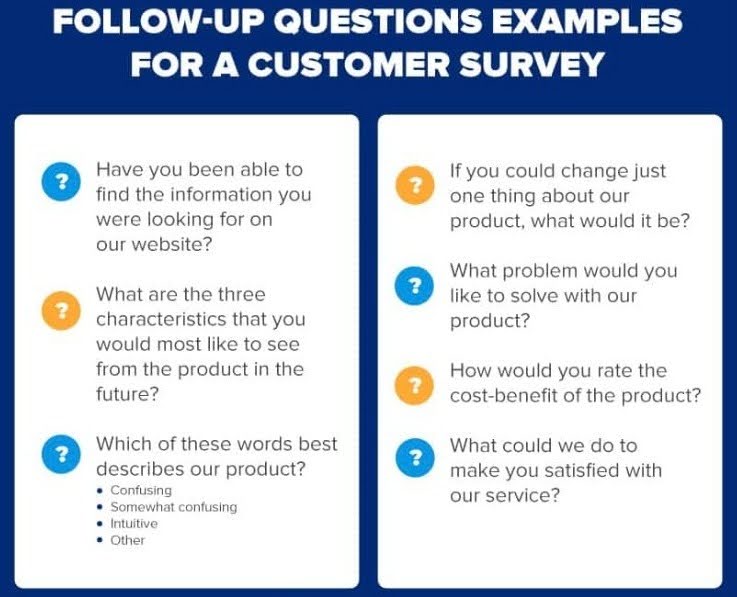
Ask more detailed questions like:
- Has our product improved your daily workflow or results?
- Which features do you use the most and why?
- What would make you stay with us longer?
These questions help you understand deeper motivations instead of being stuck in the feedback loop.
According to HubSpot, 93% of customers are more likely to make repeat purchases when they receive excellent service. This highlights the value of ongoing engagement through social media and other channels.
Follow-up surveys give you the insights needed to consistently deliver that level of service and avoid customer churn.
Turning feedback into real customer retention wins
Collecting customer feedback is relatively easy today.
The real challenge is actually using it effectively and avoiding the feedback loop.
Here’s a simple approach that works:
1. Identify patterns
Look for repeated customer feedback across multiple responses rather than focusing on individual comments on social media.
One complaint might be an exception, but repeated complaints usually point to a real issue and threaten customer loyalty.
2. Prioritize fixes
Focus on the problems that affect the most customers or have the greatest impact.
Start with quick wins to build momentum.
3. Close the loop
Always communicate back to your customers and let them know what improvements you’ve made.
This step is often overlooked but extremely powerful as it helps you avoid a feedback loop.
It shows you listen and significantly boosts the customer satisfaction score.
Personalization: The secret weapon
Generic surveys often feel cold and impersonal, and you want honest customer feedback.
Personalized surveys, on the other hand, feel more relevant and engaging.
You can personalize by using:
- The customer’s name
- Their recent purchase details
- Their previous interactions with your brand
For example:
Instead of saying: “Rate your experience.”
You can say: “How was your experience with your recent order of [product]?”
Better experiences naturally lead to more meaningful customer feedback.
Common mistakes that hurt customer retention
Even well-designed surveys can fail if they are not executed properly.
Here are some common mistakes to avoid:
Asking too many questions
Long surveys often lead to lower completion rates and less useful data.
Ignoring feedback
Customers quickly notice when their input results in no visible change (feedback loop).
Poor timing
Sending surveys at the wrong time can result in inaccurate or irrelevant feedback.
No follow-up
If you don’t act or communicate results, trust can quickly disappear.
Always remember: Feedback without action can increase customer churn rate more than not asking at all.
To avoid these mistakes, the right tools can help you collect, manage, and act on feedback more effectively.
Tools you can use (Simple and effective)
You don’t need complex or expensive tools to get started.
Some popular and easy-to-use options include:
- Google Forms for quick and free surveys
- Typeform for more engaging and interactive forms
- SurveyMonkey for advanced analytics
- HubSpot for integrated customer data and automation
These tools help you:
- Automate feedback collection
- Analyze responses efficiently
- Track trends over time
Start simple and focus on consistency.
That’s what drives real improvements in customer retention.
Building a feedback-driven culture
The most successful companies don’t just collect feedback occasionally.
They build their entire process around it.
To improve customer retention and avoid a feedback loop, make feedback part of your everyday operations:
- Share insights with your team regularly
- Review feedback on a weekly basis
- Reward improvements that come directly from customer input
This approach turns feedback into a growth engine.
Final thoughts
When feedback becomes part of your culture, improving customer retention does not require guesswork or complex strategies. It simply requires listening and acting consistently.
Feedback forms give you quick and immediate insights. Follow-up surveys provide a deeper understanding over time.
When combined, they help you:
- Identify and fix problems early
- Improve the overall customer experience
- Build strong, long-term loyalty
Start small and stay consistent.
Ask better questions. Act on what you learn. Keep the conversation going with your customers.
Do that well, and your customer retention will grow naturally and sustainably over time.
About the Author