UI vs. UX: What Does Your Business Really Need?
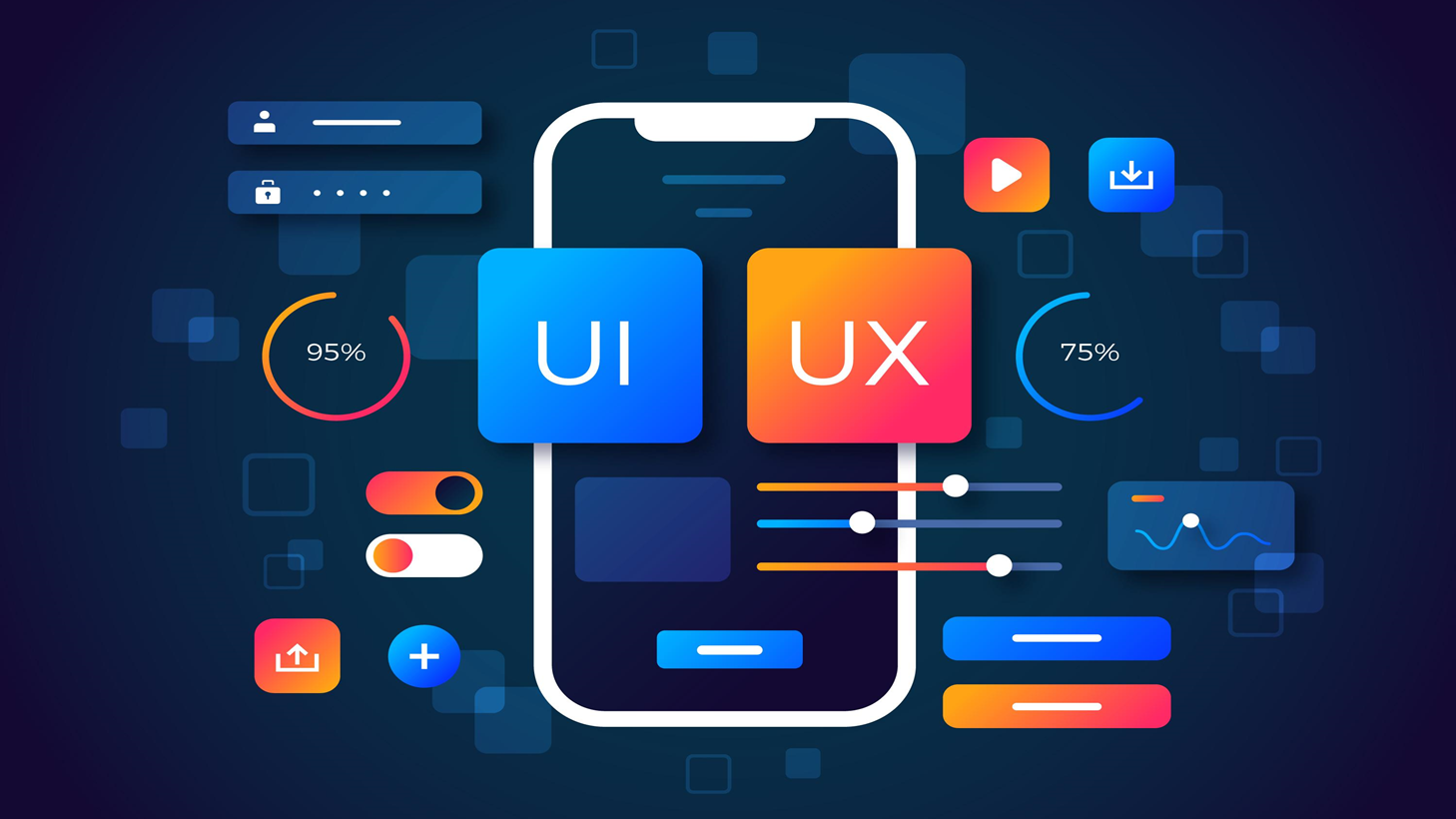
We are all so accustomed to saying UI UX in the same breath that they appear to be the same or at least a joint activity. It is one of those duos people bundle by habit, like ‘salt and pepper.’ Same aisle but totally different taste! Or a married couple who get invited to parties together, even though they have wildly different personalities.
Teams throw the terms around as if they are interchangeable (let’s get the UI UX team to fix this!), but UI and UX do completely different jobs.
Our job today is to de-hyphenate the two and show you how they stand up on their own.
Before we start, here is a real-life example of how UI UX are often misunderstood: Let’s take an everyday scenario: the blind date!
You arrive at the restaurant to find that your date looks great: a stylish outfit, perfect hair, and a confident smile. But when you start talking, the conversation becomes awkward, and you struggle to connect. Great looks, poor personality. That’s a failed date, right?
Now switch your date with an app or a website! Imagine a product that looks gorgeous, has a slick interface, but when you try to get things done, it’s clunky, confusing, slow, or just plain annoying to use. No matter how pretty it looks, you leave with no intention of coming back.
That’s the classic confusion between UI (looks) and UX (personality & vibes + function). Many founders and early-stage startups treat them like the same thing, and getting stuck on this combined identity can cost growth!
Let’s separate the two and understand them individually. Because whether your business needs polish or a foundational fix depends on what’s really broken: surface or substance. This is the critical distinction a skilled UI/UX design agency can help you make.
What is UI and UX, in Everyday Language?
UI: The Style, The Face, The First Impression
UI (User Interface) is everything the user sees. It’s the buttons, the colors, the layout, the fonts, the images, the design system. It’s like choosing a great outfit, picking a killer hairstyle, and applying the right shade of lipstick. It makes your product look polished and evokes the feeling that connects with your TG (trustworthy, approachable, etc.).
According to a couple of old yet very relevant studies, first impressions of your website are 94% design-related, and people form an opinion in about 50 milliseconds. What this boils down to is that you have to make your app/website look good, even to get users to stick around long enough to find out what you are selling.
UX: The Behaviour, the Flow, Does it get me what I want?
UX (User Experience) is the entire journey a user goes through: how they move, how intuitive it feels, whether they quickly get what they want, whether they enjoy using it, or get frustrated. It’s not about how it looks; it’s about how it works and how it feels.
90% of users have stopped using an app due to poor performance. And according to PriceWaterhouseCoopers (PWC), 32% of customers would leave a brand they absolutely loved after just one bad experience. It seems there are no second chances for bad user experience!
On the other hand, when UX is done right, the payoff can be huge. A ‘frictionless’ UX can boost conversion rates up to 400%. And that’s not just hype: better UX leads to higher user retention, satisfaction, and ultimately, better business outcomes.
Still confused? Here’s a real-world example everyone knows: Google Search vs. Yahoo (old Yahoo).
Google’s UI is nothing out of the ordinary - it's pretty simple and, dare we say, boring. A logo. A search bar. Two buttons. Meanwhile, old Yahoo packed its homepage with buttons, links, icons, news, stocks, and horoscopes; it was like a newspaper updating in real time! But despite being ‘visually richer,’ it was Google that won the world, because typing one word into a blank box and instantly getting exactly what you needed was simply a better experience. In this example, UX beat UI, fair and square.
Why UI and UX Often Get Mixed Up And Why That’s Dangerous?
Because UI is visible and immediate, it’s easy to treat design as the most important and sometimes the only important design element. ‘Make it pretty, we are done.’ But that’s like painting a beautiful exterior on a house with no stairs or doors; people can’t get inside!
We have seen even experts (and not just business owners and marketing teams) talk about UI and UX like they are the same – often mixing up their functionalities. So it’s little wonder that startups often spend hundreds of hours making their UI pixel-perfect, obsessing over gradients and shadows, only to realize later that users couldn’t figure out how to sign up, got stuck during checkout, or simply abandoned the website halfway.
On the flip side, we have seen apps with ‘plain-ish’ visual design but rock-solid UX: intuitive flows, fast performance, and easy onboarding that drove strong retention, user love, and word-of-mouth growth –but they struggled to grab new users or lost ground to a shinier, fancier competitor.
So Which One Is More Important? UI Or UX?

Hmm, there is no correct answer for this question. And we will fall back on the annoying – it depends! Here is a conversion comparison - we cited an interesting statistic above, now let’s see the entire sentence - According to Forrester Research, a well-designed user interface could raise your website’s conversion rate by up to 200%. A better UX design could yield conversion rates of up to 400%.
The statistic mentioned above might lead you to conclude that UX is more important, but if you stop comparing the two, you will realise that UI offers a 200% increase as well. And therein lies the trap – your UI UX investment has to be a strategy defined by what your business/product needs.
Here’s a Mini Diagnostic Quiz to Help You Recognise Your Requirements:
a. Are users dropping off immediately, before they explore more?
This often means the visual layer or the UI isn’t building trust fast enough. This could be due to a cluttered layout, a confusing first impression, or poor mobile responsiveness.
b. Are users exploring… but not taking action?
If people browse but don’t sign up, buy, subscribe, or engage, it could signal a UX issue, such as friction in flows (an additional step at sign-up), decision fatigue, poorly placed CTAs, etc.
A classic example: A fintech app with a stunning UI and pro-level aesthetics. But users can’t figure out how to deposit money. Users sign up, get stuck, and uninstall.
c. Are users trying to complete key actions but failing?
This isn’t a beauty problem; it’s definitely a function and structure problem. Common areas for breakdowns include abandoned carts, dropping off midway through onboarding/registration, and confusion when adding items.
For e.g., A health-tech app with a 9-field onboarding form that requires them to pull out physical documents and add complex information. Most users would quit halfway.
d. Do users keep asking the same questions repeatedly?
Check what your users are asking from support, chat, email, or your team, such as Where can I find…?; How do I…? Why isn’t this showing? If many people are asking the same question again and again, then your UX is failing.
e. Do people say your product looks great but still don’t use it regularly?
If a feature sits there taking up real estate on your product, but it barely sees any traction, it could also be a core UX problem wherein either the value of the feature is not clearly articulated, or the flow is flawed.
An example would be a beautifully designed ‘Discover’ tab in a fitness app. Users ignore it because they came to track workouts, not to explore content, and the word ‘discover’ doesn’t tell them what lies behind it!
f. Do analytics show erratic user behavior?
For example, users rage-clicking or a high bounce on simple screens or repeated back-and-forth navigation. This also signals a UX problem.
According to a Feb 2024 insight from Bytes Future, UI and UX are distinct but both crucial, and the real job of a UX design agency is to diagnose whether the bottleneck is surface-level (UI) or foundational (UX). We need both, but when, where, and how much you should invest in them depends on your product.
a. Is your product suffering from a cosmetic issue… or a structural one?
b. Your target audience - if you are making an app for older, finance professionals, clarity and minimal design will be important to ensure functionality remains front and center. If the website is selling fast fashion to young adults, the visual UI elements will be key to grabbing eyeballs and beating the competition.
So What Should Businessowners Do?

Here are some key pointers for anyone building or optimising a startup product:
a. Don’t fall for stunning UI first. Sure, it should look nice and neat, but treat UI as a second step.
b. Start with UX fundamentals: map user flows, conduct usability testing, and identify friction points.
c. Prioritize core actions: onboarding, signup, checkout, key tasks; these should be intuitive and need extra care.
d. Measure user behavior: Follow the numbers closely. Where are users dropping off? Why? When unsure, do A/B testing or even a small survey with friends and family.
e. Iterate: improve UX, then polish UI. Once flows are smooth, add UI polish, and you get the best of both.
For small teams and busy professionals, it’s easy to get lost. That’s where a real UI UX design agency can be a real asset! With in-house design teams, agencies smartly combine UI and UX to make products pretty as well as purposeful!
An agency will audit and diagnose with data and experience to identify the bottlenecks and use a combination of design and psychology to ensure your product attracts users, retains them, converts them, and then turns them into fans.
Because at the end of the day, a good UI grabs attention. A great UX keeps users coming back.
Why Make It UI vs UX When the Real Power Is UI and UX?
UI and UX aren’t competing disciplines; they are two roads leading to the same goal: to make things easier, faster, and nicer for the user.
When organizations treat UI and UX as the same thing, they overspend on aesthetics and underspend on outcomes. A mature team doesn’t fall for this trap. They know why a button’s color is important and why its placement matters even more.
A beautiful interface might get someone through the door, the same way someone gorgeous on a dating app gets a lot of right-swipes. But attention isn’t commitment. You can look good and still get ghosted. That’s where UX comes in and keeps them coming back. It’s the ease that makes you think I want to grow old with this person.
UI is the first impression; UX is the entire relationship.
Conclusion
A successful digital product is never about choosing UI or UX, it is about balancing both with intention. UI captures attention, but UX sustains trust, simplifies actions, and drives long term engagement.
When businesses identify whether their challenge is visual or structural, they invest smarter and grow faster. Combining thoughtful design with purposeful experience ensures users not only arrive but also stay, return, and ultimately become loyal advocates for your product.
About the Author