10 Employee Engagement Survey Questions Managers Need
Employee engagement is no longer a “nice to have.” It’s a business must.
Engaged employees are more loyal, more productive, and more likely to stay. According to Gallup, highly engaged teams show 23% higher profitability.
That’s why every company needs a strong employee engagement survey built around clear questions, structured response scales such as the Likert scale, and a mix of open-ended questions to capture both quantitative and qualitative data.
This guide breaks down the most important employee engagement survey questions every manager should ask—plus tips to get real, actionable insights.
Why an employee engagement survey matters
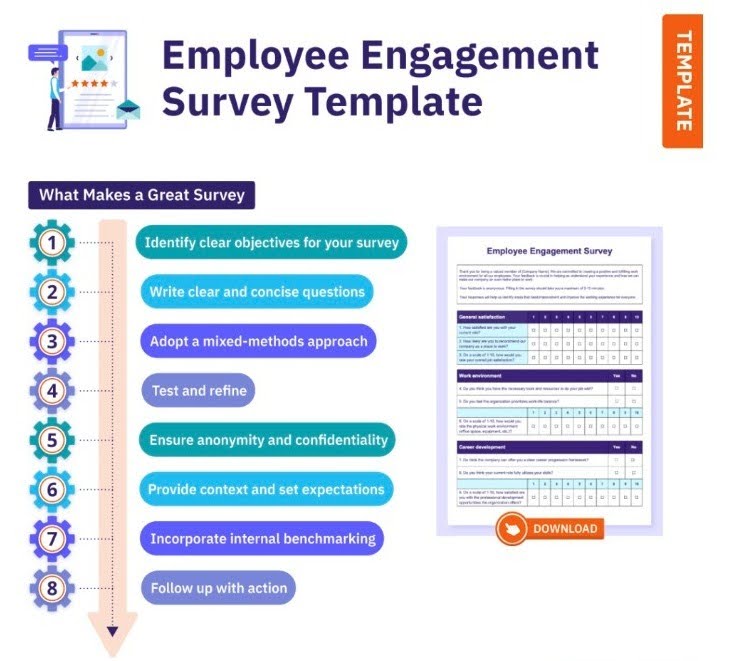
An employee engagement survey helps you understand how your team really feels. Not what they say in meetings, but what they actually think.
According to Qualtrics, 42% of employees wish their companies listened more.
Without employee surveys, you’re guessing instead of boosting employee satisfaction. With it, you’re making data-driven decisions and boosting employee experience.
These survey results can then be translated into actionable data insights using survey software, helping teams move from raw feedback to measurable performance outcomes.
These are some of the most important questions to focus on when it comes to employee engagement.
1. Role clarity questions
If employees don’t understand their role, employee engagement and job satisfaction drop fast. Pay attention to employee feedback, as it will guide you on the right path.
Ask:
- Do you clearly understand your responsibilities?
- Do you know what success looks like in your role?
- Do you have the tools and resources to do your job well?
Why it matters:
Clarity is a psychological safety net. It reduces stress and boosts confidence and job satisfaction.
Tip:
If answers are vague, revisit job descriptions and expectations. Organizational success and coordination will help boost employee experience and retention.

2. Recognition and appreciation questions
People want to feel valued. Simple as that. To boost employee retention, consider employee surveys, which can help you ask the right questions.
Ask:
- Do you feel recognized for your work?
- How often do you receive meaningful feedback?
- Does your manager appreciate your contributions?
Tip:
Employee recognition doesn’t need to be expensive. A simple “thank you” works and builds employee satisfaction.
3. Manager effectiveness questions
Managers have a massive impact on employee engagement. That's why employee surveys are essential.
Ask:
- Does your manager support your growth?
- Is your manager's feedback okay with you?
- Does your manager communicate clearly?
Gallup found that managers account for 70% of the variance in employee engagement.
Tip:
Use these insights to train managers in employee engagement—not blame them.
4. Career growth questions
If employee engagement and job satisfaction are high, employees stay where they can grow. Employee feedback matters.
Ask:
- Do you see opportunities for career advancement here?
- Do you feel supported in your professional career development?
- Are you learning new skills regularly?
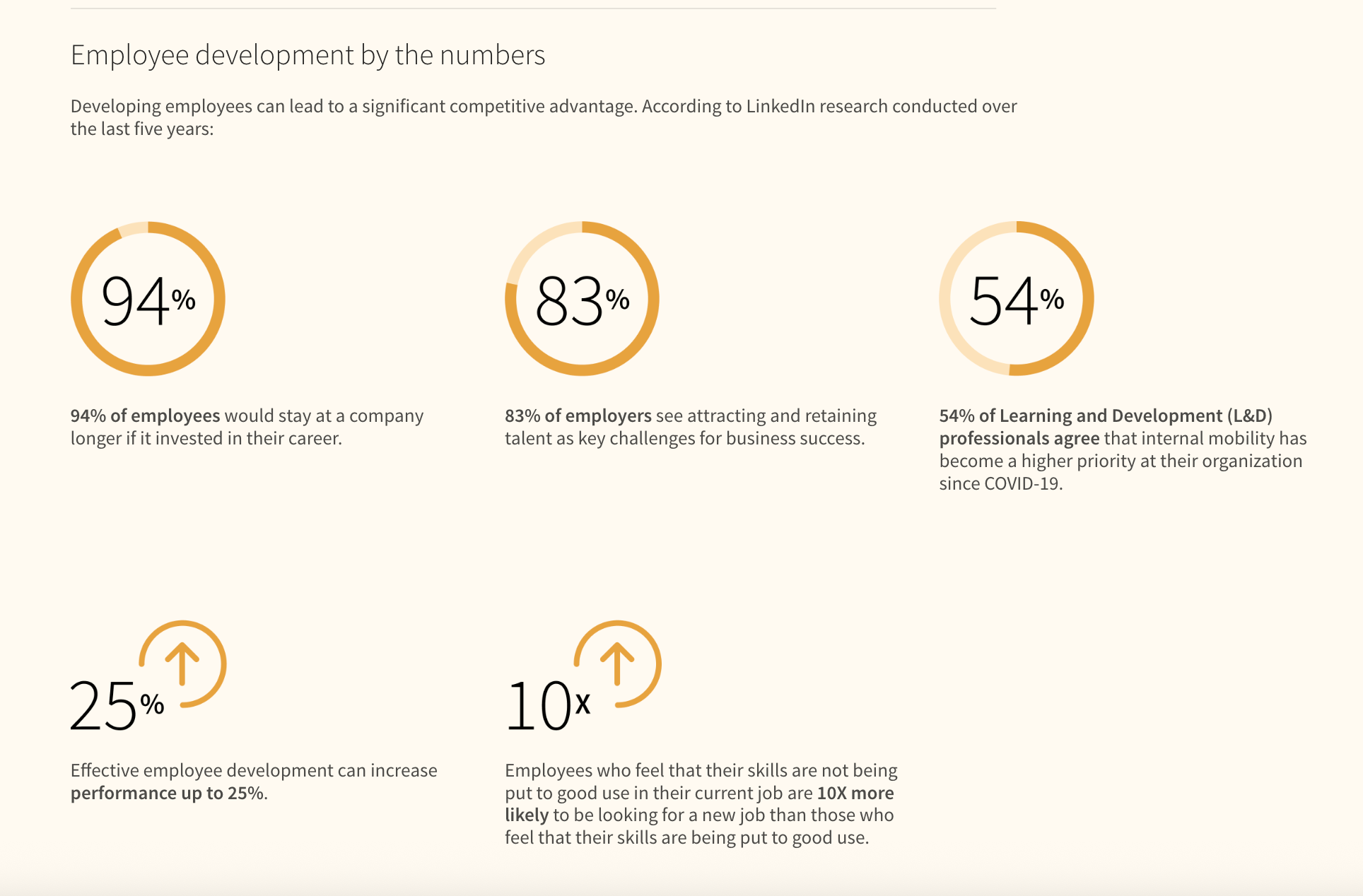
LinkedIn reports that when companies invest in their employees, 94% stay longer.
Tip:
Even small learning opportunities can make a big difference for employee experience.
5. Work-life balance questions
Burnout kills employee engagement.
Ask:
- Do you feel you have a healthy work-life balance?
- Is your workload manageable?
- Do you feel pressured to work outside normal hours?
Tip:
Watch for patterns. One overloaded team can impact the whole company.
6. Company culture questions
Culture shapes everything.
Ask:
- Do you feel a sense of belonging at work?
- Do company values align with your own?
- Do you feel respected by your colleagues?
Why it matters:
A strong company culture builds trust and collaboration. These significantly impact employee experience.
Tip:
Look for gaps between stated values and real experiences.
7. Communication questions
Poor communication = low employee engagement.
Ask:
- Do you feel informed about company updates?
- Is communication transparent and honest?
- Can you easily share your ideas?
Tip:
Fixing communication is often the fastest win.
8. Team collaboration questions
Great teams drive great results.
Ask:
- Does your team collaborate effectively?
- Do you feel supported by your teammates?
- Are conflicts handled constructively?
Why it matters:
Strong teams increase engagement naturally.
Tip:
Encourage open dialogue and psychological safety.
9. Autonomy and empowerment questions
Micromanagement kills motivation.
Ask:
- Do you have enough autonomy in your role?
- Can you make decisions without unnecessary approval?
- Do you feel trusted by leadership?
Why it matters:
People do their best work when they feel a sense of ownership.
Tip:
Empower employees with clear boundaries—not control.
10. Overall engagement questions
Now zoom out.
Ask:
- How satisfied are you with your job overall?
- Would you recommend this company as a great place to work?
- Do you see yourself here in 1–2 years?
These are your “big picture” indicators.
Tip:
Track these over time to measure improvement and boost employee motivation.
Connect survey results to business metrics like employee turnover, absenteeism, and team performance. A drop in engagement scores in one department, when cross-referenced with retention data, can surface early warning signs before they lead to separations.
Best practices for running an employee engagement survey
Group your employee engagement survey questions by category before sending, based on role clarity, management, and culture. This makes results easier to analyze. Assign each category a score and track changes over time to separate trends from one-off feedback.
Asking the right questions is only half the job. Employee retention is the second half, while both should always be primary company goals.
Here’s how to make your employee engagement survey actually work:
Keep it short and focused
Long surveys lead to drop-offs.
Aim for 15–25 well-crafted questions to boost employee morale.
Ensure anonymity
People won’t be honest if they feel exposed. Anonymity should be your company's mission.
Act on results
This is critical.
Organizational goals are a must. If employees see no change, trust drops.
Share insights transparently
Let your team know what you learned—and what’s next.
Turning survey insights into real change
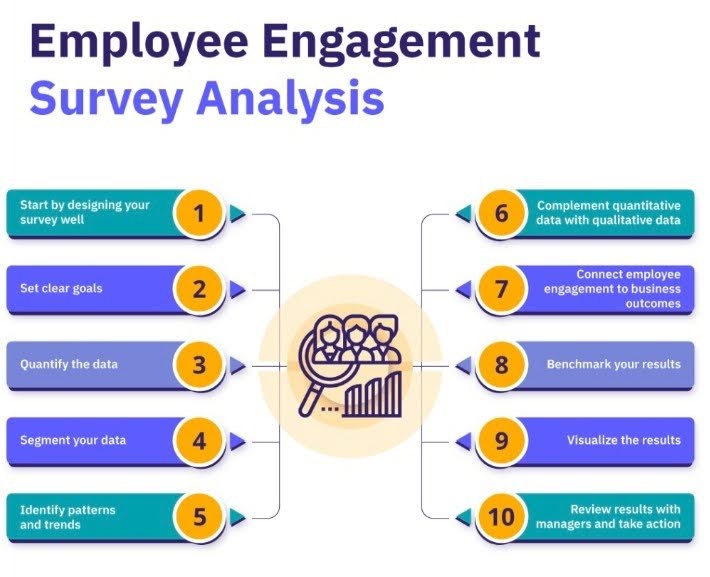
Collecting answers from your employee engagement survey is just the beginning.
What truly matters is what you do next.
Start by identifying patterns.
Don’t overreact to one negative comment. Instead, look for repeated themes across teams or departments.
For example:
- If multiple employees mention a lack of growth → invest in training
- If feedback highlights poor communication → improve internal updates
- If burnout comes up often → reassess workloads
Next, prioritize actions.
Use a simple prioritization model: rank issues based on impact (how many employees mentioned it) and severity (how strongly it affects performance). Focus first on high-impact, high-severity issues. This prevents teams from overreacting to isolated feedback.
You don’t need to fix everything at once. Pick 2–3 high-impact areas and focus there first.
Quick win tip:
Choose at least one improvement you can implement within 30 days. Fast action builds trust.
Close the feedback loop
Like with customer communication strategy, employee communication and engagement are crucial. One of the biggest mistakes managers make is staying silent after the employee engagement survey.
Employees notice.
Always follow up with:
- A summary of key findings
- Clear next steps
- A timeline for changes
Even if the feedback is tough, transparency builds credibility.
Make it an ongoing process
An employee engagement survey should not be a once-a-year activity.
The best companies treat it as a continuous process.
Try:
- Quarterly pulse surveys (5–10 questions)
- Monthly check-ins with teams
- Regular one-on-one conversations
This keeps insights fresh and actionable.
Common mistakes to avoid
Even a great employee engagement survey can fail if you:
- Ask too many vague questions
- Ignore negative feedback
- Run surveys but take no action
- Don’t follow up with employees
Remember:
The survey is just the start. Action is what drives engagement.
Final thoughts
A well-designed employee engagement survey is one of the most powerful tools a manager has.
It helps you:
- Understand your team
- Identify problems early
- Improve retention
- Build a stronger culture
But the real magic happens after the survey.
- Listen carefully.
- Act quickly.
- Communicate clearly.
Do that consistently, and engagement won’t just improve—it will thrive.
About the Author