How Lead Generation Systems Increase Advisor Business Value

A financial advisory practice can look “healthy” on paper—decent AUM, solid revenue, long-tenured clients—and still get discounted in a sale or succession deal for one uncomfortable reason:
The business can’t reliably replace clients.
That’s not a marketing critique. It’s a valuation critique.
Buyers and valuation professionals increasingly look at advisory firms the same way they look at any relationship-based business: How durable is the revenue, and how transferable is the growth engine? SmartAsset puts it plainly: valuations go beyond simple revenue math, because buyers consider cash flow stability, client demographics, growth potential, and risk.
And that’s where lead generation—done the right way—quietly becomes one of the most underrated drivers of enterprise value.
When you can show consistent, trackable demand coming from your website, it supports the same story a buyer wants to see inside a professional valuation for financial advisors: growth isn’t luck, it’s a system.
This article connects what valuation experts focus on (recurring revenue, concentration risk, growth trajectory, operational maturity) with what high-performing advisory firms do on their websites (capture intent, qualify leads, shorten sales cycles, and document a repeatable acquisition process). We’ll also show how interactive online forms—built for conversion—help you build that “growth engine” in a way a buyer can believe.
The hidden valuation problem most advisors don’t see until it’s late
If you ask most advisory owners what drives valuation, they’ll mention:
a. Revenue and profitability
b. Recurring vs. transactional revenue
c. Client retention
d. Assets under management
All true. But there’s another question that shows up in buyer diligence and valuation conversations:
“What happens to new business when the founder steps back?”
If growth is primarily the result of the founder’s personal network, a few referral partners, or “we’ve always gotten business by word of mouth,” buyers see risk. In valuation terms, that risk shows up as lower multiples, stricter earnouts, and more contingencies.
So if your growth depends on you personally, your business is more “you-shaped” than “enterprise-shaped.” And in a professional valuation for financial advisors, that kind of key-person dependency often shows up as a discount—sometimes quietly, sometimes painfully obvious.
Why a lead generation system can raise value even if revenue stays the same
This is counterintuitive, but it’s real: you can increase valuation without immediately increasing revenue—by reducing perceived risk.
A repeatable lead gen system helps in three big valuation levers:
- Stability: you have a mechanism to replace natural attrition
- Transferability: growth doesn’t collapse when leadership changes
- Scalability: the business can grow without proportional cost or effort
When your website produces qualified opportunities consistently, you’re not “doing marketing.” You’re strengthening the business as an asset.
The valuation lens: what professionals actually evaluate

At a high level, advisory firm valuation commonly uses a mix of approaches:
a. Multiple of revenue or earnings/profit
b. EBITDA-based methods
c. Discounted cash flow (DCF)
d. Comparable company / transaction comps
The key takeaway for marketing-minded advisors:
Your website and intake process influences multiple drivers that shape those numbers.
Let’s break down how.
How online forms directly support valuation drivers
1) They reduce “key-person risk” by systematizing acquisition
If leads come from a documented process—traffic source → form → qualification → follow-up workflow—then growth is less dependent on the founder’s memory, relationships, and availability.
From a buyer perspective, a system is an asset. A personality is a risk.
2) They improve lead quality and close rates (which supports predictable growth)
Interactive forms can do more than collect contact info. They can qualify prospects, segment intent, and route the right prospects to the right next step.
Even if you don’t treat “5X more conversions” as a guarantee, the strategy is sound: better form design often improves completion rates and downstream sales efficiency.
3) They lower acquisition cost through better tracking and optimization
Buyers like businesses that understand their marketing economics. If you can show:
a. Lead volume by channel
b. Conversion rates by landing page/form step
c. Appointment rate from qualified leads
d. Cost per acquisition trends over time
…you’re not just “marketing.” You’re running a measurable growth engine.
That measurability matters because a professional valuation for financial advisors isn’t only about what you earned last year—it’s also about how confidently the next owner can forecast the next three.
The most valuable “asset” in an advisory firm is trust—so protect it with better intake
A modern lead gen and onboarding flow helps protect trust by:
a. Setting clearer expectations early
b. Filtering out mismatched prospects
c. Standardizing discovery and data collection
d. Creating a consistent “first experience” of the firm
That consistency becomes even more important when a firm grows beyond one advisor or prepares for succession.
A practical framework: build a “valuation-friendly” lead gen funnel
Step 1: Match your website offer to buyer-intent, not curiosity
Not every visitor wants a 45-minute consultation.
Valuation-friendly funnels create layers:
a. A low-friction first step (quick assessment, checklist, quiz)
b. A mid-friction qualification step (multi-step form)
c. A high-friction commitment step (calendar booking)
Step 2: Use multi-step forms to qualify and segment
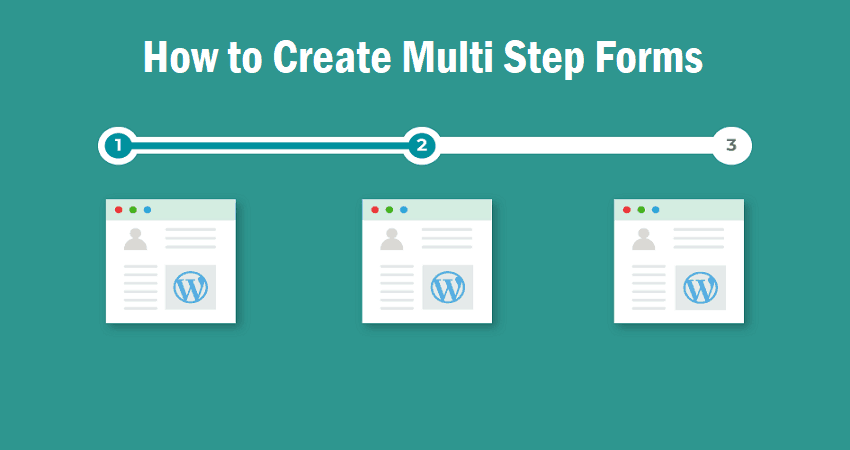
For advisory firms, the wrong leads are expensive. A smart form flow can qualify on:
a. Investable assets range
b. Timeline (now vs. later)
c. Situation (retirement, liquidity event, business sale)
d. Service needs (planning-only vs. full wealth management)
e. Geography and compliance constraints
Step 3: Route leads automatically to protect speed-to-lead
One of the easiest ways to lose value (and growth) is slow follow-up.
A simple operational rule:
- High-fit leads → immediate booking link + advisor notification
- Medium-fit leads → nurture sequence + content path
- Low-fit leads → polite decline or referral resource
Step 4: Track the numbers that a buyer (or lender) will ask for
If you want your marketing to support valuation, track like an operator:
a. Unique visitors → form starts → form completions
b. Qualification rate
c. Appointment rate
d. Show rate
e. Close rate
f. CAC estimate (even if rough)
g. Lead source mix and trendline
The “valuation story” you want to be able to tell
When a firm is preparing for a sale, internal buyout, or succession plan, the goal isn’t just to “get a number.” It’s to be able to defend that number with a business narrative:
a. Our revenue is durable (recurring, retained, diversified)
b. Our operations are systematized (documented processes)
c. Our growth engine is repeatable (measurable web lead gen)
d. Transition risk is managed (client communication + continuity plan)
That’s the real reason advisors seek a valuation process that’s defensible—one that normalizes the numbers, documents the risks, and makes the story coherent for a buyer.
If you’re prepping for a sale, partner buy-in, or succession plan, the work behind a professional valuation for financial advisors should do two things: establish a defensible baseline and spotlight the risk areas that are suppressing your multiple (concentration, founder-dependence, weak ops, or an inconsistent pipeline).
Bringing it home: why this matters for leadgenapp.io readers
For B2B businesses, the payoff is obvious: more pipeline.
For financial advisory firms, the payoff goes one step further:
A strong lead generation system doesn’t just grow revenue—it can raise the perceived quality of the business as an asset.
That’s how a “marketing tool” becomes a valuation lever.
Final thought: build the pipeline you’d want to inherit
If you plan to sell, merge, bring in a partner, or transition to next-gen leadership, ask yourself one question:
Would someone else feel confident inheriting your client acquisition process?
If the honest answer is “not really,” the fix isn’t only operational. It’s also web-based:
a. Clearer positioning
b. Better qualification
c. Better onboarding
d. Better conversion paths
e. Better tracking
And in most cases, it starts with one unglamorous but powerful upgrade:
A form journey that turns website traffic into predictable, qualified leads.
Because when your pipeline is measurable and repeatable, it’s easier for the numbers to hold up under scrutiny—exactly what you want before commissioning a professional valuation for financial advisors.
About the Author