Why Lead Capture Forms Need to Change for AI-Informed Buyers
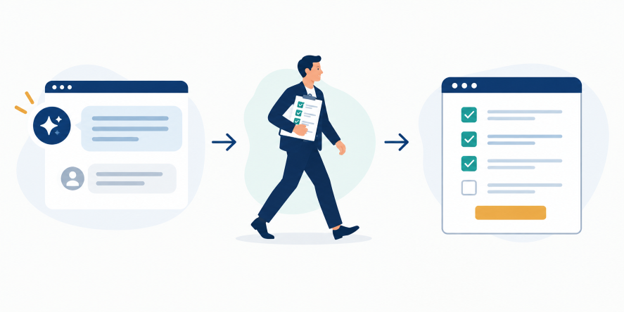
Something odd happened to me on a sales call last year. The prospect knew more about my own product category than the pitch I had prepared. He'd asked ChatGPT which tools to consider, read a synthesized comparison of five vendors, and arrived with a shortlist already in his head. My job that day wasn't to convince him - it was to not get eliminated.
If you run lead generation for a B2B company, this is now your normal Tuesday. Buyers don't start at your website anymore. They start inside an AI answer, and by the time they reach your form, the discovery conversation has already happened. Just not with you.
I run an AI-search visibility company, so I test this for a living. Recently we ran one brand question across six AI platforms - ChatGPT, Gemini, Perplexity, Copilot, Claude, and Google's AI Overviews - ten times each. Sixty identical prompts. We got 31 materially different answers, and the same brand showed up anywhere from 0% to 41% of the time depending on the engine. Ask two assistants for the best lead capture tool and you can get two different shortlists.
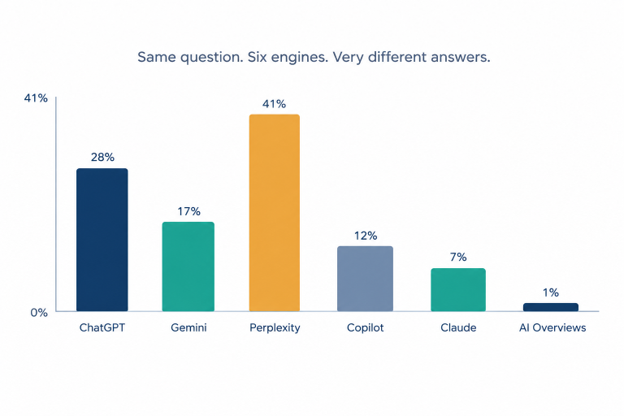
Which raises an awkward question for everyone in our field: your forms are working perfectly, but are they even in the conversation?
Your form's job has changed
For twenty years, the playbook was simple. Drive traffic, present the offer, capture the fields. The form was the conversion moment, and everything before it was noise.
That model assumed the prospect arrived blank. Today they arrive pre-informed - sometimes better informed than the SDR who calls them. So the form's real job now is different. It's not the start of the conversation. It's the part of the conversation the AI couldn't finish.
In practice, that means three things:
First, confirm they're in the right place - fast. Reference the exact problem they typed into the assistant, not your internal product category. "Struggling to get cited in AI answers?" will always beat "Learn about our platform."
Second, ask what the AI couldn't tell them. AI answers are averages - summaries of what's publicly said. They can't answer anything specific: your lead volume, your stack, your timeline, your edge case. Those are the questions worth a form field. Anything a chatbot could have already told them is a field that costs you completions.
Third, find out who sent them. Add an "AI assistant" option to your "how did you hear about us?" question. It sounds trivial. It isn't - because right now that answer changes how the sales call should open.
The three mistakes I see most
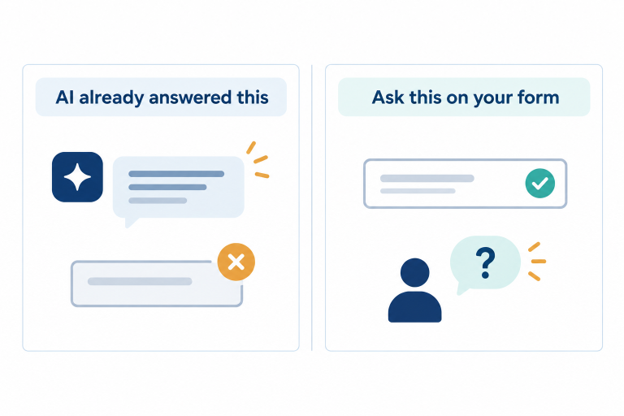
Asking questions the AI already answered. If a prospect filled your form after reading an AI comparison, and your first field asks them something that comparison covered, they notice. The form feels redundant, and redundant forms get abandoned at step two.
Routing every inbound lead the same. A click from a cold ad and a visit after an AI recommendation are not the same lead. The second one self-qualified against a shortlist before you knew they existed. Route them faster and open the call by acknowledging the comparison they already read. In our own pipeline, leads who found us through an assistant close noticeably faster - they arrive with the hard questions already answered.
Never checking what the assistants actually say. Most companies audit their Google reviews and ignore their AI answers. That's backwards. Once a quarter, type your core buyer questions into the major assistants and write down what comes back: are you mentioned, are you cited, is the information accurate or three years out of date. The fixes are unglamorous - consistent company data, extractable bios, real review presence - but they work. We built Llumo to automate exactly this tracking across the six engines, and honestly, the manual version taught us more than any tool did. It costs an afternoon.
Attribution is quietly breaking
Here's the part your CFO won't like. Last-touch attribution assumed the touch before the form fill caused the conversion. When the real cause was an AI answer three days earlier, your channel report confidently credits the wrong thing and your budget follows it.
The platforms aren't handing us referral data yet, so do the cheap version: tag leads who select "AI assistant" in your form, put them in a CRM segment, and compare close rates against ad-sourced leads for a quarter. If they convert faster, you've found the most honest attribution signal available to you right now, and it didn't cost a dollar.
So, what now
Your forms still matter. Multi-step forms, conditional logic, clean progressive profiling - all of it still works, and tools like LeadGen App are genuinely good at it. But build the form for its actual job: finishing a conversation that started somewhere you can't see in your analytics.
The companies that figure this out won't just get more leads. They'll get leads who already trust them - because the first salesperson the buyer ever talked to was an AI, and it said their name.
Conclusion
AI-powered answers are revolutionizing the way B2B buyers learn about potential vendors and their solutions, as well as how they arrive at a business’s website. When a prospect fills out a lead form, a lot of the initial discovery is completed before they ever do so. This means that a business needs to change their approach to how forms are filled out, how the leads are routed, and even how they define a conversion.
An effective lead form would contain information that is impossible for an AI assistant to generate. On the other hand, the sales team could leverage a prospect’s research context and make follow-ups more relevant to the prospect. Brands must track their online presence in various AI platforms and figure out practical ways to flag the results of AI-powered discovery in the CRM software.
While classic approaches to lead capture and attribution remain valid, businesses will have to find new ways to utilize them in order to capitalize on AI visibility.
FAQs
1. How does AI search change B2B lead generation?
AI search gives buyers an opportunity to explore categories of products, vendors, compare them, and select before visiting company websites. Therefore, it becomes necessary for lead generation specialists to deal not only with leads that have not yet made any decisions but also to attract leads that are already informed about the category.
2. What is a pre-informed lead?
The pre-informed lead is a visitor that has done his/her homework, including researching the category, comparing the vendors, and learning about some solutions before reaching out to a company. The assistance of AI assistants can help a lead become pre-informed before visiting a company's website or sales team.
3. How should companies optimize lead capture forms for AI search visitors?
It is important for companies to pay attention to the fields in which a visitor will provide information that cannot be provided in an answer given by AI. It could be needs, current stack, project timeline, etc.
4. How can companies distinguish leads generated by AI assistants?
Companies can include an option like “AI assistant” in the “How did you hear about us?” section, and they can sort these leads in the CRM. Comparing lead quality, progress in sales cycle, and conversion rate can give meaningful direction despite the fact that attribution done by people themselves is not perfect.
5. Why should sales teams approach AI-referred leads differently?
These prospects will come having researched the product, having compared vendors, and having asked all questions that are on their minds. The sales team can leverage this situation by personalizing their conversation and addressing the questions left, but they need to confirm that the prospect really has that information.
About the Author