Aikido vs Snyk: Which DevSecOps Platform Is Better in 2026?
As software development continues to grow in 2026, security teams need to work harder to keep apps safe without slowing down delivery. DevSecOps platforms are now required for ensuring that security is integrated into every part of the development process, from code to cloud. Aikido and Snyk are two of the most popular application security solutions, but they use very different methods.
This article compares Aikido and Snyk in key areas, including their simplicity of use, the extent of coverage they offer, the level of automation they provide, and the overall value they offer.
At the end, it's clear which platform is better for modern development teams that want strong security with as little hassle as possible.
What Modern DevSecOps Platforms Deliver
DevSecOps tools have changed from simple vulnerability scanners into advanced platforms that support secure development from code to the cloud. In 2026, the best platforms must provide:
- Unified visibility across source code, open-source dependencies, containers, and infrastructure as code (IaC), ensuring a strong cybersecurity posture.
- Prioritized, high-signal insights that help teams stay on track with what matters.
- CI/CD and IDE integrations make automation easy.
- Actionable recommendations for fixing things faster.
- Scaling up in a way that doesn't cost too much as teams and coverage needs grow.
These features make sure that security is not a roadblock, but a normal part of modern Agile and DevOps workflows.
Aikido: A Unified, Developer-First DevSecOps Platform

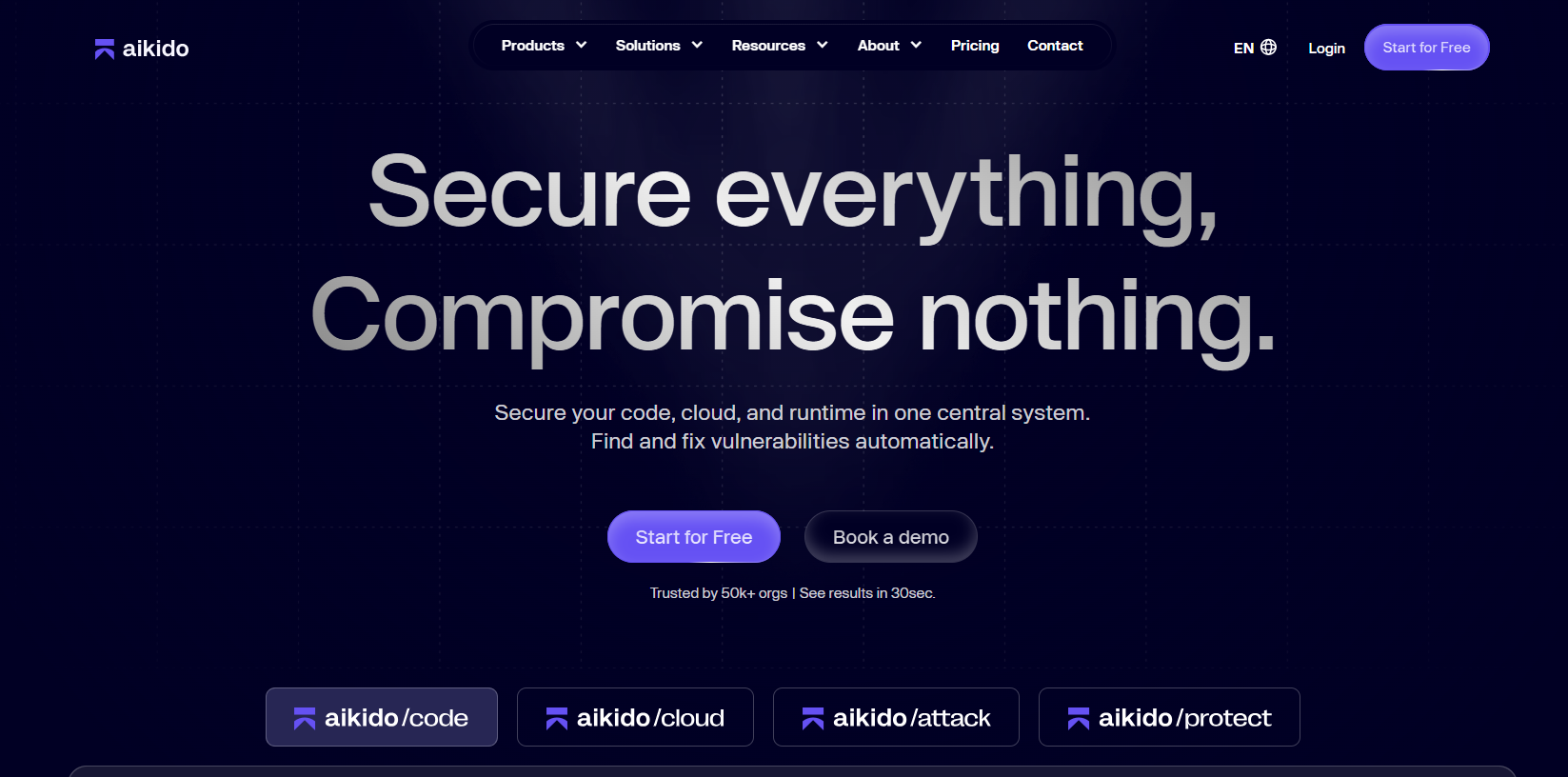
DevSecOps teams rapidly adopt Aikido Security because it focuses on keeping it easy for developers to use and covers all aspects of security. Aikido emerged as a way to help developers write secure code with as little trouble as possible.
By 2026, it had grown into one of the most complete "code-to-cloud" security platforms available.
Core Strengths
- True all-in-one coverage: SAST, SCA, DAST, CSPM, container scanning, runtime protection, and more are all combined under one roof by Aikido.
- Decreased noise and false positives: Context analysis and advanced reachability significantly cut down on pointless alerts, saving developers time when triaging.
- Smart automation: Time-to-fix is accelerated by AI-driven prioritization and automatically generated remediation pull requests.
- Developer-centric workflows: Security becomes an integral part of the process rather than an interruption, thanks to seamless integrations with IDEs and CI/CD pipelines.
- Transparent pricing: Predictable costs without pricey extras are achieved with straightforward, seat-based pricing that includes all features.
- Quick adoption: Users report seeing value right away and onboarding entire teams in less than an hour.
Teams no longer need to manage numerous different tools or pay separately for essential features like DAST or IaC scanning, thanks to Aikido's emphasis on a single, integrated platform.
Snyk

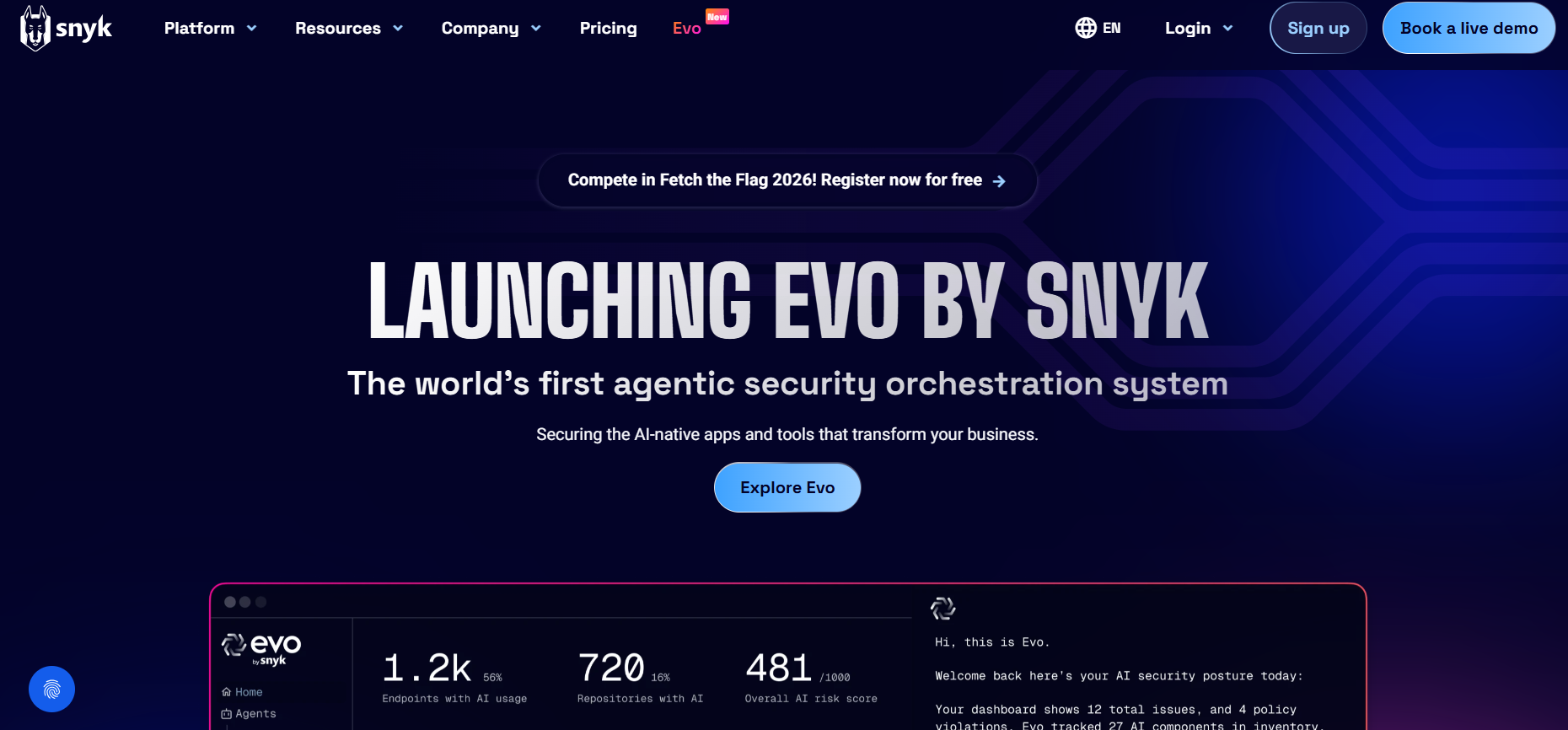
Because of its robust open-source scanning and developer-focused methodology, Snyk is a popular DevSecOps platform. By integrating vulnerability scanning into the development lifecycle, it contributed to the popularization of "shift-left" security.
Core Strengths of Snyk
- Strong SCA capabilities: Snyk's open-source dependency scanning is extensive and highly regarded.
- Developer focus: Developers are able to identify problems early thanks to real-time insights and remediation recommendations.
- Comprehensive ecosystem integrations: Compatible with major CI/CD and version control systems.
- ROI claims: Due to lower remediation costs, some clients report significant returns.
However, as teams grow, Snyk's platform typically consists of several distinct products (such as Open Source, Code, IaC, and Container), each of which is priced and managed independently. This can create complexity and cost issues.
Side-by-Side Comparison
This is how Aikido and Snyk contrast in essential aspects:
Security Coverage
- Aikido is a unified platform that comes pre-configured with SAST, SCA, DAST, CSPM, container/image scanning, runtime protection, API security, and more.
- Snyk has SCA and SAST capabilities, but additional modules or tiers might be needed for advanced features like IaC and cloud posture.
Noise and Accuracy
- Aikido: AI-assisted prioritization and enhanced reachability decrease false positives and concentrate on actual threats.
- Snyk: Extensive scanning may produce a large number of alerts, which could cause alert fatigue.
Developer Experience
- Aikido: Security is less of a challenge with streamlined workflows, an intuitive user interface, and integrated remediation pull requests.
- Snyk: Excellent workflow and IDE integrations, but having several modules could make things more difficult overall.
Pricing & Value
Aikido has clear, set prices:
- Free: $0 a month for 2 users and basic scanning.
- Basic: about $350 a month for 10 users, full SAST, DAST, container, and cloud scanning.
- Pro: about $700 a month, includes advanced features and AI-powered fixes.
- Advanced/Enterprise: about $1,050 per month, unlimited users, full coverage, and custom support.
Snyk charges by module and by developer:
- Free: $0 unlimited developers, but only a few tests per product.
- Team: about $25 a month for each developer, which is a good starting point for small teams.
- Ignite: costs about $1,260 a year per developer, or about $105 a month, for more features.
- Enterprise: Custom pricing (depends on the size of the organization)
Effectiveness and ROI
While both platforms provide noticeable security posture improvements, Aikido's unified approach often results in faster remediation times and lower operating costs. Efficiency and developer satisfaction gains are frequently mentioned by users who are moving away from conventional multi-product stacks.
Final Verdict
Aikido and Snyk are both great DevSecOps platforms that put developers first and have strong security features.
For the majority of DevSecOps teams seeking to secure software more quickly and effectively in 2026 and beyond, Aikido is a better option due to its comprehensive coverage, user-friendly developer-first workflows, and predictable cost structure. Its continuous innovation and robust integration capabilities make it a future-proof choice for modern development teams.
About the Author