Best Jotform Alternatives for Lead Generation
For many teams, Jotform is the first form tool they ever use. It’s easy to set up, flexible enough for basic needs, and works well for collecting information.
But as businesses start relying on forms to drive pipeline growth, qualify prospects, and trigger timely follow-up, those early conveniences often become limitations.
Then, new questions come up. Which forms convert best? Which questions qualify leads rather than scare them off? How fast do submissions reach sales or automation tools? Jotform can support some of this, but it wasn’t built with lead generation as the core job.
Then, the search for Jotform alternatives begins.
In this guide, we break them down.
Key features of a lead gen form
Before we get into Jotform alternatives, it helps to get clear on what actually makes a lead generation form work. A lot of tools can collect information. Far fewer can support marketing performance, sales follow-up, and a solid customer experience at the same time.
Here are the core features to look for in a flexible form builder:
- Supports fast creation of online forms without developer help
- Form templates that accelerate launch while allowing deep form customization
- Conditional logic that adapts questions based on user behavior
- Clean, reliable form submission handling with real-time delivery
- Workflow automation to route leads, trigger emails, or sync with CRMs
- Built-in support for file uploads when richer submissions are needed
- Team collaboration tools so marketing, sales, and ops can work together
- Granular user permissions to control access and edits
- Form scheduling for time-based campaigns or availability windows
- Native Stripe payments for seamless payment collection
- Optional mobile app access for teams working on the go
- Advanced functionality and reporting (often in an enterprise plan)
These features are what turn a simple form-building tool into part of your growth engine.
That said, it’s also worth calling out what lead gen forms aren’t designed to do. Not every form use case is about marketing or leads. Many teams still rely on forms for internal workflows, contracts, applications, or compliance-heavy documents where accuracy matters more than conversion.
This is where you might consider a PDF-focused tool.
SmallPDF is a PDF document management platform that simplifies digital workflows. It allows users to edit, merge, sign, and fill out documents.
SmallPDF's form filler stands out for its professional accuracy. It allows businesses to quickly complete contracts, applications, and tax forms without expensive software, ensuring that document-heavy tasks are completed in seconds.
Top Jotform Alternatives for Lead Generation
These Jotform alternatives focus on lead generation over simple form building. They integrate forms directly into marketing and sales workflows, so your team can capture, qualify, and convert leads more effectively.
LeadGenApp
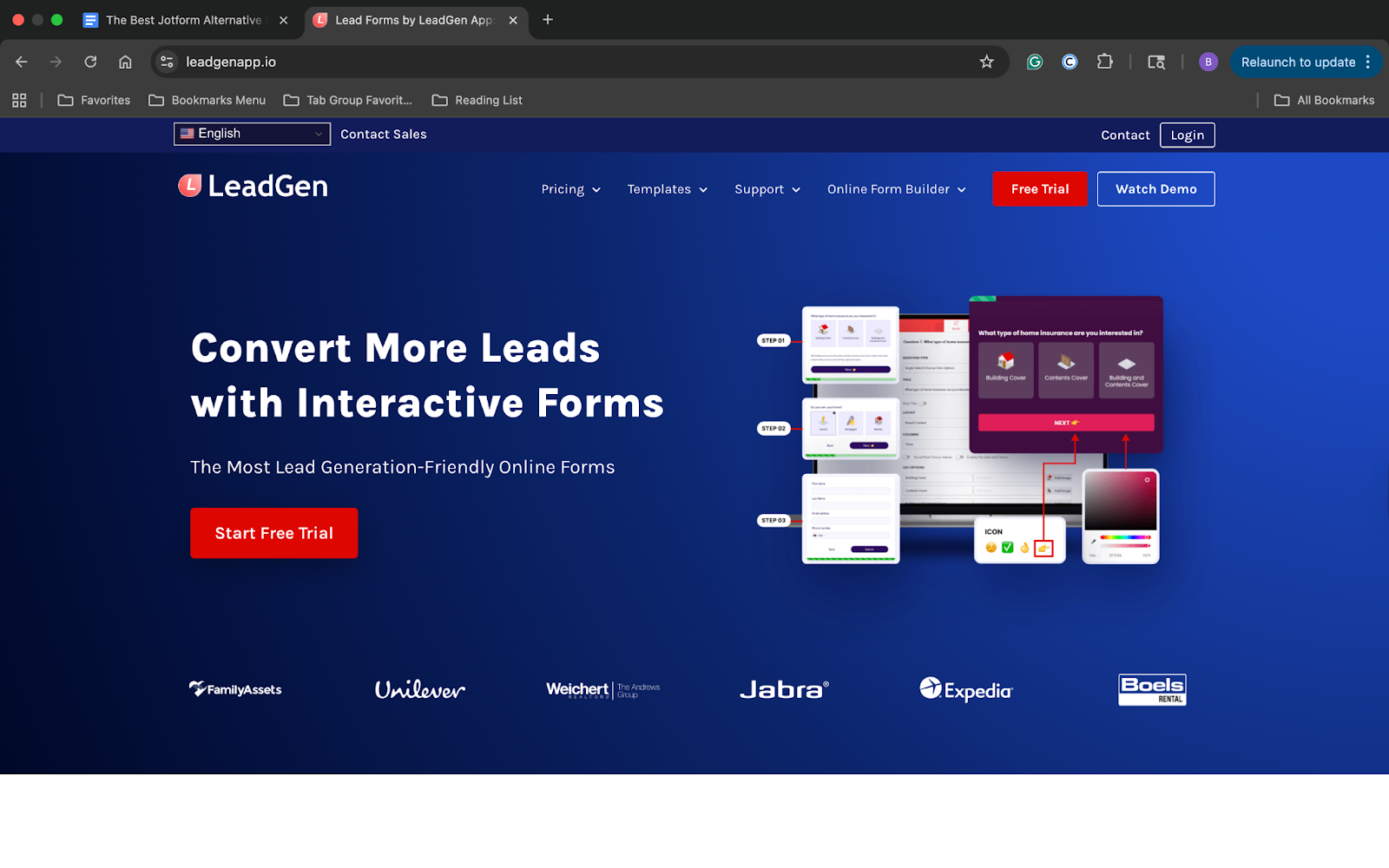
LeadGenApp is built for lead capture and qualification. It doesn’t treat forms as simple assets. It makes them conversion points in a larger workflow. It uses conditional logic and automation to send leads straight to your sales team. This is best for teams that want lead quality and speed over raw volume.
Key features:
- Proof popups: Displays real-time social proof to boost trust.
- Lead routing: Sends data to specific sales reps based on logic.
- Quality filtering: Screens out low-quality leads before they reach your CRM.
Typeform
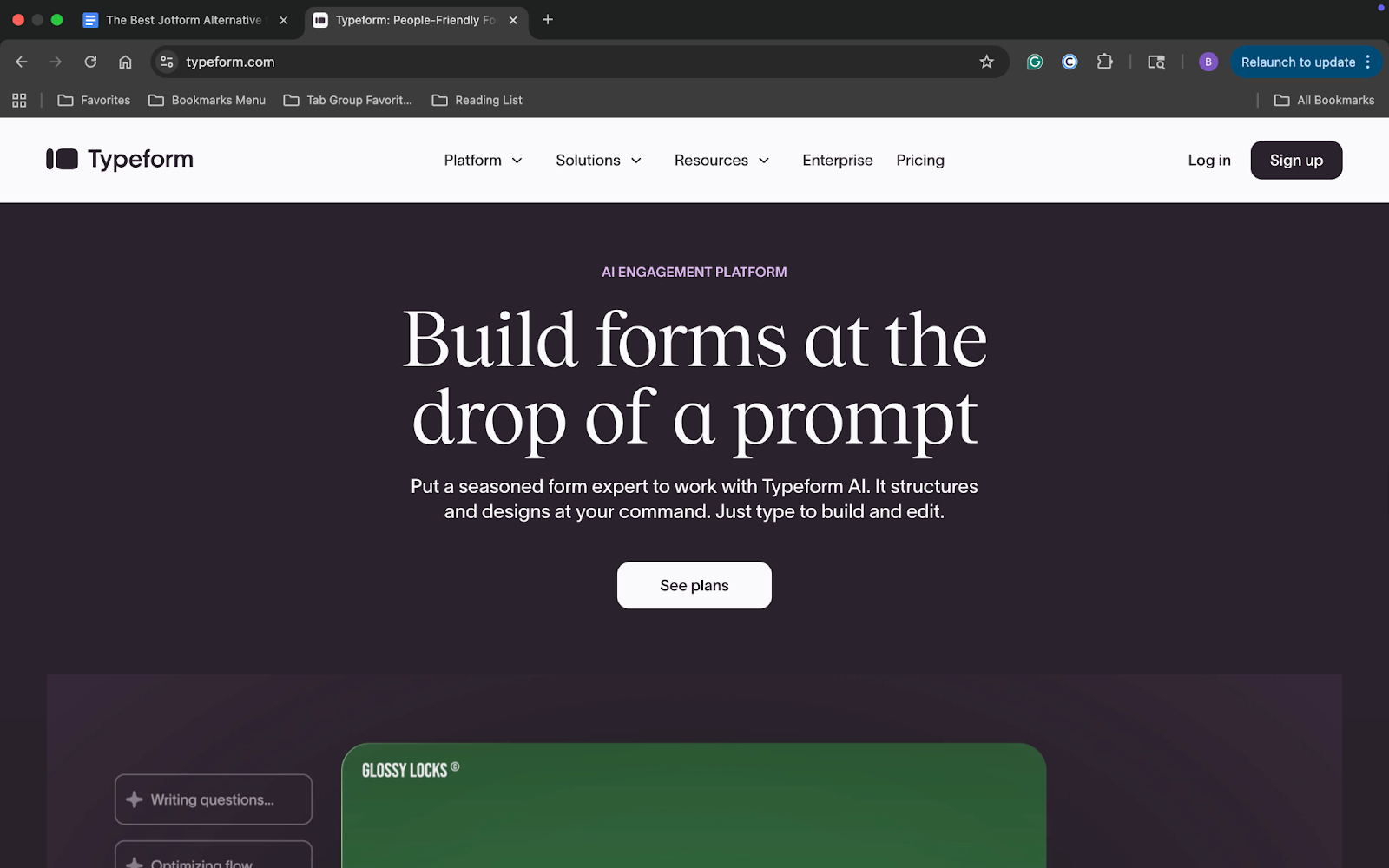
Typeform makes forms feel like a conversation. Its layout adapts to user behavior. This keeps people engaged and raises completion rates. It’s not as heavy on automation, but it’s great for brand-led marketing and surveys.
Key features:
- AI form builder: Generates forms from a simple prompt or URL.
- Conversational logic: Asks follow-up questions based on specific answers.
- Video interaction: Allows you to embed a video to personalize the lead experience.
HubSpot Forms
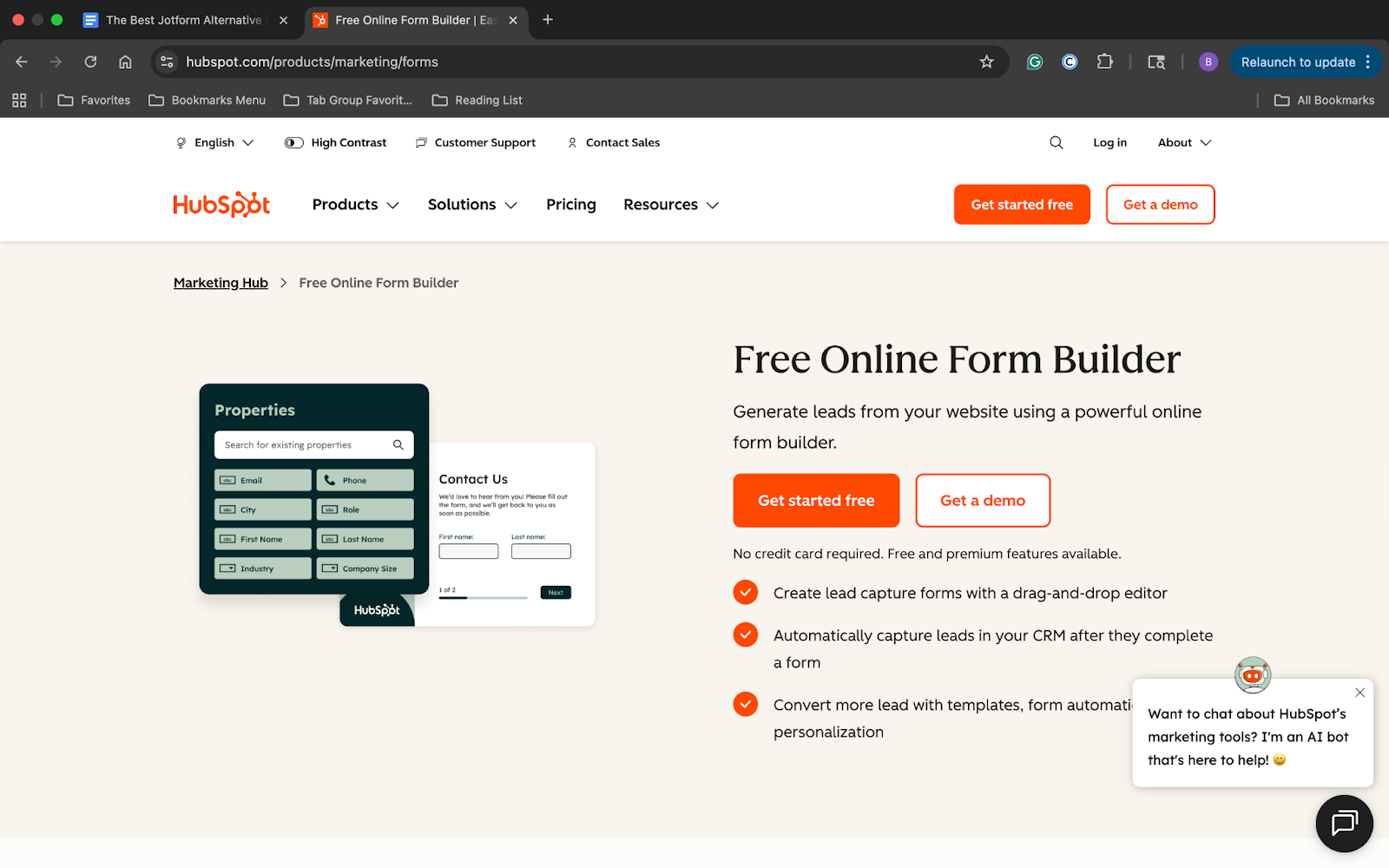
HubSpot Forms works best when lead gen is tied to a CRM. Every submission updates your contact records and sales reports.
This is a top choice for teams already using HubSpot who want to bridge the gap between forms and sales without extra tools.
Key features:
- Progressive profiling: Asks new questions only when a lead returns.
Smart CTAs: Changes buttons based on who’s visiting your site.
- Lead nurturing: Triggers automatic email sequences as soon as a form is filled.
Formstack
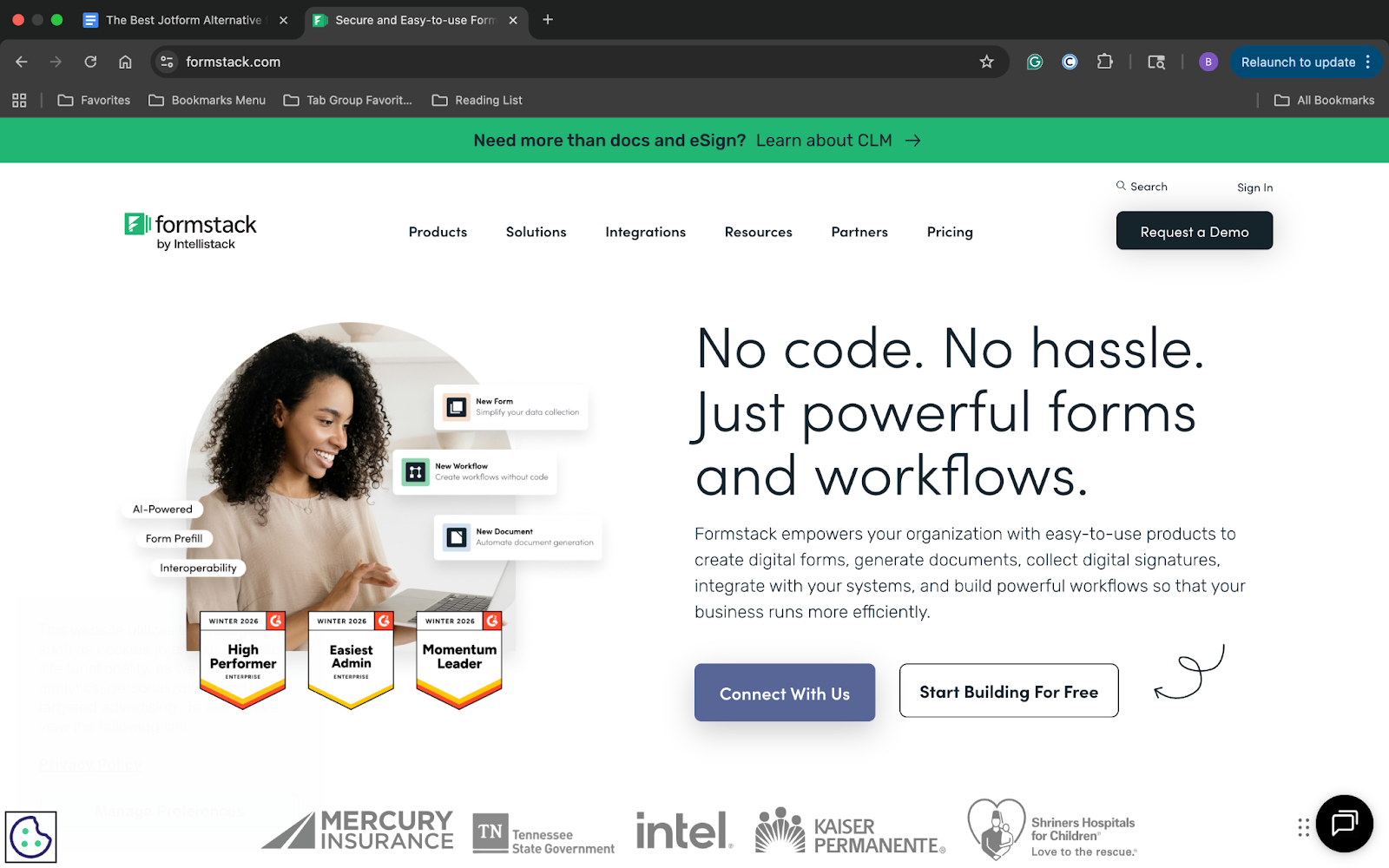
Formstack is for advanced teams with complex needs. It offers deep logic, workflow automation, and enterprise security. Use this if your lead process has many steps or requires strict compliance.
Key features:
- Document automation: Creates custom PDFs or NDAs from form data.
Field bottlenecks: Shows exactly where users drop off in a form.
- eSignatures: Collects digital signatures as part of the lead capture.
Gravity Forms (WordPress)
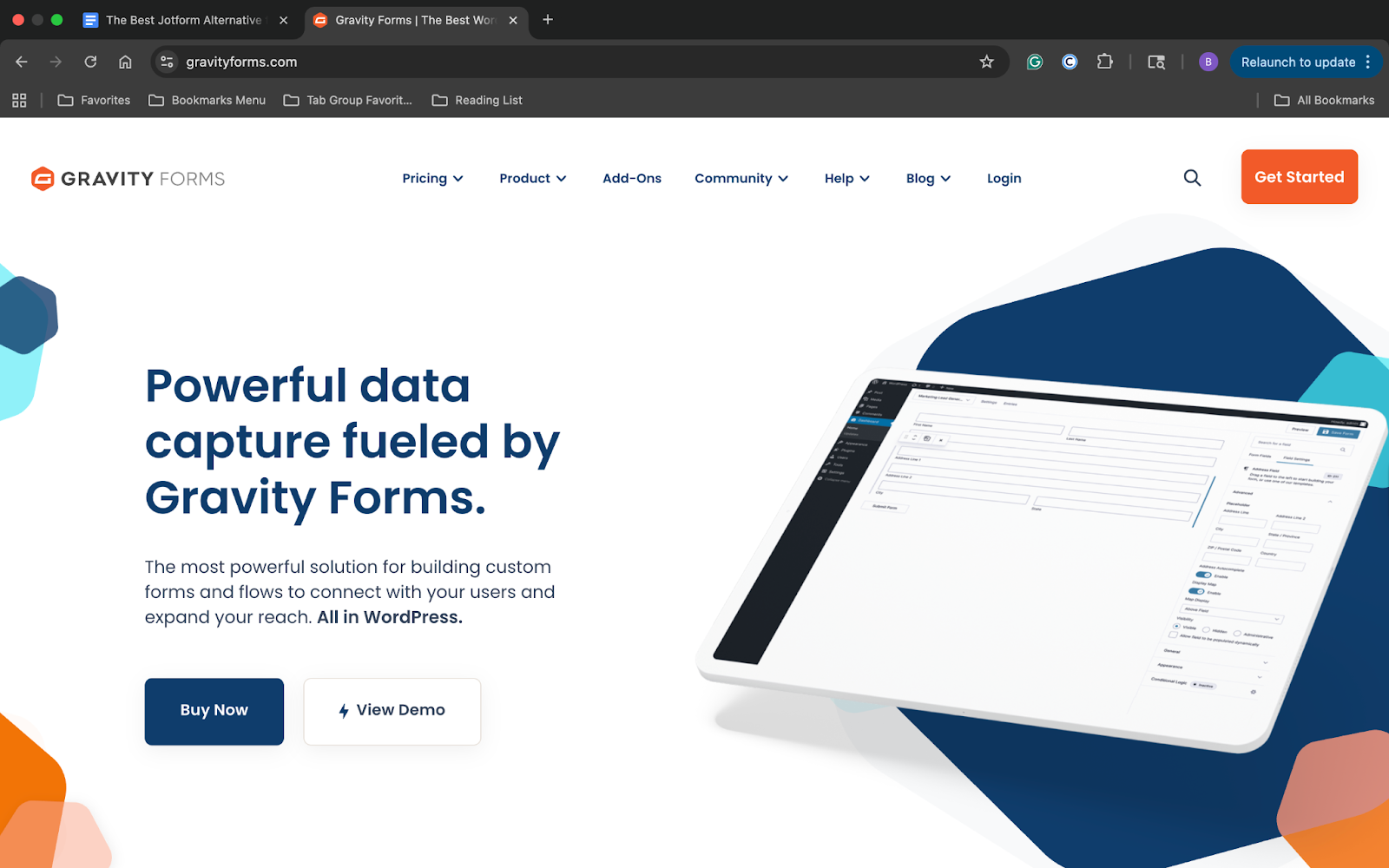
Gravity Forms is the best pick for WordPress sites. It’s a flexible builder that becomes a powerful lead tool with add-ons. It gives you full control over your site rather than relying on a separate platform.
Key features:
- WordPress integration: Built specifically to live inside your site dashboard.
- Partial entries: Captures data even if the user doesn’t finish the form.
- Add-on library: Connects to almost any CRM or email tool via official plugins.
Zoho Forms
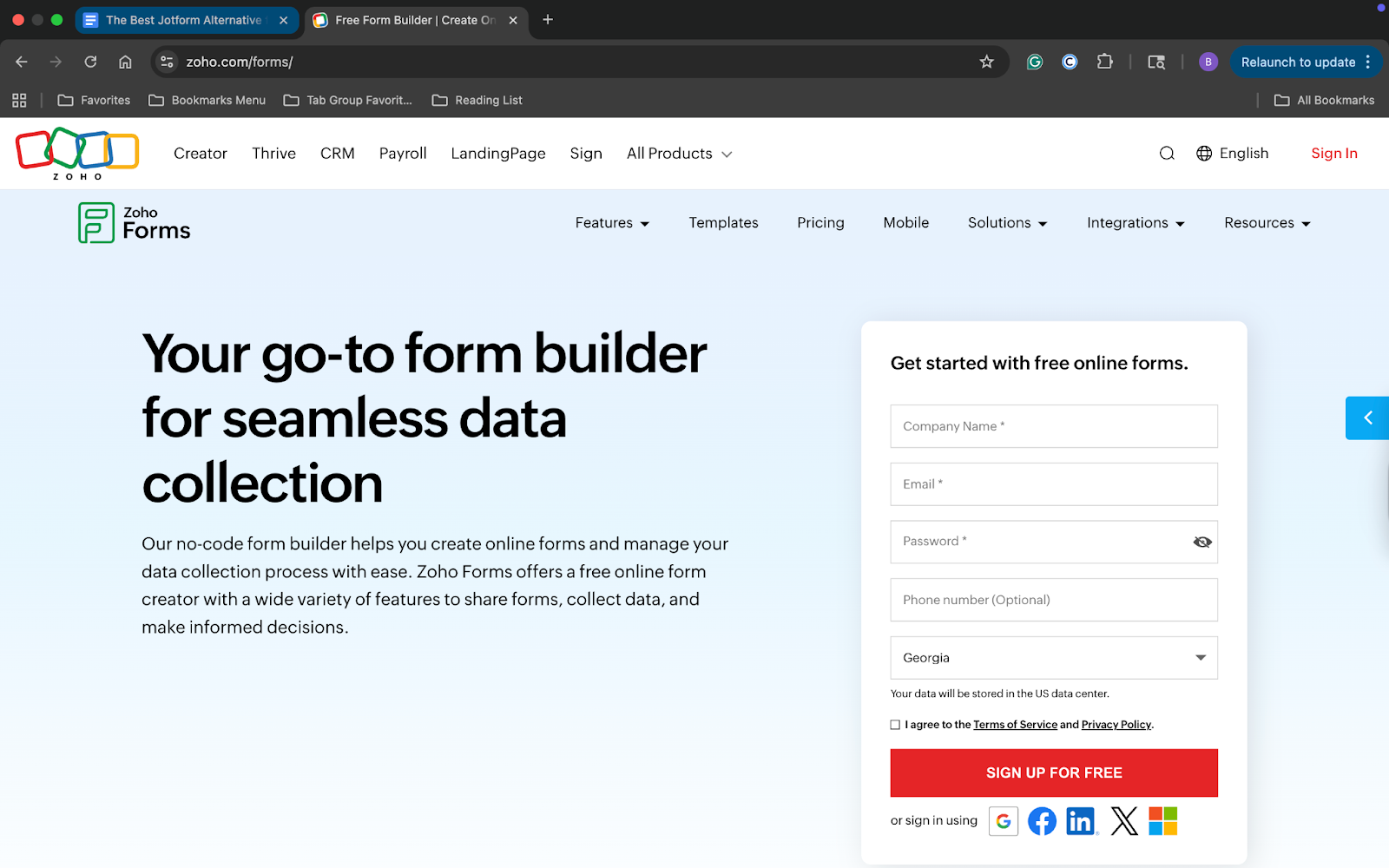
Zoho Forms is most effective for teams already in the Zoho ecosystem. It feeds data directly into Zoho CRM. For companies using Zoho, this is a cost-efficient way to align forms with sales.
Key features:
- Two-way sync: Pre-fills firms with data you already have in your CRM.
- Offline collection: Captures leads without an internet connection via the app.
- Task automation: Automatically creates tasks for sales reps upon submission.
Paperform
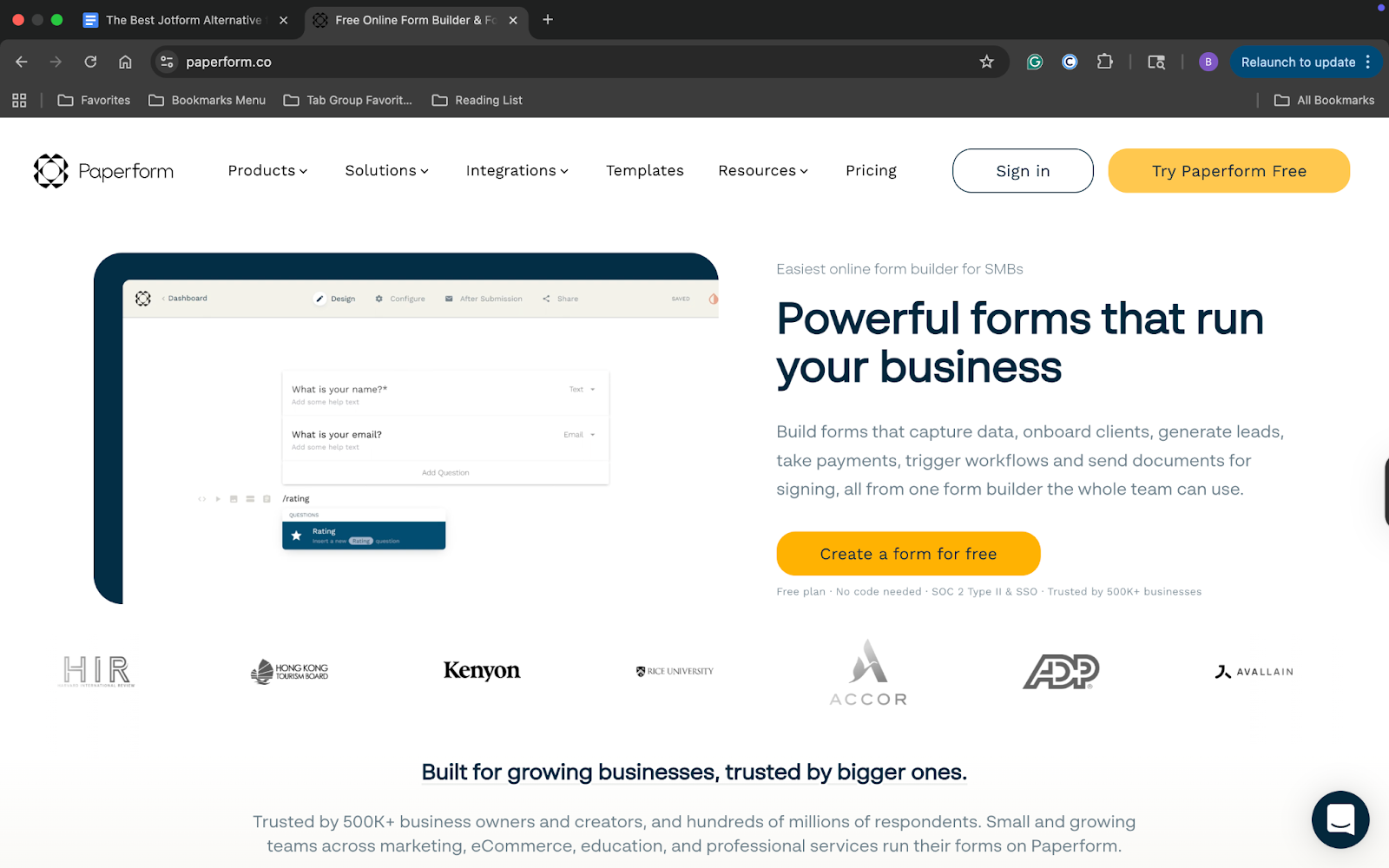
Paperform blends forms and landing pages into one. It focuses on visual design and flexibility. It’s a great option for teams running ads, events, or specific marketing campaigns.
Key features:
- Direct payments: Sells products or accepts deposits directly within the form.
- Landing page builder: Creates full-page lead magnets without a separate site.
- Answer piping: Uses a lead’s name or answers to personalize the rest of the form.
Final Thoughts
Choosing the right Jotform alternative depends on your sales goals. If you need a simple way to gather data, most general tools work well. However, for lead generation, you need tools that qualify prospects and sync with your CRM. Focus on platforms that offer deep logic and automation.
These features ensure your team focuses on the right leads, not just the loudest.
Stop wasting time on bad leads and generic forms. LeadGenApp helps turn your website visitors into high-quality sales opportunities.
About the Author