10 Best Marketing Automation Platforms for Businesses in 2026
Marketing in 2026 is faster, more data-driven, and more competitive than ever. Businesses that rely on manual outreach, disconnected tools, and guesswork are falling behind – fast. The ones growing consistently have one thing in common: they have invested in the right marketing automation platform. Whether you are a B2B startup trying to fill your pipeline or an enterprise brand managing multi-channel campaigns at scale, the right tool can transform how you attract, engage, and convert customers.
This guide breaks down the 10 best marketing automation platforms for businesses in 2026. We have evaluated each platform on ease of use, automation depth, AI capabilities, integrations, pricing, and overall value – so you can make a confident decision without spending hours comparing feature lists.
How We Evaluated These Platforms
Every platform on this list was assessed against six core criteria that matter most when choosing a marketing automation tool:
- Ease of use and onboarding speed
- Depth of automation capabilities (workflows, triggers, branching logic)
- AI and personalisation features
- Integration ecosystem (CRM, data tools, ad platforms)
- Pricing and scalability for different team sizes
- Customer support quality and user reviews
1. Tapistro – Best for AI-Powered B2B GTM Automation
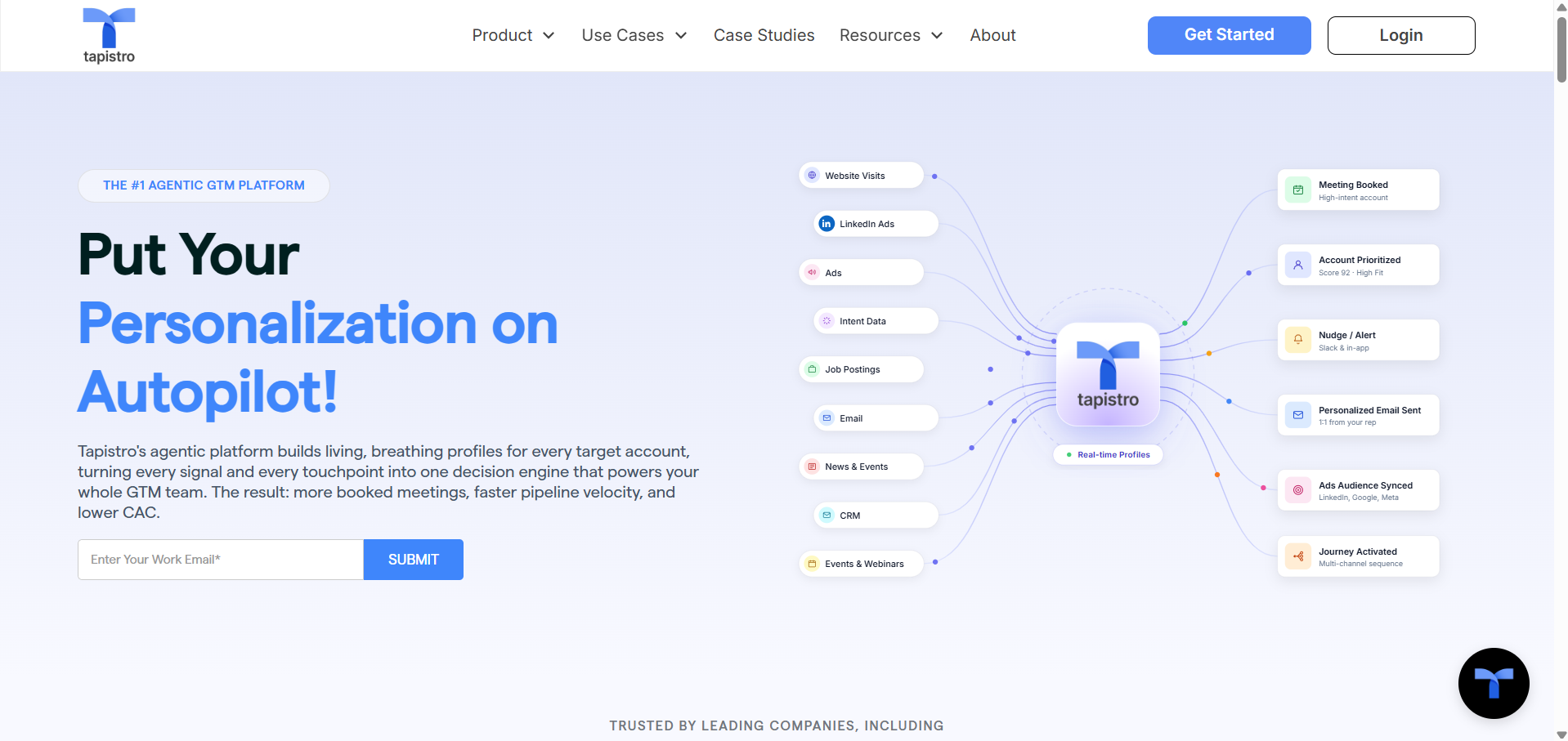
Tapistro should be at the top of your shortlist. It is an AI-powered GTM (Go-To-Market) orchestration platform built specifically for sales and marketing teams that want to replace slow, manual prospecting with intelligent, automated outreach – at scale.
What sets Tapistro apart from traditional marketing automation tools is its use of TapAI agents. These agents continuously research target accounts by scanning websites, job boards, news sources, and public data to keep your contact and account information fresh and accurate – without any manual intervention. This means your team is always working with clean, current data rather than stale CRM records.
Best For: B2B sales teams, SDRs, marketing ops, and growth leaders replacing manual prospecting
Standout Feature: Journey Canvas – a no-code, drag-and-drop workflow builder that creates branching, adaptive multi-channel campaigns based on real-time buyer behaviour such as email opens, clicks, and pipeline stage changes
Key Features:
- TapAI agents for continuous account and contact enrichment
- First, second, and third-party intent signal unification (LinkedIn Ads, G2, website visits, CRM)
- ICP definition, testing, and ongoing refinement
- Hyper-personalised, 1:1 content generation for individual accounts and personas
- 70+ integrations including Salesforce, HubSpot, LinkedIn, and major enrichment databases
- Buying group expansion with multiple waterfall databases
- Full GDPR and CCPA compliance with audit logs
Pricing: Custom – contact Tapistro for a demo and pricing tailored to your team size
Tapistro is ideal for B2B companies that want to scale from researching 20 accounts per week to 2,000+ without adding headcount. It is not just a marketing automation tool – it is an entire GTM engine.
2. HubSpot Marketing Hub – Best All-in-One for SMB and Mid-Market
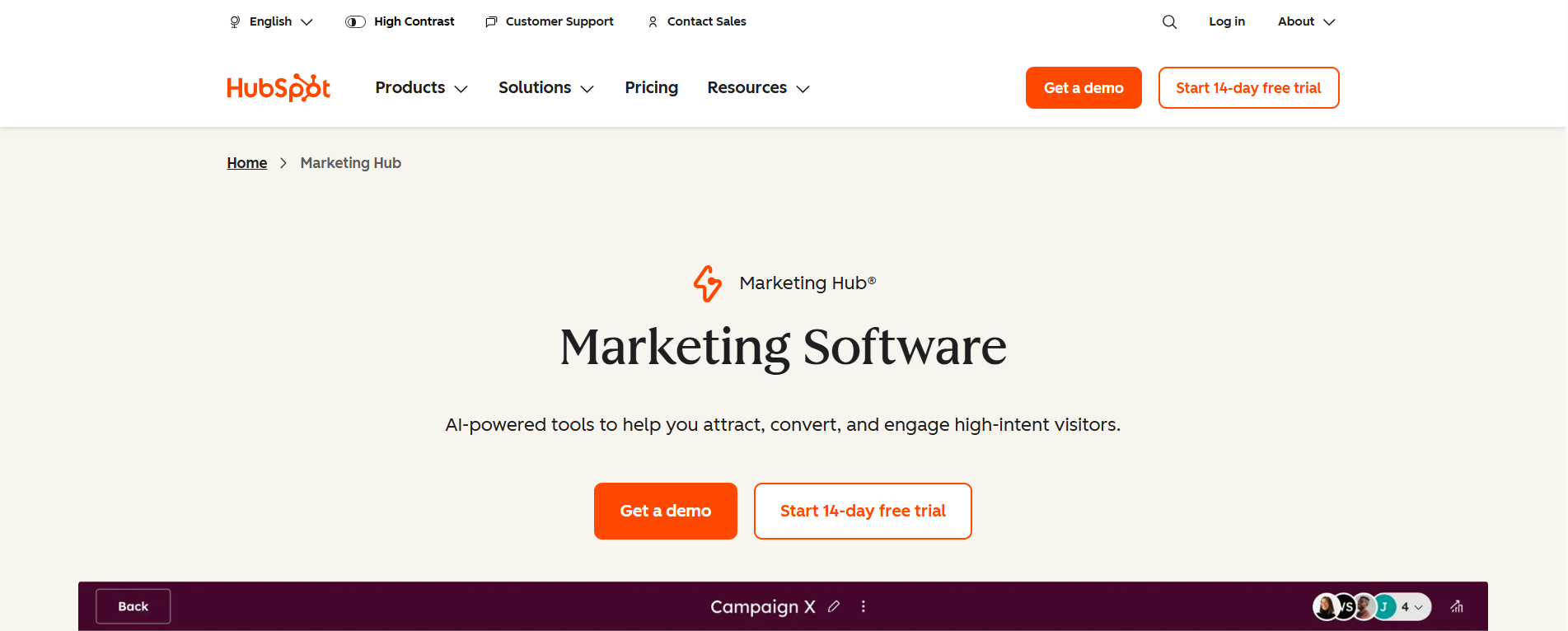
HubSpot remains one of the most widely used marketing automation platforms in the world, and for good reason. It combines email marketing, landing pages, lead scoring, social media tools, and CRM in a single, beginner-friendly interface. For businesses that want everything under one roof without a steep learning curve, HubSpot is hard to beat.
However, companies with more specific automation needs or budget constraints often explore ActiveCampaign alternatives that offer greater flexibility, advanced workflows, or more competitive pricing.
Best For: SMBs to mid-market companies with a content and inbound marketing strategy
Key Features: Email workflows, lead nurturing, lead scoring, CRM sync, A/B testing, reporting dashboards
Pricing: Free CRM available; Marketing Hub starts from approximately $800/month for professional features
HubSpot is a great choice for teams that want strong automation without needing a dedicated marketing ops specialist. Its drag-and-drop workflow builder is intuitive, and the native CRM integration means your sales and marketing teams always stay aligned.
3. Marketo Engage (Adobe) – Best for Enterprise B2B Marketing
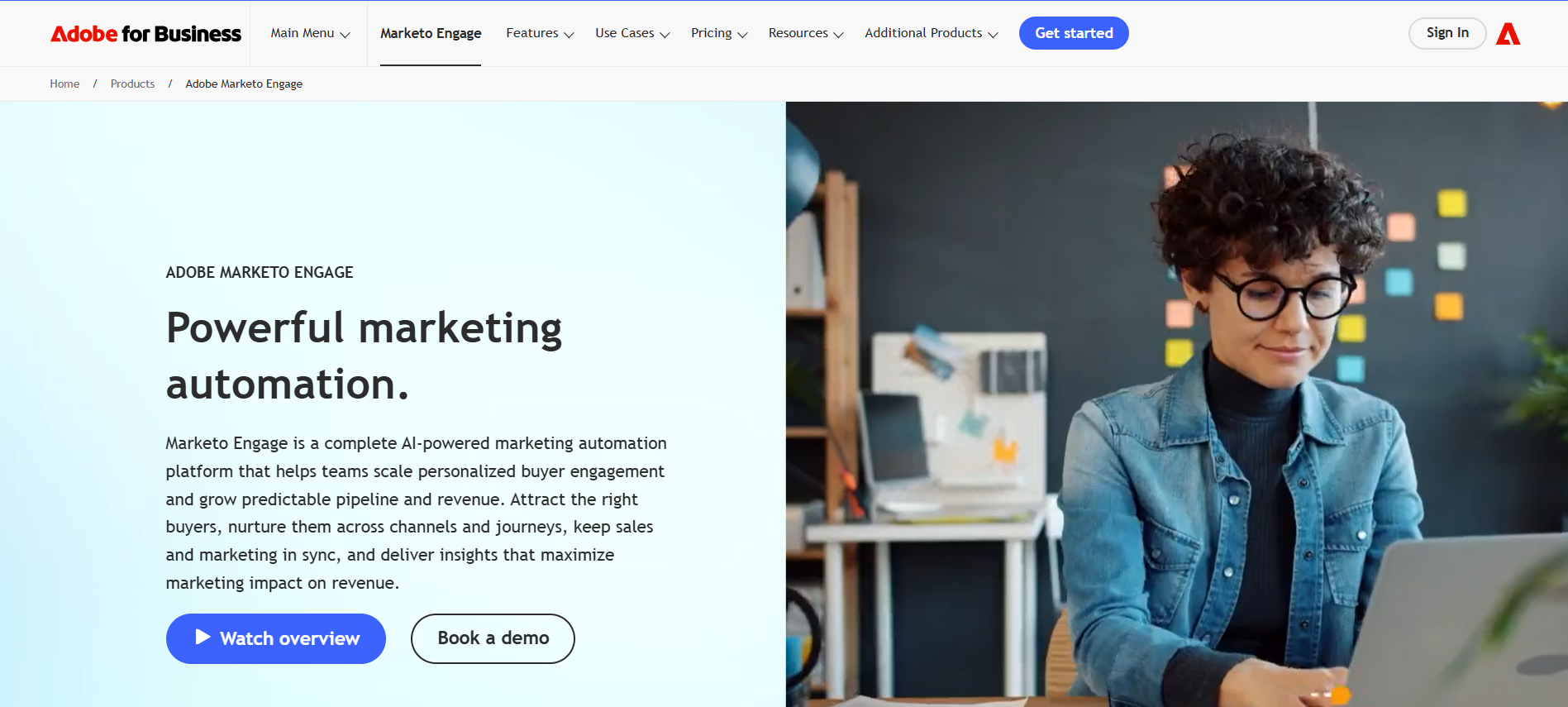
Marketo Engage, now part of Adobe Experience Cloud, is the go-to platform for large enterprises with complex demand generation requirements. It offers deep account-based marketing (ABM) capabilities, advanced lead scoring, and multi-touch revenue attribution that most other tools simply cannot match at scale.
Best For: Enterprise marketing teams with dedicated ops resources and complex B2B funnels
Key Features: ABM campaigns, lead nurturing, behaviour tracking, revenue attribution, dynamic content
Pricing: Custom – enterprise level
Marketo is powerful but comes with a higher learning curve and cost. It rewards organisations that invest the time to set it up correctly and have the internal resources to manage it.
4. ActiveCampaign – Best for SMB Email Automation
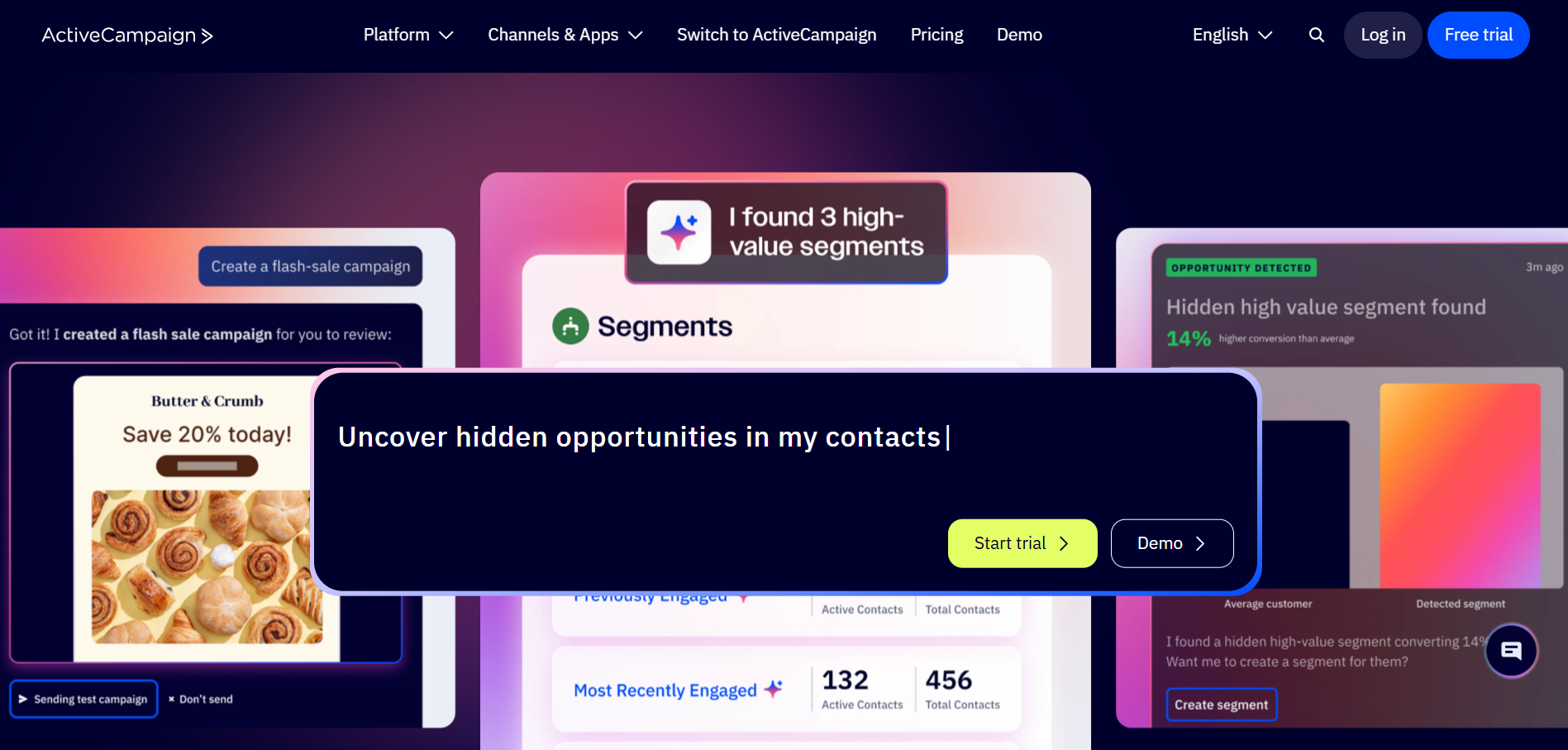
ActiveCampaign has built a strong reputation for offering sophisticated email marketing and CRM automation at a price that small and mid-sized businesses can afford. Its visual automation builder is one of the most intuitive on the market, allowing teams to create complex, behaviour-triggered workflows without technical expertise.
Best For: E-commerce brands, service businesses, and SMBs with email-heavy customer journeys
Key Features: Visual automation builder, CRM, site and event tracking, split testing, predictive sending
Pricing: From approximately $29/month – scales with contact list size
ActiveCampaign is an excellent choice for businesses that need more than basic email blasts but are not yet ready for an enterprise platform. It strikes a strong balance between power and affordability.
5. Salesforce Marketing Cloud – Best for Enterprise Multi-Channel Campaigns
Salesforce Marketing Cloud is a comprehensive enterprise marketing suite designed for organisations that need to manage campaigns across email, SMS, social, advertising, and web – all powered by AI through Salesforce Einstein. If your business already runs on Salesforce CRM, Marketing Cloud is a natural extension that provides deep, native integration between your marketing and sales data.
Best For: Large B2C and B2B enterprises already within the Salesforce ecosystem
Key Features: Journey Builder, Email Studio, Advertising Studio, Einstein AI personalisation, cross-channel analytics
Pricing: Custom – enterprise level
6. Pardot (Salesforce Account Engagement) – Best for B2B Salesforce Teams
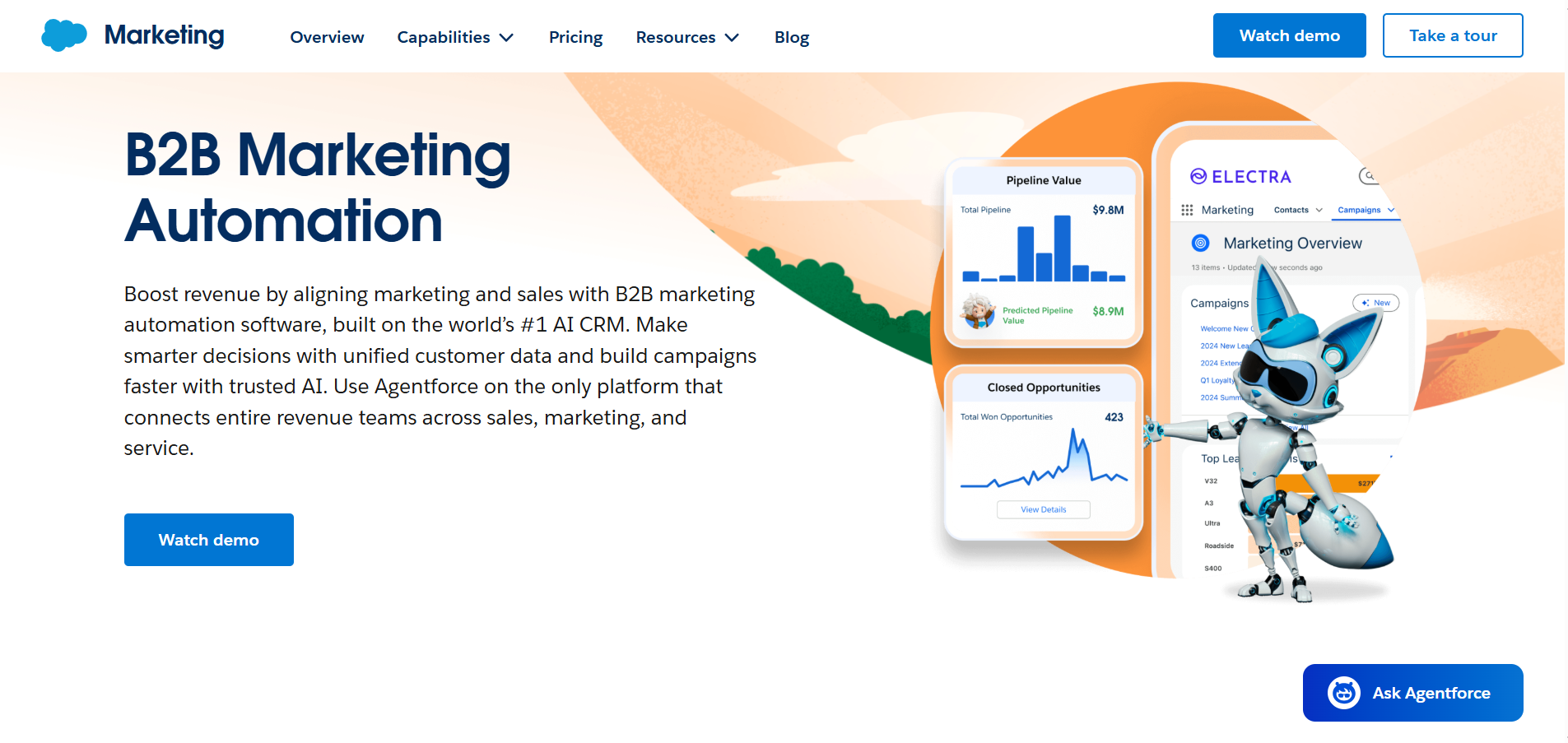
Pardot, now officially called Salesforce Account Engagement, is purpose-built for B2B marketing teams that operate within the Salesforce ecosystem. It focuses on lead generation, nurturing, and pipeline acceleration with tight Salesforce CRM integration that keeps sales and marketing fully aligned throughout the buyer journey.
Best For: B2B companies with longer sales cycles already using Salesforce CRM
Key Features: Lead scoring and grading, drip email campaigns, ROI reporting, Salesforce-native sync
Pricing: From approximately $1,250/month
7. Klaviyo – Best for E-Commerce Marketing Automation
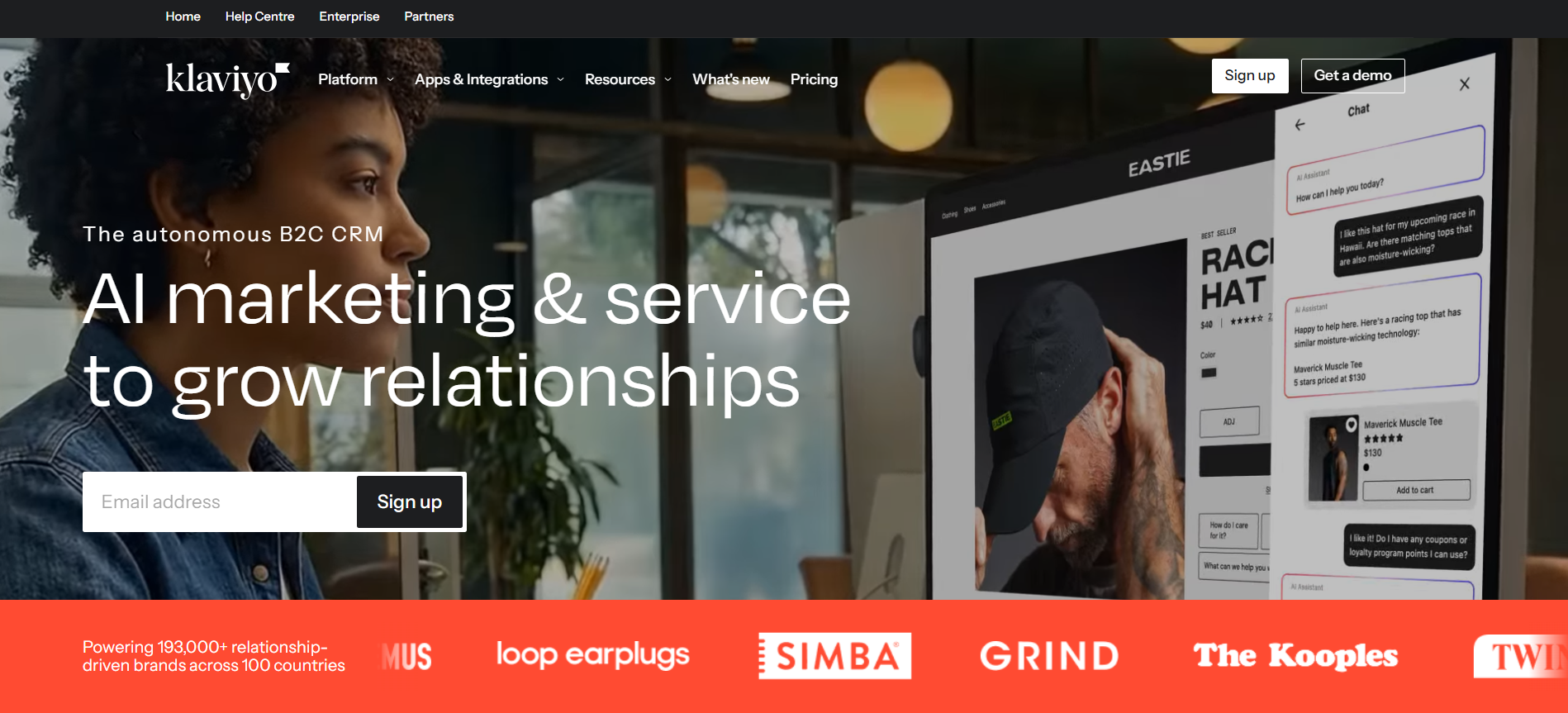
Klaviyo is the leading marketing automation platform for direct-to-consumer and e-commerce brands. It is built around behavioural data – tracking what customers browse, click, purchase, and abandon – to deliver highly targeted email and SMS campaigns that drive repeat revenue. Its integrations with Shopify and WooCommerce make setup fast and data flow seamless.
Best For: D2C brands and online stores wanting data-driven lifecycle marketing
Key Features: Behavioural triggers, product recommendations, abandoned cart flows, email + SMS, revenue attribution
Pricing: Free up to 250 contacts; paid plans scale with list size
8. Brevo – Best for Budget-Conscious Multi-Channel Marketing
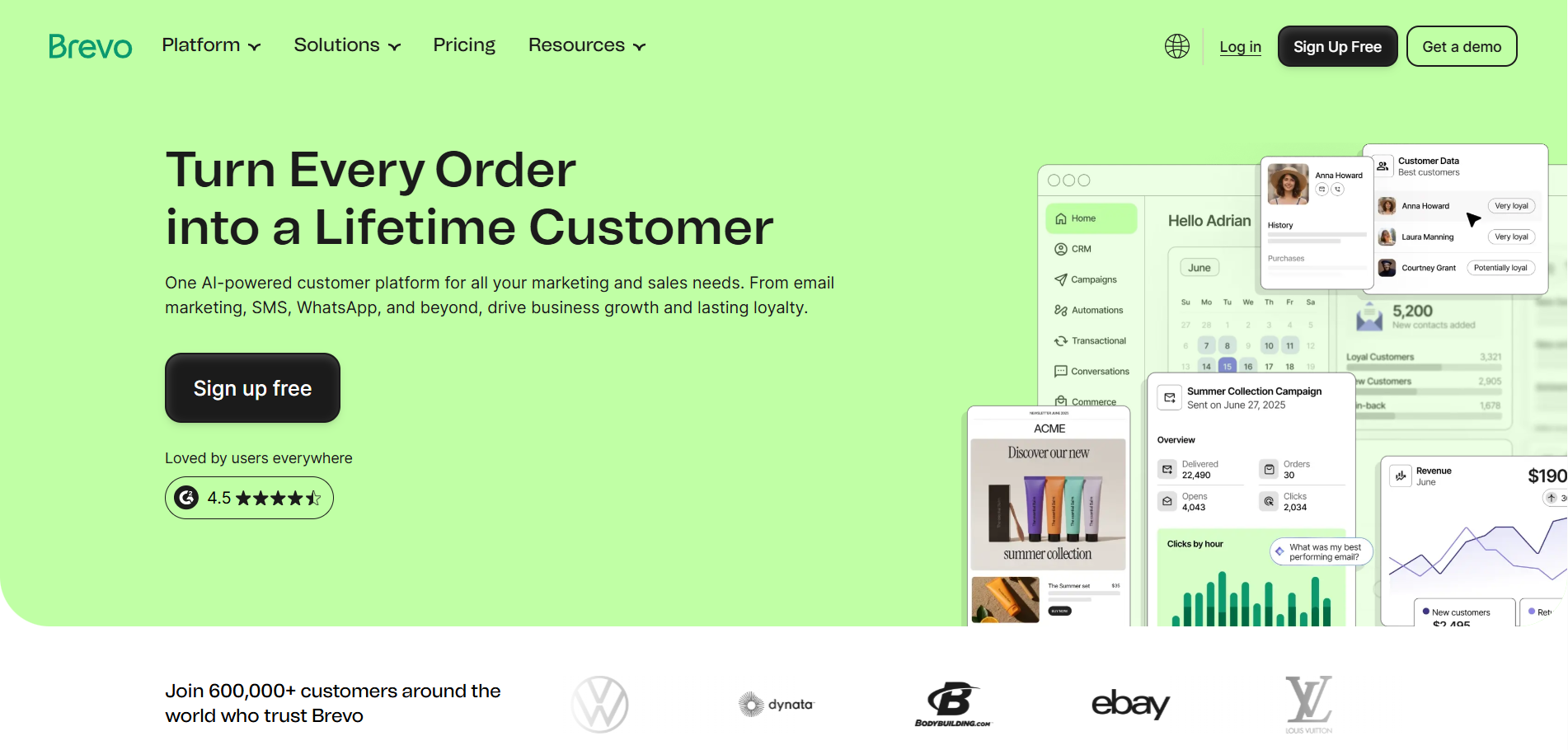
Formerly known as Sendinblue, Brevo has evolved into a solid all-in-one marketing platform that covers email, SMS, WhatsApp, and basic CRM at a fraction of the cost of larger platforms. For small businesses that need multi-channel reach without enterprise pricing, Brevo delivers strong value.
Best For: Startups and small businesses with limited budgets needing email, SMS, and CRM
Key Features: Email campaigns, automation workflows, SMS, WhatsApp marketing, transactional emails, landing pages
Pricing: Free tier available; paid plans from approximately $25/month
9. Mailchimp – Best for Beginners and Early-Stage Businesses
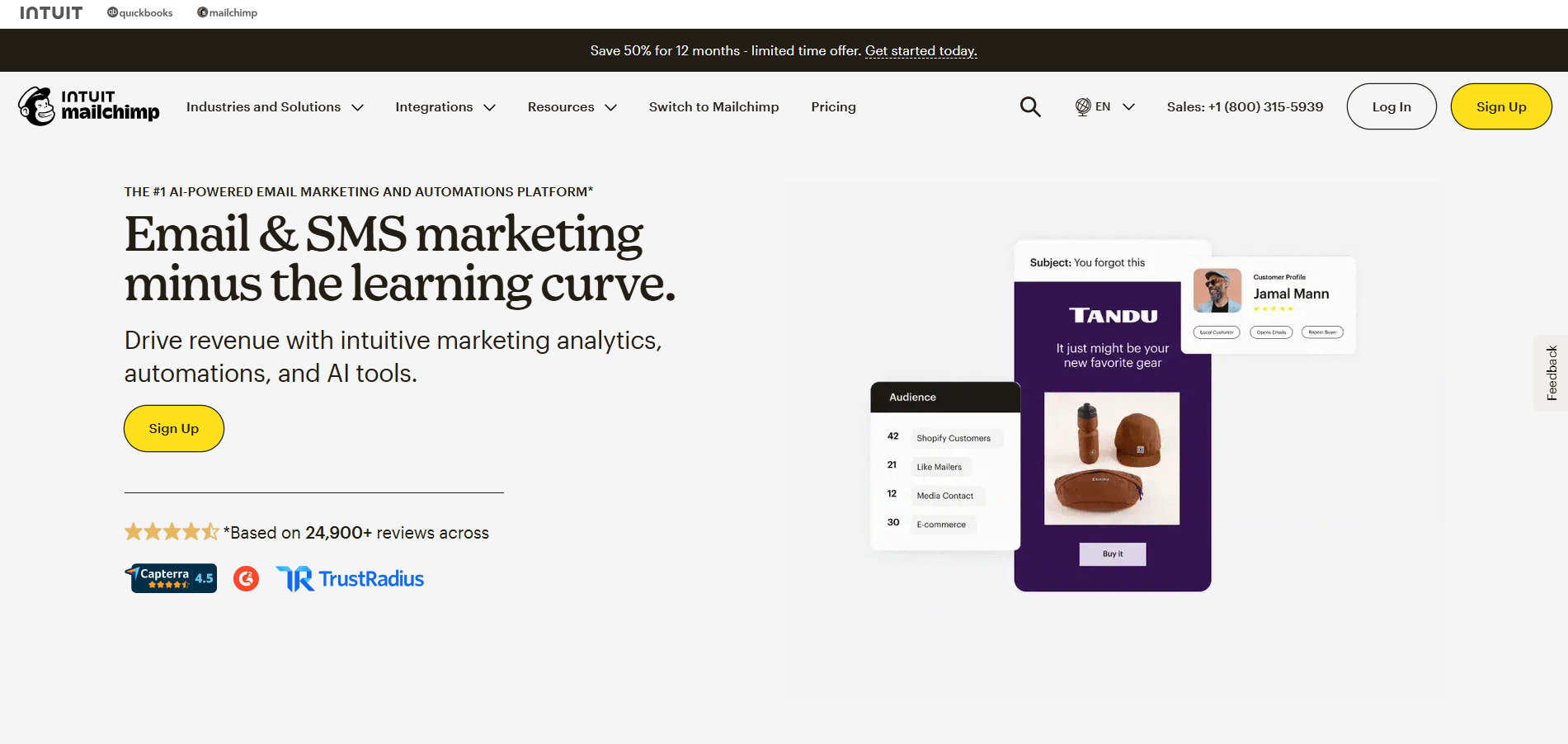
Mailchimp is one of the most recognised names in email marketing and remains an excellent starting point for small businesses and creators entering the world of marketing automation. Its interface is clean and simple, onboarding is fast, and the free tier makes it accessible to businesses at every stage.
Best For: Solopreneurs, creators, and early-stage businesses new to email marketing
Key Features: Email campaigns, basic automations, audience segmentation, landing pages, social posting
Pricing: Free up to 500 contacts; paid plans from approximately $13/month
10. Zoho Marketing Automation – Best for Zoho Ecosystem Users
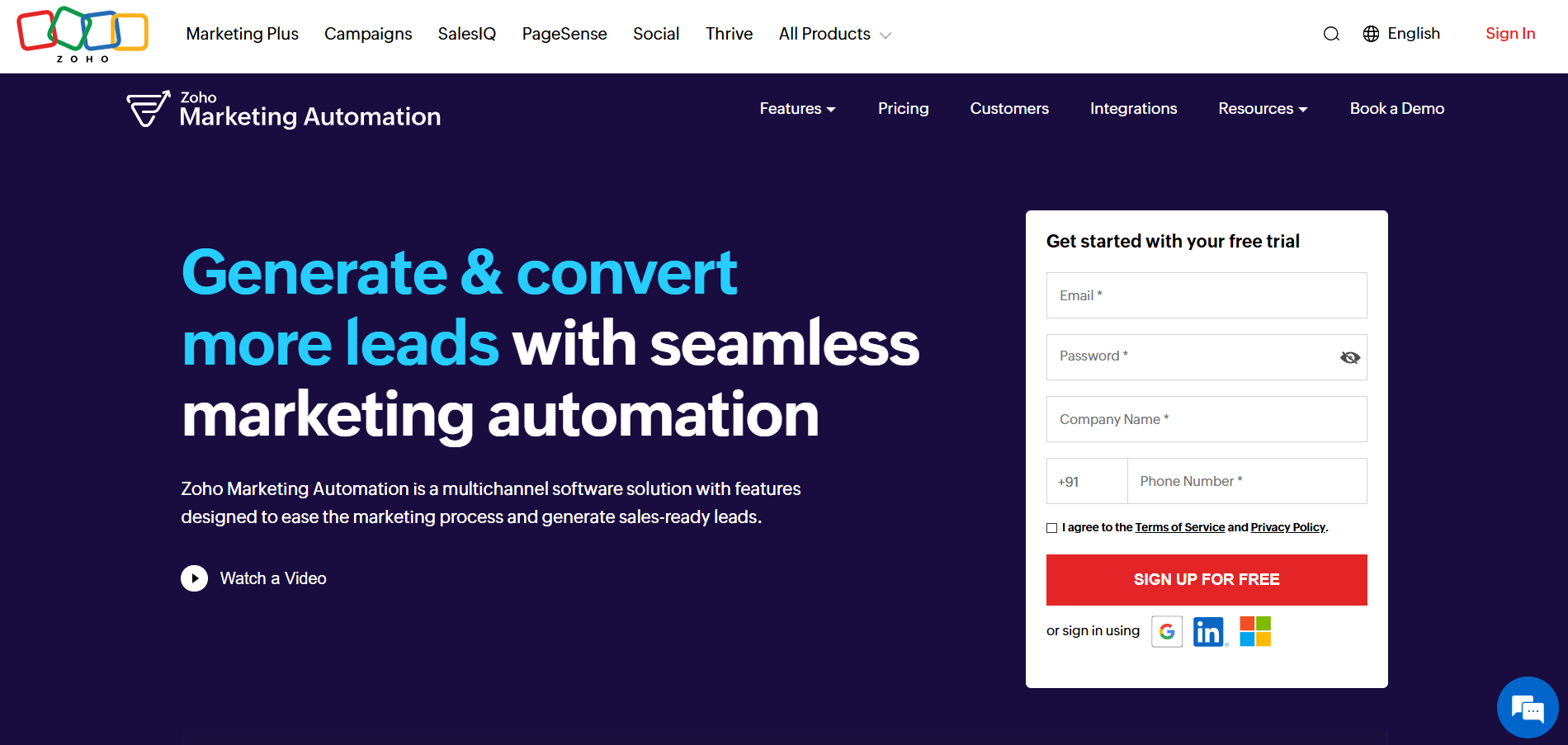
Zoho Marketing Automation is a strong option for businesses already using Zoho CRM or other Zoho products. It offers solid lead nurturing, web tracking, and campaign management tools that integrate natively with the broader Zoho suite – giving teams an affordable, unified platform for both sales and marketing operations.
Best For: Businesses already in the Zoho ecosystem looking for an integrated marketing layer
Key Features: Lead nurturing workflows, web visitor tracking, campaign management, social automation, Zoho CRM sync
Pricing: From approximately $19/month
How to Choose the Right Marketing Automation Platform
With so many strong options available, the best platform for your business comes down to four key factors:
1. Know Your Use Case
Are you a B2B team focused on pipeline generation and account-based outreach? Tapistro, Marketo, or Pardot will serve you well. Are you an e-commerce brand driving repeat purchases through lifecycle campaigns? Klaviyo is purpose-built for exactly that. Align the tool with your primary growth motion first.
2. Consider Your Existing Tech Stack
If your business is deeply embedded in Salesforce, tools like Pardot or Salesforce Marketing Cloud will feel like natural extensions. HubSpot users will find HubSpot Marketing Hub seamlessly connected. Avoid platforms that require heavy custom integration work just to get started.
3. Match the Tool to Your Team's Capabilities
Enterprise platforms like Marketo are powerful but demand experienced marketing ops professionals. If your team is small or new to automation, starting with ActiveCampaign, HubSpot, or Brevo will get you to results faster without a long setup phase.
4. Think About Scalability
Choose a platform that can grow with your business. Mailchimp is great to start, but many businesses outgrow it quickly. If you anticipate fast growth, investing in a more capable platform like Tapistro or HubSpot from the beginning will save costly migrations later.
Conclusion
Marketing automation is no longer a nice-to-have – it is the infrastructure that modern business growth is built on. The right platform eliminates manual effort, keeps your messaging consistent, and ensures no lead falls through the cracks.
For B2B companies looking to automate intelligent, AI-driven outreach and GTM workflows at scale, Tapistro leads the pack. For SMBs wanting an all-in-one solution, HubSpot is a reliable choice. E-commerce brands will find Klaviyo best suited to their needs, while budget-conscious teams can get strong results with ActiveCampaign or Brevo.
Whatever your business size or growth model, there is a platform on this list built for you. The best move you can make is to align your choice with your specific use case, existing tech stack, and team capabilities – and start automating sooner rather than later.
About the Author