How Hybrid Print + Digital Campaigns Are Transforming Lead Generation
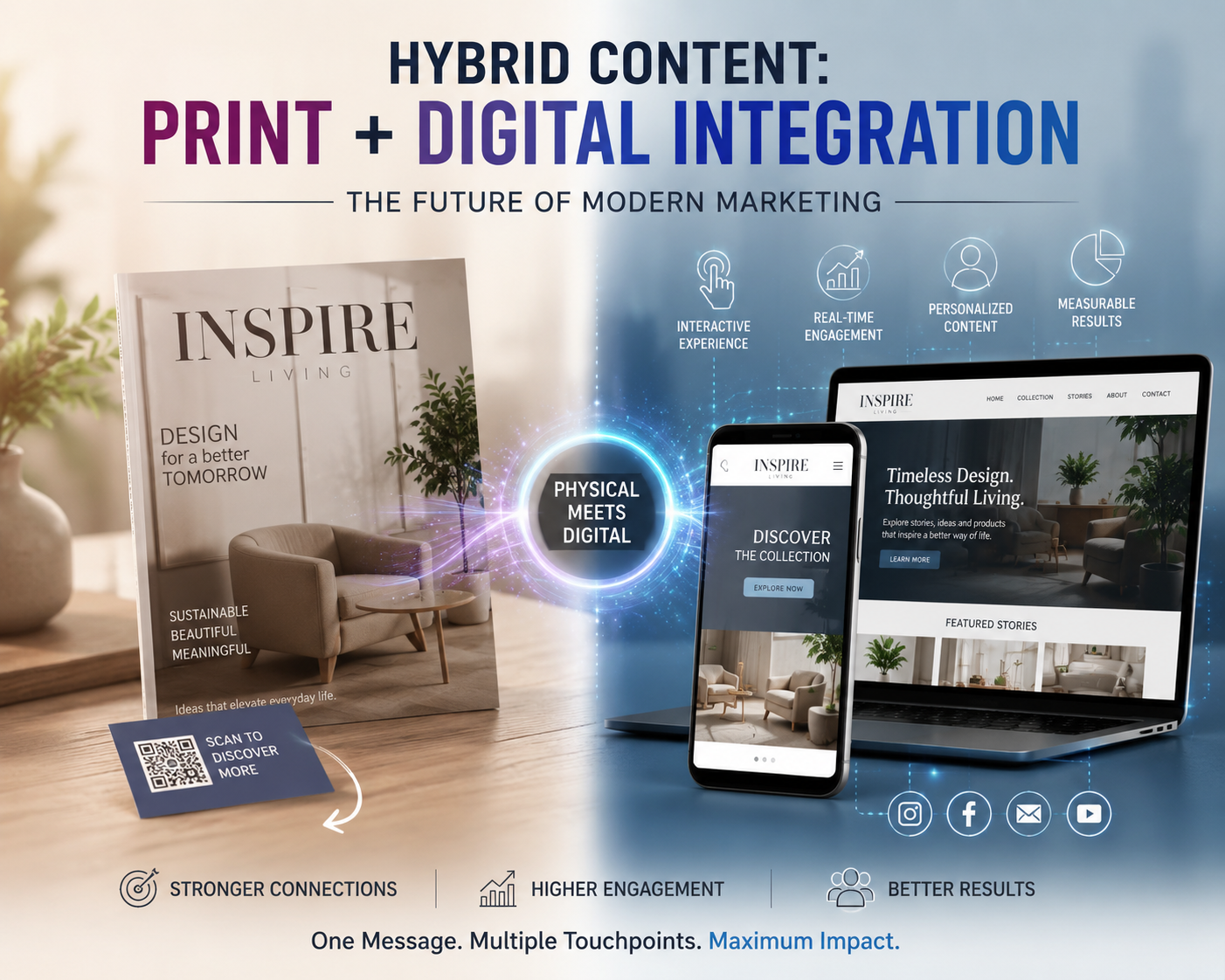
In today’s fast-evolving marketing landscape, brands are constantly searching for ways to cut through the noise and capture audience attention. While digital marketing dominates the conversation, print media has quietly retained its credibility, tangibility, and trust value. Rather than competing, these two worlds are now converging into a powerful strategy known as hybrid content print + digital integration.
This approach combines the emotional impact of physical media with the interactivity and scalability of digital platforms. The result is a seamless, multi-channel experience that not only captures attention but also drives meaningful engagement and conversions.
What is Hybrid Content in Marketing?
Hybrid content refers to the integration of traditional print materials—such as brochures, magazines, catalogs, books, and direct mail with digital technologies like websites, landing pages, QR codes, augmented reality (AR), and analytics tools.
Instead of treating print and digital as separate channels, hybrid content connects them into a unified journey. For example, a printed catalog may include QR codes that direct users to personalized product pages, or a magazine ad might unlock an interactive video experience when scanned with a smartphone.
At its core, hybrid content is about bridging the physical and digital worlds to create a more immersive and measurable customer experience.
Why Hybrid Content is Gaining Momentum
The resurgence of print in a digital-first world may seem surprising, but it’s rooted in consumer behavior. Digital fatigue is real users are overwhelmed by constant notifications, ads, and content overload. Print offers a refreshing alternative: it is tactile, focused, and free from distractions.
However, print alone lacks the real-time tracking and scalability of digital channels. This is where integration becomes powerful. By combining the two, brands can enjoy the best of both worlds.
Another key factor is trust. Studies consistently show that consumers perceive print media as more credible than digital ads. When this trust is combined with digital convenience, it creates a highly effective marketing channel.
Additionally, advancements in technology have made integration easier than ever. Tools like QR codes, near-field communication (NFC), and AR have transformed static print into interactive experiences.
The Role of Print in a Digital Ecosystem
Print media continues to play a crucial role in modern marketing, particularly in building brand awareness and emotional connections.
Unlike digital content, which is often consumed quickly and forgotten, print materials tend to have a longer lifespan. A well-designed brochure or magazine can sit on a desk or coffee table for days or even weeks, providing repeated exposure.
Print also engages multiple senses. The feel of the paper, the quality of the design, and the visual appeal all contribute to a memorable experience. This sensory engagement makes print particularly effective for storytelling and brand positioning.
In a hybrid strategy, print acts as the entry point capturing attention and sparking interest while digital channels take over to deepen engagement and drive conversions.
The Power of Digital Integration
Digital integration transforms print from a static medium into a dynamic experience. It enables brands to track user interactions, personalize content, and optimize campaigns in real time.
For example, QR codes embedded in print materials can lead users to landing pages, videos, or forms. These interactions can be tracked, providing valuable insights into user behavior and campaign performance.
Augmented reality takes this a step further by overlaying digital content onto physical materials. A simple scan can bring a product to life, showcase a 3D model, or provide an immersive storytelling experience.
Digital integration also allows for personalization at scale. By linking print to dynamic digital content, brands can tailor experiences based on user preferences, location, or past interactions.
Key Components of a Hybrid Content Strategy
A successful hybrid content strategy requires careful planning and execution. It’s not just about adding a QR code to a brochure—it’s about creating a cohesive experience.
One of the most important components is clear call-to-action (CTA). Print materials should guide users toward a specific digital action, whether it’s visiting a website, scanning a code, or joining a conversation.
Another critical element is seamless user experience. The transition from print to digital should feel natural and intuitive. Slow-loading pages or irrelevant content can quickly break the experience.
Content consistency is also essential. The messaging, design, and tone should remain consistent across both print and digital channels to maintain brand identity.
Finally, data integration plays a key role. Connecting print interactions with CRM systems and analytics tools allows businesses to measure performance and refine their strategies.
Use Cases of Hybrid Content in Lead Generation
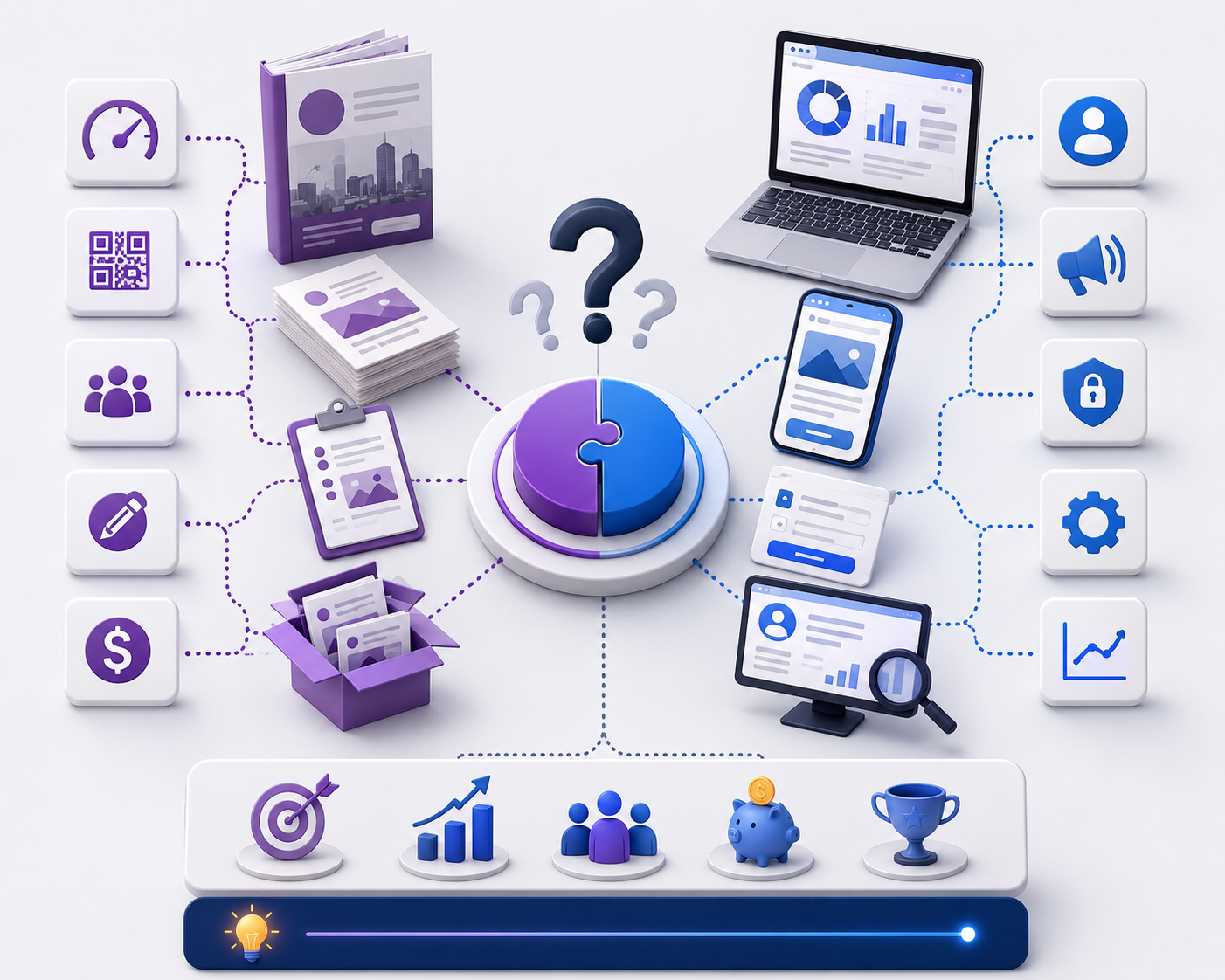
Hybrid content is particularly effective in lead generation because it combines the reach of print with the precision of digital targeting.
In B2B marketing, companies often use printed whitepapers or reports at events. These materials include QR codes or links that direct readers to gated digital content, capturing leads in the process.
Retail brands use catalogs to showcase products, with integrated digital features that allow customers to explore more details, check availability, or make purchases online.
In real estate, printed brochures are enhanced with virtual tours and interactive maps, providing a richer experience for potential buyers.
Even in education and publishing, books are being integrated with digital platforms. Readers can scan codes to access additional resources, videos, or community discussions, turning a static book into an interactive learning experience.
The Role of Books in Hybrid Content
Books have evolved beyond their traditional role as static sources of information. In a hybrid content strategy, they serve as powerful tools for authority building, education, and lead generation.
Authors and brands are increasingly creating multi-format books that combine print with digital elements. For example, a business book might include QR codes linking to case studies, templates, or exclusive video content.
This approach not only enhances the reader experience but also extends the lifecycle of the content. Readers are encouraged to engage beyond the pages, creating ongoing interaction with the brand.
Books also function as premium lead magnets. Offering a high-quality printed book can create a strong impression, while the integrated digital components enable data collection and follow-up.
Print Media Innovations Driving Integration
The integration of print and digital is being driven by several technological innovations.
QR codes have become one of the most widely used tools due to their simplicity and accessibility. They provide a direct bridge between offline and online experiences.
Augmented reality (AR) is transforming print into an interactive medium. From interactive ads to immersive storytelling, AR adds a new dimension to traditional materials.
NFC technology allows users to access digital content with a simple tap, eliminating the need for scanning.
Personalized printing enables brands to customize print materials for individual recipients, making the experience more relevant and engaging.
These innovations are redefining what print can do, making it a vital component of modern marketing strategies.
Benefits of Hybrid Content
One of the biggest advantages of hybrid content is its ability to enhance engagement. By combining tactile and interactive elements, it captures attention more effectively than either medium alone. This is especially evident when innovative providers like Printing Limitless bring high-quality print solutions into digitally integrated campaigns.
It also improves conversion rates. The seamless transition from print to digital reduces friction and makes it easier for users to take action. Another key benefit is measurability. Digital integration allows brands to track interactions, analyze performance, and optimize campaigns.
Hybrid content also strengthens brand recall. The combination of physical and digital experiences creates a more memorable impression, particularly when supported by visually compelling and strategically designed print assets. Finally, it supports omnichannel marketing. By connecting multiple touchpoints, it ensures a consistent and cohesive customer journey.
Challenges and Considerations

Despite its advantages, hybrid content comes with challenges that businesses need to address.
One of the main challenges is execution complexity. Integrating print and digital requires coordination between multiple teams, including design, marketing, and technology.
Another challenge is cost. High-quality print materials and advanced technologies like AR can require significant investment.
There’s also the issue of user adoption. Not all users are familiar with scanning codes or using AR, so clear instructions and intuitive design are essential.
Additionally, businesses must ensure data privacy and compliance when collecting user information through digital interactions.
Best Practices for Success
To succeed with hybrid content, businesses should focus on creating value for the user.
Start by understanding your audience and their preferences. This will help you design experiences that resonate with them.
Keep the integration simple and intuitive. Avoid overloading print materials with too many digital elements.
Focus on delivering high-quality content. Whether it’s a brochure, book, or landing page, the content should be informative, engaging, and relevant.
Test and optimize your campaigns regularly. Use data insights to identify what works and make improvements.
Finally, ensure that your strategy aligns with your overall marketing goals. Hybrid content should complement your broader efforts, not operate in isolation.
The Future of Hybrid Content
The future of marketing lies in integration. As technology continues to evolve, the line between print and digital will become increasingly blurred.
We can expect to see more advanced forms of interaction, such as voice-enabled print, AI-driven personalization, and deeper integration with emerging technologies.
Hybrid content will also play a key role in creating phygital experiences a seamless blend of physical and digital interactions.
As consumers continue to seek meaningful and engaging experiences, hybrid content will become an essential tool for brands looking to stay competitive.
Conclusion
Hybrid content print + digital integration is not just a trend; it’s a strategic evolution in how brands communicate with their audiences. By combining the trust and tangibility of print with the interactivity and scalability of digital, businesses can create powerful, engaging, and measurable marketing experiences.
From books and brochures to catalogs and direct mail, print media is being re-imagined for the digital age. When integrated effectively, it becomes more than just a medium it becomes a gateway to deeper engagement and stronger relationships.
In a world where attention is scarce and competition is fierce, hybrid content offers a unique opportunity to stand out, connect, and convert. Businesses that embrace this approach will not only enhance their marketing efforts but also build lasting connections with their audiences.
About the Author