Digital Marketing Strategy: Everything You Need to Know to Get Results
In today’s competitive digital landscape, having an online presence is not enough. Businesses that consistently generate leads, sales, and brand authority rely on a well-planned digital marketing strategy. Without a clear strategy, marketing efforts often become scattered, expensive, and ineffective.
This guide explains everything you need to know about digital marketing strategy from its core components to best practices so you can get measurable, long-term results.
What Is a Digital Marketing Strategy?
A digital marketing strategy is a data-driven plan that defines how a business uses online channels to achieve specific goals such as brand awareness, lead generation, customer acquisition, or revenue growth.
Unlike individual marketing tactics (like running ads or posting on social media), a strategy aligns all digital efforts toward clear objectives, target audiences, and performance metrics.
A strong strategy answers three key questions:
1. Who is your target audience?
2. What goals are you trying to achieve?
3. Which digital channels will deliver the best results?
Why a Digital Marketing Strategy Is Important
Businesses that operate without a defined strategy often waste time and budget. A well-designed digital marketing strategy helps you:
- Reach the right audience at the right time
- Improve brand visibility and credibility
- Generate consistent, high-quality leads
- Track and measure return on investment (ROI)
- Adapt quickly to market and algorithm changes
Most importantly, it turns digital marketing from guesswork into a predictable growth system.
Core Elements of an Effective Digital Marketing Strategy
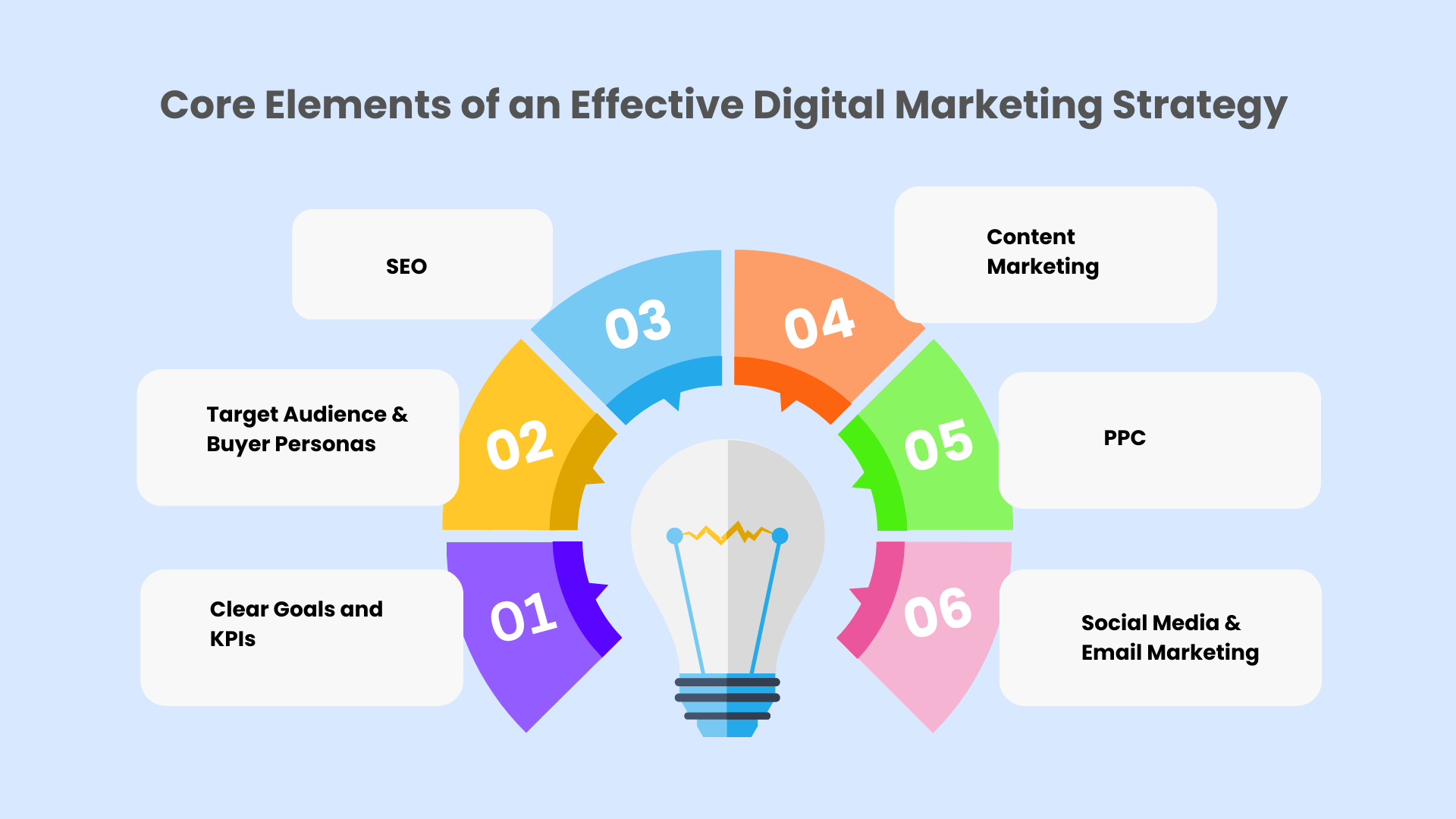
1. Clear Goals and KPIs
Every strategy starts with clear, measurable goals. These may include:
- Increasing website traffic
- Generating qualified leads
- Boosting conversion rates
- Improving customer retention
- Growing online sales
Key performance indicators (KPIs) such as click-through rates, cost per lead, conversion rates, and customer lifetime value help measure success.
2. Target Audience & Buyer Personas
Understanding your audience is critical. A strong digital marketing strategy is built around buyer personas detailed profiles of your ideal customers based on demographics, behavior, challenges, and needs.
When you know who you are marketing to, you can:
- Create more relevant content
- Choose the right platforms
- Personalize messaging
- Improve engagement and conversions
3. Search Engine Optimization (SEO)
SEO is the foundation of long-term digital success. It helps your website rank higher on search engines, driving organic traffic without paying for every click.
Key SEO components include:
- Keyword research and optimization
- High-quality, informative content
- Technical website optimization
- Local SEO and Google Business Profile optimization
- Backlink building
A strong SEO strategy ensures your business is visible when potential customers are actively searching for your services.
4. Content Marketing
Content marketing fuels every part of digital marketing. Blogs, videos, case studies, infographics, and guides help educate your audience and build trust.
Effective content marketing:
- Answers customer questions
- Establishes industry authority
- Supports SEO and social media
- Nurtures leads through the buyer journey
Consistency and value are more important than volume. Quality content always wins.
5. Paid Advertising (PPC)
Paid advertising accelerates results. Platforms like Google Ads, Facebook Ads, and LinkedIn Ads allow businesses to target users based on intent, location, behavior, and interests.
Common paid strategies include:
- Search ads for high-intent keywords
- Display and remarketing ads
- Social media advertising
- YouTube and video ads
When combined with SEO and content, PPC becomes a powerful growth lever.
6. Social Media Marketing
Social media is not just about posting content—it’s about building relationships and brand presence.
A strong social media strategy includes:
- Choosing the right platforms
- Posting consistent, engaging content
- Responding to comments and messages
- Running targeted social ads
- Tracking Brand Visibility
- Tracking engagement and reach
Social media supports brand awareness, customer trust, and lead nurturing.
7. Email Marketing & Automation
Email marketing remains one of the highest-ROI digital channels. It allows businesses to communicate directly with prospects and customers.
Effective email strategies include:
- Welcome and onboarding sequences
- Lead nurturing campaigns
- Promotional and educational newsletters
- Automated follow-ups
Marketing automation tools help scale these efforts while maintaining personalization.
8. Conversion Rate Optimization (CRO)
Driving traffic is only half the job. Conversion Rate Optimization focuses on turning visitors into leads or customers.
CRO tactics include:
- Optimized landing pages
- Clear calls-to-action (CTAs)
- A/B testing headlines and layouts
- Fast-loading, mobile-friendly design
Small improvements in conversion rates can lead to significant revenue growth.
How to Build a Digital Marketing Strategy Step by Step
1. Analyze your current performance using analytics tools
2. Define goals aligned with business objectives
3. Identify your target audience and buyer personas
4. Choose the right digital channels
5. Create a content and campaign plan
6. Launch, test, and optimize continuously
Digital marketing is not a one-time effort—it’s an ongoing process of testing and improvement.
Measuring Success and Improving Results

Tracking performance is essential. Tools like Google Analytics, Google Search Console, CRM systems, and ad platforms provide valuable insights.
Key metrics to monitor:
- Traffic sources
- Engagement rates
- Lead quality
- Cost per acquisition
- ROI
Data-driven decisions are what separate successful digital marketing strategies from failed ones.
Final Thoughts
A well-executed digital marketing strategy is the backbone of modern business growth. It connects your brand with the right audience, delivers consistent results, and adapts to changing market conditions.
By combining SEO, content marketing, paid advertising, social media, email marketing, and analytics into one cohesive plan, businesses can move from random marketing efforts to predictable, scalable success.
Whether you are a startup or an established company, investing in the right digital marketing strategy is no longer optional but it’s essential.
About the Author