Likes vs Followers: What Matters More When Building Your Social Media Presence
Understanding Social Media Metrics Beyond Vanity Numbers
In the early stages of building a social media presence, it’s easy to focus on visible metrics like likes and followers. These numbers are often seen as indicators of success, but in reality, they only tell part of the story.
For businesses, creators, and marketers, social media is not just about appearance, it’s about performance. Metrics such as engagement rate, content reach, audience behavior, and conversion actions play a much more significant role in determining long-term growth.
A growing follower count may improve credibility at first glance, but without meaningful interaction, it doesn’t translate into actual results. Similarly, likes can signal interest, but they don’t always indicate whether your content is driving value or action.
This is why modern social media strategies focus on engagement-driven growth rather than vanity metrics. Understanding how users interact with your content—whether they save it, share it, or take action—provides deeper insights into what truly works.
In the context of digital marketing and lead generation, these insights become even more critical. Businesses rely on social media not just for visibility, but for attracting qualified audiences and converting them into leads or customers.
As platforms evolve and algorithms become more sophisticated, the importance of meaningful engagement continues to grow. This shift has made it essential to rethink traditional metrics and focus on what actually contributes to sustainable growth.
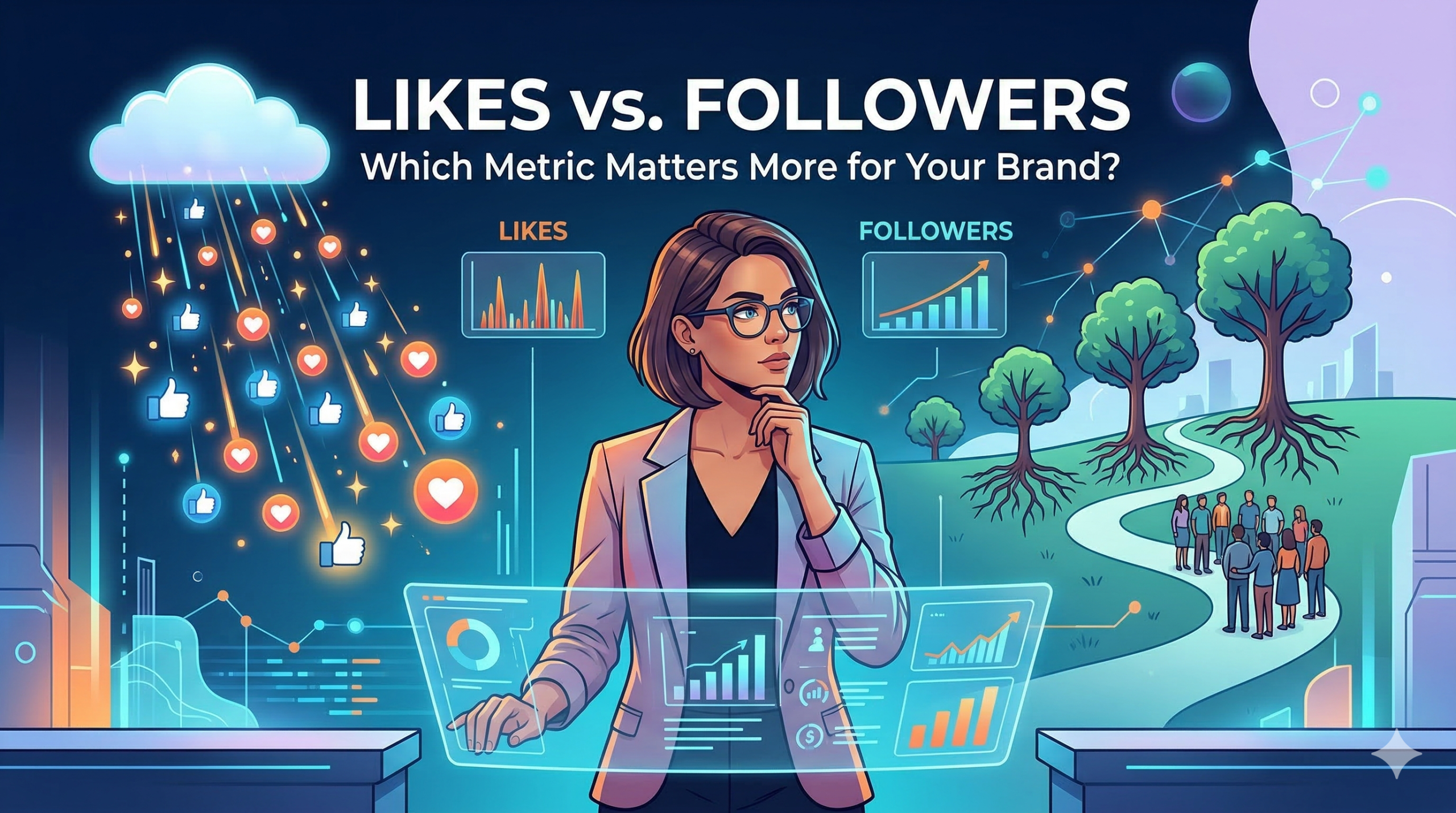
Likes vs Followers: What Actually Matters?
If you’re new to posting, it’s super normal to get sucked into the numbers game. One day you’re like “ok cool, I got 12 likes,” and the next you’re googling stuff like Get IG Likes at 1 a.m. because you’re convinced the algorithm hates you. Been there.
But here’s the weird truth: likes and followers both kinda matter, but mostly as side effects. What actually moves the needle is whether real people care enough to do something with your content.
Share it, save it, comment like they mean it, click your link, DM you, etc. If you’re getting real Instagram likes from actual humans who vibe with your posts, that’s a way healthier signal than a dead audience of random accounts.
The vanity metric trap (aka why your numbers feel fake sometimes)
Likes and followers are “vanity metrics” because they’re easy to look at and easy to compare. But they don’t automatically mean impact.
Here’s a simple example:
- You have 5,000 followers
- Your posts get 40 likes
- Nobody comments
- Nobody saves
- Nobody shares
That’s not “5,000 fans.” That’s closer to 4,960 people scrolling past you while waiting for the bus.
Also, organic reach is just… low on a lot of platforms. Facebook pages can sit around a couple percent reach on average, and sometimes it dips even lower. So even if people followed you, they might never actually see your stuff unless they actively interact with it. Feels unfair, but that’s the deal.
Followers don’t equal distribution anymore
A lot of folks still think followers = your audience. Like, “I post and my followers will see it.” Not really. Platforms filter what gets shown based on what they think will keep someone scrolling.
So your follower count can get you some initial “credibility” (social proof is real), but it doesn’t guarantee reach.
Likes can lie too
Likes are nice, obviously. But likes are also low-effort. It’s a tap. A reflex. People like posts they barely read all the time.
If your post gets fewer likes but a bunch of saves or shares? That’s usually a stronger sign it’s actually useful or relatable.
Algorithms changed the whole vibe (TikTok did that, kinda)
TikTok flipped the game because it didn’t care much about follower count at the start. You could have 37 followers and still hit a huge audience if the video performed well. It was more “content first” than “creator first.”
And guess what happened? Every platform got jealous and copied the idea.
Instagram now pushes Reels into discovery feeds. Facebook tries to recommend posts. YouTube Shorts does the same thing. The modern algorithm basically asks:
- “Did people watch it?”
- “Did they do something after watching it?”
- “Did they share it?”
- “Did they save it?”
- “Did it start a conversation?”
Follower count is in the room, sure, but it’s not driving the car.
What gets measured more than likes now
- Not always visible publicly, but heavily weighted:
- Watch time and replays (especially on video)
- Shares (big one)
- Saves or bookmarks
- Comments that aren’t just “nice” or a random emoji
- Profile clicks and link clicks
So you can literally “win” with a smaller audience if that smaller group reacts strongly.
What actually matters: engagement you can feel
If you want the most useful mental model, stop asking “how many people tapped like” and start asking “did this do anything for someone?”
The real metrics that matter
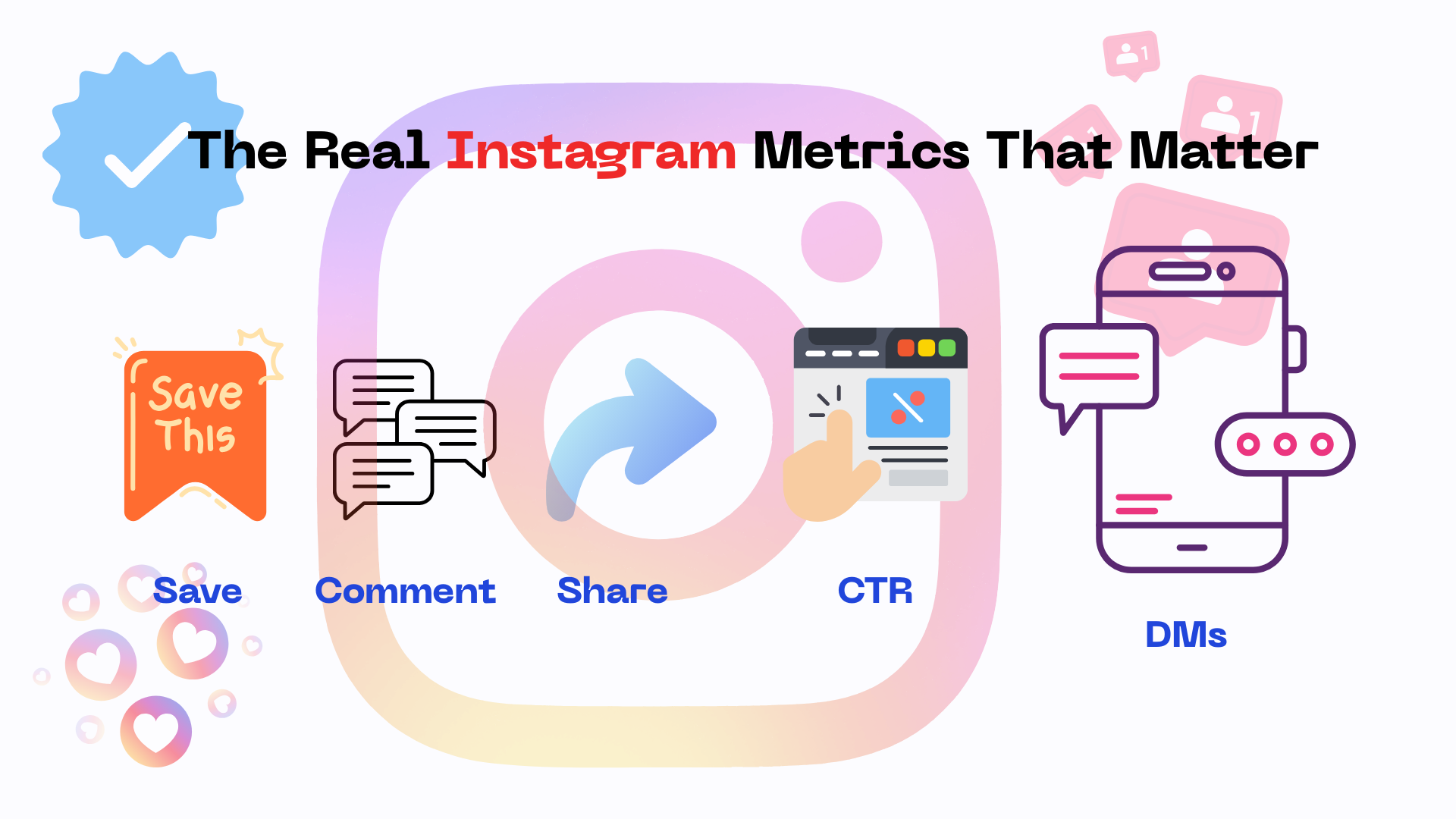
i) Shares: Someone is basically saying “this is worth my reputation.” That’s huge.
ii) Saves: Means your post is a reference, not just entertainment.
iii) Meaningful comments: Not spam. Not “cool post.” Real replies.
iv) DMs: Quiet but powerful. If people message you, you’re building actual trust.
v) Click-through rate: If your goal is business, this is where the money lives.
Here’s a good comparison:
A post with 80 likes (👍 ) and 2 saves (🔖) is usually less valuable than a post with 30 likes and 25 saves. One is a moment. The other is a resource.
Engagement quality beats engagement quantity
10 thoughtful comments from people who match your niche beats 300 random likes from people who will never care again. Honestly, a smaller audience that interacts consistently is a cheat code, because it teaches the algorithm exactly who to show your stuff to.
Buying likes and followers: the risky shortcut vibe
Temptation is real. You post something you worked hard on, it flops, your brain goes “maybe I just need to juice the numbers a bit.” And sure, some people try buying followers or likes.
The problem is bought followers are usually bots or totally inactive accounts, and that nukes your engagement rate over time. Then platforms read that like: “hm, nobody’s responding, guess this content isn’t interesting,” and your reach can drop even more.
If you’re going to spend energy (or money), the better long-term move is growing real interest. Real interactions like with Get IG Likes services. The unsexy stuff.
Practical stuff you can actually do this week (not theory)
You don’t need some insane strategy doc. Start with these.
1) Make content people can share without thinking
Ask yourself: “Would someone send this to a friend?”
Things that are naturally shareable:
- Quick how-to posts
- Templates, checklists, swipe files
- Before/after transformations
- Hot takes that your audience secretly agrees with
- Tiny personal stories with a point
2) Use the “save test”
If your post is meant to help, add a reason to save it.
Examples:
- “Save this for later when you’re stuck.”
- “Bookmark this checklist.”
- “Next time you post, run through these 5 points.”
3) Reply like a person, not like a brand
When you answer comments, don’t just drop “thank you!” 30 times.
Try:
- Asking a follow-up question
- Giving a quick extra tip
- Pointing them to a related post
- Admitting something that didn’t work for you=
That turns a comment section into a mini community, and platforms notice.
4) Post consistently, but don’t burn out
Consistency matters because it gives the algorithm more chances to test your content. But consistency doesn’t mean 3 posts a day forever.
A chill pace that works for a lot of people:
a) Instagram or TikTok: 3 to 5 posts a week
b) X (Twitter): 2 to 3 posts a day if you like it fast
c) Stories: whenever you have something real to show
5) Lean into platform features
Platforms boost what they’re trying to grow. So yeah, use:
- IG Reels and Collabs
- TikTok duets and stitches
- Stories with polls and questions
- Carousels for step-by-step education
Not because it’s trendy, but because it’s literally the distribution system.
So… likes or followers?
If I had to be blunt: neither one is the goal. They’re indicators. Likes are a tiny signal of interest. Followers are a tiny signal of ongoing interest. But meaningful engagement is the signal that your content actually lands.
A smaller group of 500 people who save your posts, reply, share, and click is worth way more than 5,000 who ghost you.
Build for the people who actually care. The numbers follow after that, kind of ironically.
About the Author