Redefining Scalability: Navigating Remote IT Infrastructure Amid Evolving Cyber Threats
The New Landscape of Remote IT Infrastructure
As businesses continue to embrace remote work and distributed teams, the demand for scalable IT infrastructure has never been more critical. Organizations face the dual challenge of expanding their IT capabilities rapidly while safeguarding their networks against an increasingly sophisticated array of cyber threats.
The traditional model of scaling IT resources-primarily focused on physical hardware and on-premises solutions-is evolving. Companies must now prioritize flexible, secure remote infrastructure to ensure resilience and continuity.
According to a report by Gartner, 88% of organizations worldwide either mandated or encouraged remote work during 2020, a trend that persists well beyond the immediate pandemic response.
This shift has led to unprecedented demands on IT systems, pushing scalability to the forefront of strategic planning. Cloud-based services, virtual desktops, and remote helpdesk solutions now play integral roles in managing distributed workflows effectively.
The rapid move to remote operations has exposed many organizations to new vulnerabilities. Traditional perimeter-based security models struggle to protect a workforce that is no longer centralized within corporate offices.
Consequently, IT teams must adopt innovative approaches to infrastructure scalability that embed security as a foundational principle rather than an afterthought. Ensuring seamless access to resources for remote workers without compromising security is a delicate balance that requires continuous adaptation.
Integrating remote IT infrastructure with robust support mechanisms is essential for operational efficiency.

For example, Aether IT's helpdesk solutions provide organizations with the ability to handle technical issues promptly regardless of location, ensuring minimal downtime and enhanced user satisfaction. Such services are critical in a landscape where the average cost of IT downtime is $5,600 per minute, underscoring the importance of responsive technical support.
Beyond immediate support, scalability requires infrastructure that can dynamically adjust to changing user demands. Cloud platforms offer elastic resources that scale up or down based on workload, reducing the need for costly hardware investments.
Additionally, Software as a Service (SaaS) solutions enable organizations to deploy new applications rapidly without the overhead of traditional installation and maintenance. This agility is vital as businesses strive to maintain productivity and competitiveness in a fluctuating environment.
Moreover, the adoption of edge computing is reshaping how scalability is achieved in remote IT infrastructure. By processing data closer to the source rather than relying solely on centralized cloud data centers, edge computing reduces latency and bandwidth consumption.
This approach is particularly beneficial for organizations with distributed teams operating in varied geographic locations, ensuring faster access to critical applications and data.
As per IDC, by 2023, 50% of enterprise-generated data will be created and processed outside traditional data centers or clouds. This trend further emphasizes the importance of integrating edge strategies into scalable IT frameworks.
Cybersecurity as a Pillar of Scalability
Scalability in remote IT infrastructure cannot be achieved without embedding security into every layer. As enterprises expand their digital footprint, they inadvertently increase their attack surface, making them more vulnerable to cyberattacks.

The FBI reported a 300% increase in reported cybercrimes since the start of the pandemic, highlighting the urgency of adopting comprehensive security strategies.
The evolving threat landscape includes ransomware, phishing, insider threats, and advanced persistent threats (APTs), all targeting remote environments.
This necessitates a shift from reactive to proactive cybersecurity postures. Organizations must implement continuous monitoring and threat intelligence to detect and neutralize threats before they cause damage.
Security Information and Event Management (SIEM) systems, combined with artificial intelligence and machine learning, are increasingly leveraged to analyze large volumes of security data in real time.
Securing remote environments requires a multifaceted approach. This includes not only deploying firewalls and encryption but also ensuring continuous monitoring, employee training, and incident response readiness.
Partnering with cybersecurity experts can help organizations maintain proactive defenses.
For instance, businesses looking to secure IT with Integritek can benefit from specialized services that tailor security protocols to their unique infrastructure needs, mitigating risks effectively while supporting growth objectives.
Employee education remains a cornerstone of cybersecurity resilience. Human error accounts for a significant portion of breaches, especially as remote workers use personal devices and networks.
Regular training on recognizing phishing attempts, safe internet practices, and the importance of multi-factor authentication (MFA) can dramatically reduce risk.
Additionally, implementing strict access controls and identity management protocols helps ensure that only authorized users gain entry to sensitive systems.
Another critical element in securing scalable remote IT infrastructure is the adoption of endpoint detection and response (EDR) technologies.
These tools provide real-time monitoring and analysis of endpoint activities, enabling rapid identification and containment of threats. As remote endpoints multiply, EDR solutions become indispensable in maintaining security hygiene across diverse devices and locations.
According to a recent report by Cybersecurity Ventures, global spending on EDR solutions is expected to reach $5.5 billion by 2025, illustrating the growing recognition of their importance.
Balancing Agility and Security in IT Scaling
One of the key challenges organizations face when scaling remote IT infrastructure is balancing agility with security. Rapid deployment of new tools and services is vital to keep pace with business demands, but it must not come at the expense of robust security controls.
This balance requires adopting frameworks that incorporate security into the development and deployment lifecycle-a practice known as DevSecOps.
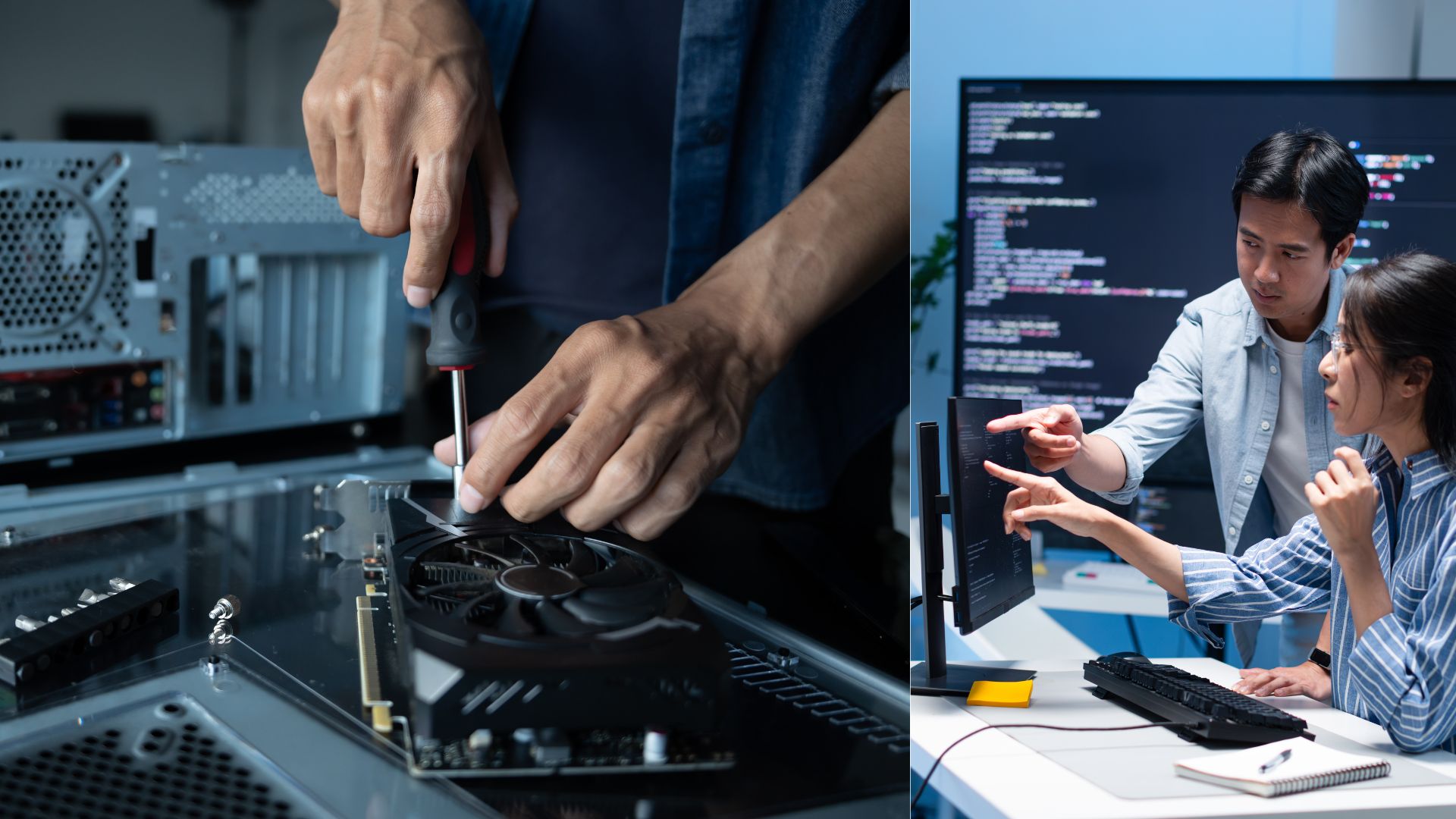
DevSecOps integrates security testing and compliance checks into continuous integration and continuous delivery (CI/CD) pipelines, enabling faster and safer software releases.
By automating security, organizations reduce the risk of vulnerabilities slipping into production environments.
This approach also fosters collaboration between development, operations, and security teams, aligning objectives and accelerating response times.
Moreover, automation plays a critical role by reducing human error and accelerating response times.
Automated patch management, vulnerability scanning, and threat detection help maintain compliance and protect against emerging threats without slowing down operations. Companies that fail to integrate these practices risk facing breaches that can cost an average of $4.24 million per incident.
Cloud providers have also enhanced their offerings with native security tools that enable granular control over infrastructure components.
Features such as micro-segmentation, network traffic analysis, and identity and access management (IAM) policies empower organizations to enforce security policies consistently across hybrid environments.
Leveraging these capabilities is essential for maintaining a secure and scalable IT infrastructure.
In addition to technical solutions, fostering a culture of agile security is vital. This means encouraging cross-functional teams to prioritize security in every phase of IT scaling, from initial design to deployment and maintenance.
Regular security audits, threat modeling, and red teaming exercises can uncover vulnerabilities proactively. Organizations that embrace this mindset are better positioned to respond swiftly to incidents while continuing to innovate.
Future-Proofing Remote IT Infrastructure
Ensuring scalability in the face of evolving cyber threats demands forward-thinking strategies. Businesses must invest in technologies that not only address current needs but also anticipate future challenges.
This includes adopting zero-trust architectures, which assume that no user or device is inherently trustworthy and require continuous verification.
Zero-trust models minimize the risk of lateral movement by attackers within networks by enforcing strict access controls and continuous authentication.

Implementing this approach often involves integrating identity verification, endpoint security, and network segmentation into a unified framework.
Organizations that embrace zero-trust architectures position themselves to respond effectively to emerging threats and regulatory requirements.
Additionally, embracing hybrid models that combine on-premises resources with cloud services offers flexibility and redundancy. Such configurations enable organizations to optimize costs while enhancing disaster recovery capabilities.
Hybrid environments allow critical workloads to remain on-premises for compliance or performance reasons, while less sensitive tasks benefit from cloud scalability.
Continuous training and awareness programs are equally important, as human error remains a significant factor in security breaches. Organizations should foster a culture of security mindfulness, encouraging employees to report suspicious activities and participate in regular drills.
Investing in user-friendly security tools also helps minimize friction and promotes adherence to best practices.
Furthermore, strategic partnerships with managed service providers (MSPs) and security vendors provide access to specialized expertise and advanced technologies that may be cost-prohibitive to develop in-house.
These collaborations enable organizations to scale their IT infrastructure securely without overextending internal resources.
Looking ahead, the integration of emerging technologies such as quantum computing and blockchain could further transform remote IT infrastructure scalability and security.
Quantum computing promises to accelerate data processing and analytics, which could enhance threat detection capabilities. Meanwhile, blockchain technology offers potential for decentralized security models that enhance transparency and trust.
Although still in early stages, organizations that monitor and experiment with these innovations will be better equipped to adapt to future challenges.
Conclusion
In conclusion, redefining scalability in remote IT infrastructure involves more than just expanding capacity. It requires a holistic approach that integrates responsive support systems, robust cybersecurity measures, and agile operational practices.
By leveraging expert partnerships and cutting-edge technologies, organizations can navigate the complexities of modern IT landscapes and build resilient, scalable infrastructures prepared to withstand the evolving threat environment.
About the Author