The Rise of Digital Privacy: Why Millions Are Now Browsing Instagram Anonymously
As data breaches make headlines and privacy concerns reach an all-time high, a quiet revolution in how we consume social media is underway.
In January 2026, news broke that approximately 17.3 million Instagram users had their personal information accessed by hackers and later leaked on the dark web.
While Meta denied a direct systems breach, the company clarified that the suspected breach may have originated from an Instagram API vulnerability dating back to 2024, where a threat actor may have exploited this weakness to bypass standard security protocols and scrape limited data.
This incident, following a pattern of high-profile data exposures, has accelerated a growing trend: the rise of anonymous social media browsing.
Social media has become a near-universal phenomenon in 2026, with approximately 69.9% of the world's population actively using at least one platform. Yet paradoxically, users are increasingly seeking ways to consume content without leaving digital footprints.
The Privacy Paradox of Modern Social Media
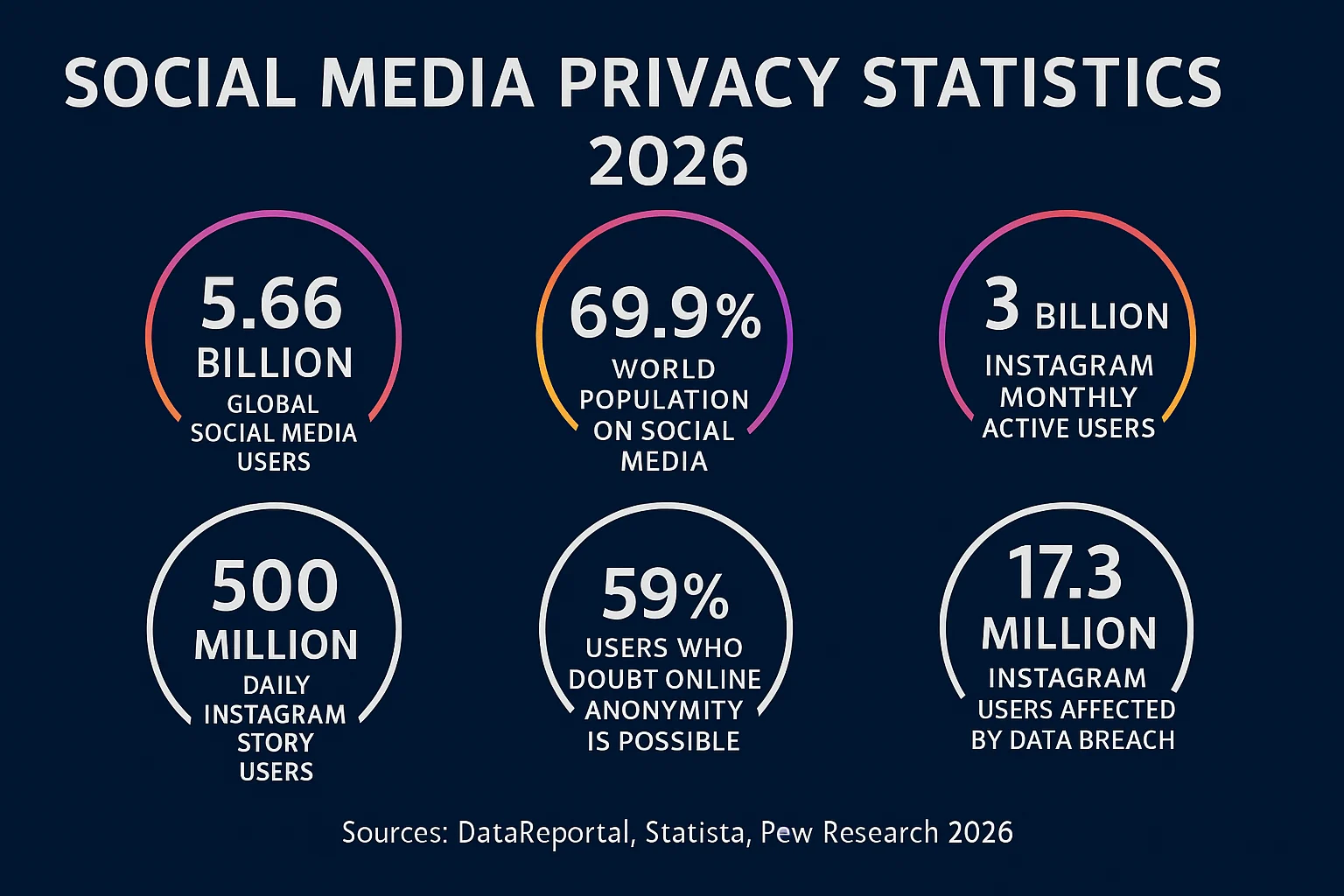
More than 2 in 3 people on Earth now use social media. Analysis of the latest data indicates that there are now 5.66 billion active social media user identities at a worldwide level, which equates to 68.7 percent of the total global population.
Instagram, in particular, has cemented its position as a cultural cornerstone. Instagram has 3 billion monthly active users globally, with Instagram Stories alone commanding 500 million daily active users, a number that has steadily increased since its launch and shows no signs of slowing down.
Yet this massive engagement comes with growing concerns. Similar to Instagram and Facebook, these platforms collect a great deal of data linked to users' identities, including contact information, financial information, location, contacts, user content, usage data, purchases, search history and other sensitive data.
Combined, this data maps out a person's life in great detail and can be used to compromise their digital and physical well-being.
Why Users Are Choosing Anonymous Browsing
The motivations behind anonymous social media browsing are more nuanced than one might expect.
Beyond their general hope that they can go online anonymously, the majority of internet users have tried to avoid observation by other people, groups, companies, and government agencies.
Hackers, criminals and advertisers are at the top of the list of groups people wish to avoid. Users feel strongly about controlling who has access to certain kinds of behavioral data and communications content.
Research indicates several primary use cases driving this trend:
1. Professional Research and Competitive Analysis
Brands, marketing teams, and business professionals increasingly need to monitor competitors, research influencers, and analyse market trends, all without revealing their corporate identities or alerting subjects to their interest.
2. Personal Privacy Preferences
59% of internet users do not believe it is possible to be completely anonymous online, while 37% believe it is possible. This awareness hasn't diminished the desire for privacy; it has intensified it.
3. Content Discovery Without Commitment
Many users simply want to explore content from accounts they don't wish to follow publicly, preview profiles before engaging, or catch up on content without the social obligation of interaction.
The Technology Behind Anonymous Viewing
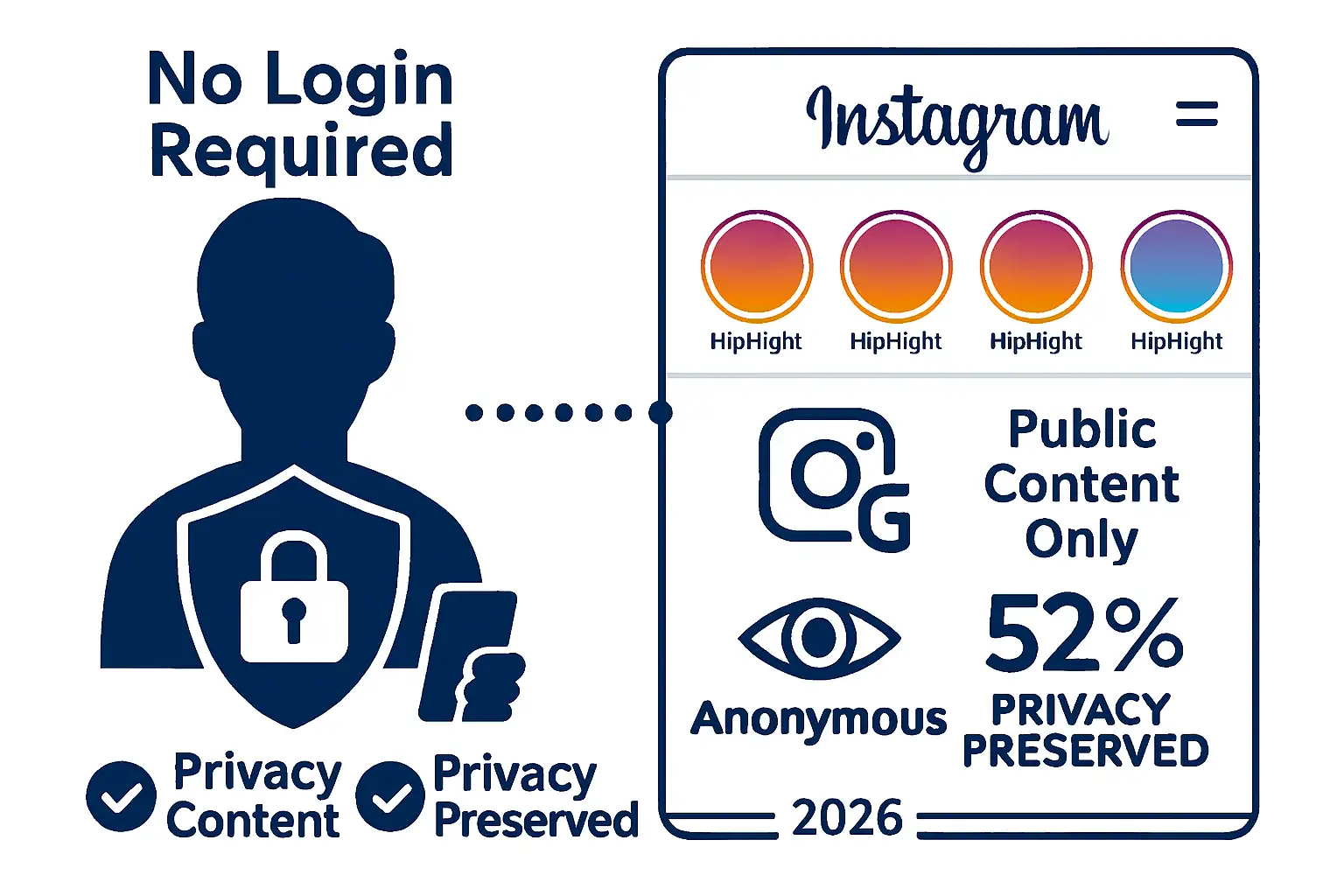
The demand for privacy-preserving social media access has given rise to a new category of tools: anonymous story and highlight viewers.
These platforms work by accessing publicly available content through web-based interfaces, allowing users to view Instagram Stories and Highlights without logging in or creating an account. Importantly, legitimate tools like Instagram story viewer only access content from public profiles, they cannot and do not bypass Instagram's privacy settings for private accounts.
The distinction is crucial. The incident highlights the ongoing challenges in securing user data on social media platforms. As users increasingly share personal content online, ensuring robust privacy controls is paramount to maintain trust and comply with data protection regulations.
Instagram Stories and Highlights: A $67 Billion Ecosystem
Understanding why anonymous viewing has become so significant requires examining just how central Stories and Highlights have become to Instagram's ecosystem.
About 71.9% of brand content on Instagram is posted as Stories, making them the most common format on the platform. Bigger accounts with over 50,000 followers post an average of 46 Stories each week.
Instagram Highlights, permanent collections of Stories that appear on user profiles, have become digital portfolios, brand showcases, and personal archives. Instagram Feed ads bring in 53.7% of total ad revenue, with Stories contributing 24.6%.
For those who wish to view this content anonymously, tools like an Instagram highlights viewer provide a legitimate solution, accessing only publicly shared content while preserving the viewer's privacy.
The Regulatory Landscape Intensifies
In 2026, organisations face a markedly more complex privacy and cybersecurity landscape. Numerous individual states continue to expand substantive requirements, federal regulators are asserting broader enforcement authority and emerging technologies are reshaping compliance expectations.
With the addition of Indiana, Kentucky and Rhode Island's new statutes on January 1, 2026, a total of 20 states have comprehensive consumer privacy laws in effect. Although these laws share many structural similarities, their divergent definitions, exemptions and rights create operational challenges.
This regulatory evolution has implications for both platforms and users. The majority of investigated platforms received fines related to privacy matters. Notably, Meta's products all received privacy risk points due to fines issued to the parent company, Meta.
However, there are also numerous instances where Meta's products, namely Instagram, WhatsApp, and Facebook, were named specifically when a fine was issued.
Meta's history with data protection has drawn scrutiny. In September 2024, the company paid a $101 million penalty after it was revealed that around 600 million Facebook and Instagram passwords had been stored in plaintext without adequate security safeguards.
Instagram's Response: Teen Accounts and Enhanced Privacy
In response to mounting pressure, Instagram has implemented significant changes. Meta is rolling out a "teen accounts" feature on Instagram that automatically makes accounts private for all users younger than 18. The teen account setting includes privacy options to limit who can message, tag, or mention them without parent or guardian approval and an option to turn off users' account access at night. It also features daily time limit prompts, giving parents further control.
In late 2024, Meta implemented fundamental changes to the Instagram platform to provide more parental control over minor's accounts, among other child safety enhancements.
These updates build on Instagram's continued evolution as detailed in the platform's recent feature rollouts.
The Security-Conscious Approach to Anonymous Viewing
For those considering anonymous viewing tools, security experts recommend a measured approach.
Anonymous browsing techniques aim to reduce personal data exposure and minimize digital footprints. This protects users from tracking by advertisers, data brokers and potential malicious actors.
Key considerations when selecting anonymous viewing tools:
Legitimate tools share common characteristics:
- They require no login credentials or personal information
- They only access publicly available content
- They use secure HTTPS connections
- They don't store browsing history or user data
- They cannot bypass private account settings
Common web tracking methods include third-party cookies, IP address logging, browser and device fingerprinting, tracking pixels and social media widgets. These techniques are usually used in combination.
The Broader Implications for Digital Identity
A recent incident involving Instagram has sparked debate over what constitutes a data breach and why even "non-breach" exposures can erode customer trust. Traditional security definitions fail to account for the dangers of cumulative risk, where seemingly harmless data leaks combine to fuel sophisticated cyber threats.
Aggregated identity data such as names, email addresses, or behavioral patterns can enable attackers to craft highly targeted phishing and impersonation schemes.
This "cumulative identity theft" concept explains why privacy-conscious users are reassessing every digital interaction, including how they consume social media content.
Looking Ahead: The Future of Social Media Privacy
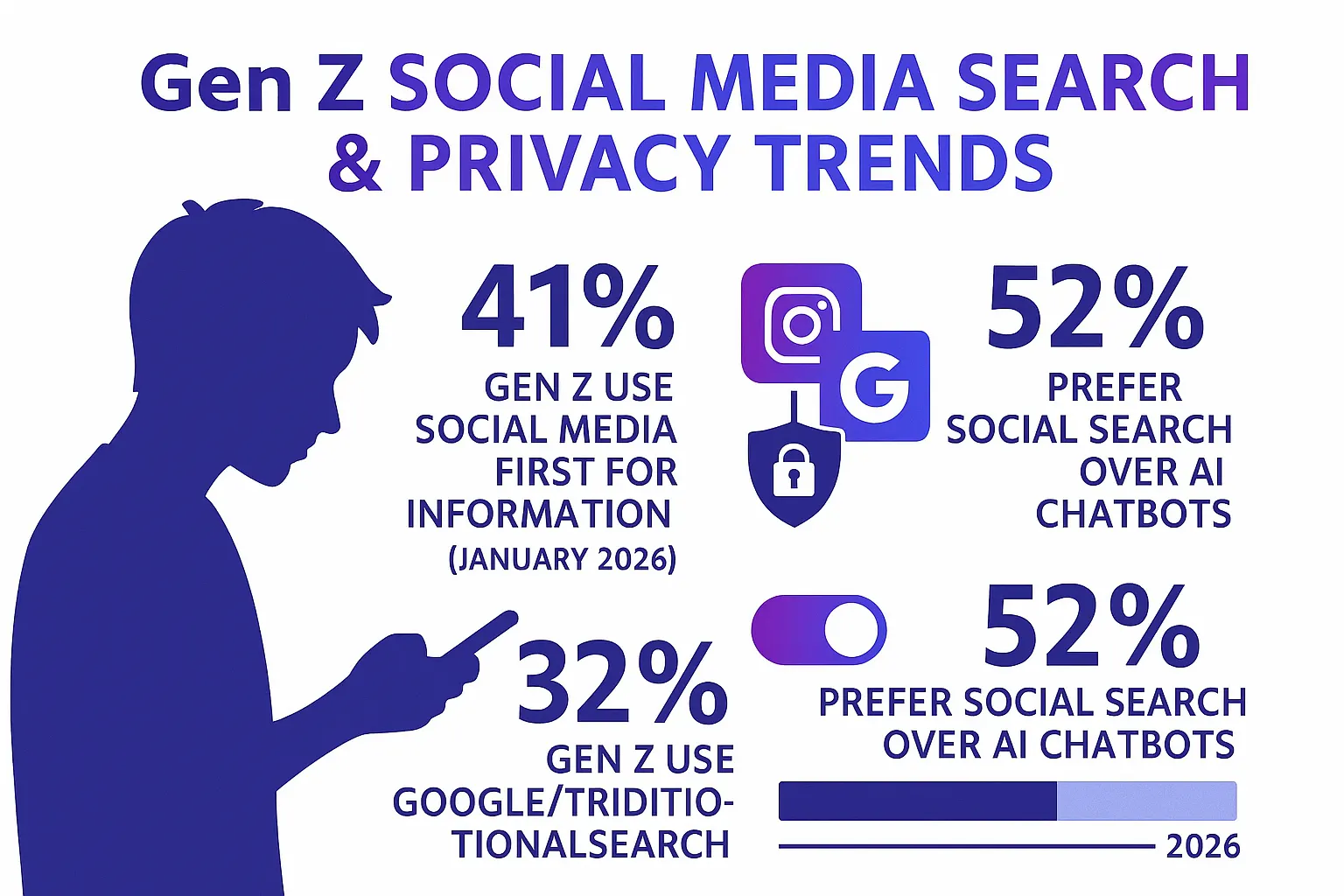
Social platforms are becoming the primary search engine for younger generations. Among Gen Z, 41% now turn to social media first when looking for information, compared to just 32% who prioritise Google or traditional search engines. That gap is driven by a desire for human validation. 52% of social media users prefer social search over AI chatbots specifically to find user-generated content and personal experiences.
As social media increasingly becomes a primary information source, the tension between engagement and privacy will only intensify.
While new features enhance engagement and discovery, they also raise privacy concerns. Meta addresses this with opt-in models, giving users control over visibility, frequency, and sharing settings to balance safety with utility.
Practical Guidance for Privacy-Conscious Users
For those navigating this landscape, experts recommend:
1. Audit your own privacy settings: Review what information you're sharing publicly on your own profiles
2. Use anonymous viewing judiciously: For legitimate research, competitive analysis, or content discovery, anonymous viewers offer a privacy-preserving option
3. Understand the limitations: No legitimate tool can access private accounts; claims otherwise should raise red flags
4. Stay informed: Privacy regulations and platform policies continue to evolve rapidly
5. Enable two-factor authentication: 58% of users now enable two-factor authentication on Instagram, a basic but essential security measure
The Bottom Line
The rise of anonymous social media browsing reflects a broader recalibration of how we approach digital identity. With approximately 5.66 billion social media users representing 69.9% of the world's population, the stakes have never been higher.
As one privacy expert noted, customers don't wait for a direct theft to lose confidence in a bank's security; the same applies to companies handling personal data.
In this environment, tools that allow users to consume content while preserving their privacy aren't merely convenient, they're becoming essential components of thoughtful digital citizenship.
The question is no longer whether privacy matters in social media, but how we'll balance our desire for connection with our need for protection in an increasingly transparent digital world.
About the Author