Connecting Your Lead Gen Forms Directly to MSP-Specific CRMs
In the highly competitive managed service provider (MSP) industry, efficient lead management is a critical factor that can make or break your sales pipeline. When potential clients fill out lead generation forms on your website or landing pages, the speed, accuracy, and seamlessness with which that information enters your customer relationship management (CRM) system are paramount.
Manual data entry not only wastes valuable time but also increases the risk of errors, delays, and lost opportunities. Studies show that 35-50% of sales go to the vendor that responds first to a lead, underscoring the importance of rapid lead follow-up.
Connecting your lead gen forms directly to MSP-specific CRMs streamlines the entire lead capture process. It ensures that every lead is instantly routed to the appropriate sales or service team member, enabling faster follow-up and higher conversion rates.
According to a study by HubSpot, companies that respond to leads within an hour are seven times more likely to qualify the lead than those who respond later. For MSPs operating in competitive markets, this speed is not just advantageous but it is essential for capturing and nurturing valuable prospects.
Furthermore, direct integration eliminates the common bottlenecks caused by manual data transfers. It reduces the likelihood of lost or duplicated leads and ensures that your CRM is always up-to-date with the latest client information.
This real-time data flow empowers your teams to act swiftly, increasing the chances of converting prospects into loyal customers. Given that 79% of marketing leads never convert into sales due to a lack of proper lead nurturing, having an integrated system that facilitates immediate action is a game-changer for MSPs.
Overcoming Traditional CRM Limitations with Expert Support
Many MSPs initially rely on general-purpose CRMs that lack the specialized functionality required to manage the unique workflows of the MSP business model, such as ticketing systems, recurring billing, and remote monitoring tools.
MSP-specific CRMs are designed to address these needs, but integrating lead gen forms with these platforms can sometimes present challenges. Common hurdles include compatibility issues, data mapping complexities, and the need for custom connectors or middleware solutions.
Many MSPs resort to manual imports or third-party connectors that introduce latency, complexity, and potential points of failure.
This is where working with the tech team at Resource Stack can make a substantial difference. Their expertise in IT support and technology solutions ensures that your lead gen forms seamlessly feed data into your MSP-specific CRM without disruption.
By leveraging their knowledge, you can automate the lead capture process, minimize human error, and accelerate your sales cycle. Their tailored approach helps MSPs overcome integration hurdles efficiently, ensuring that your CRM ecosystem operates smoothly.
Benefits of Direct Lead Form Integration
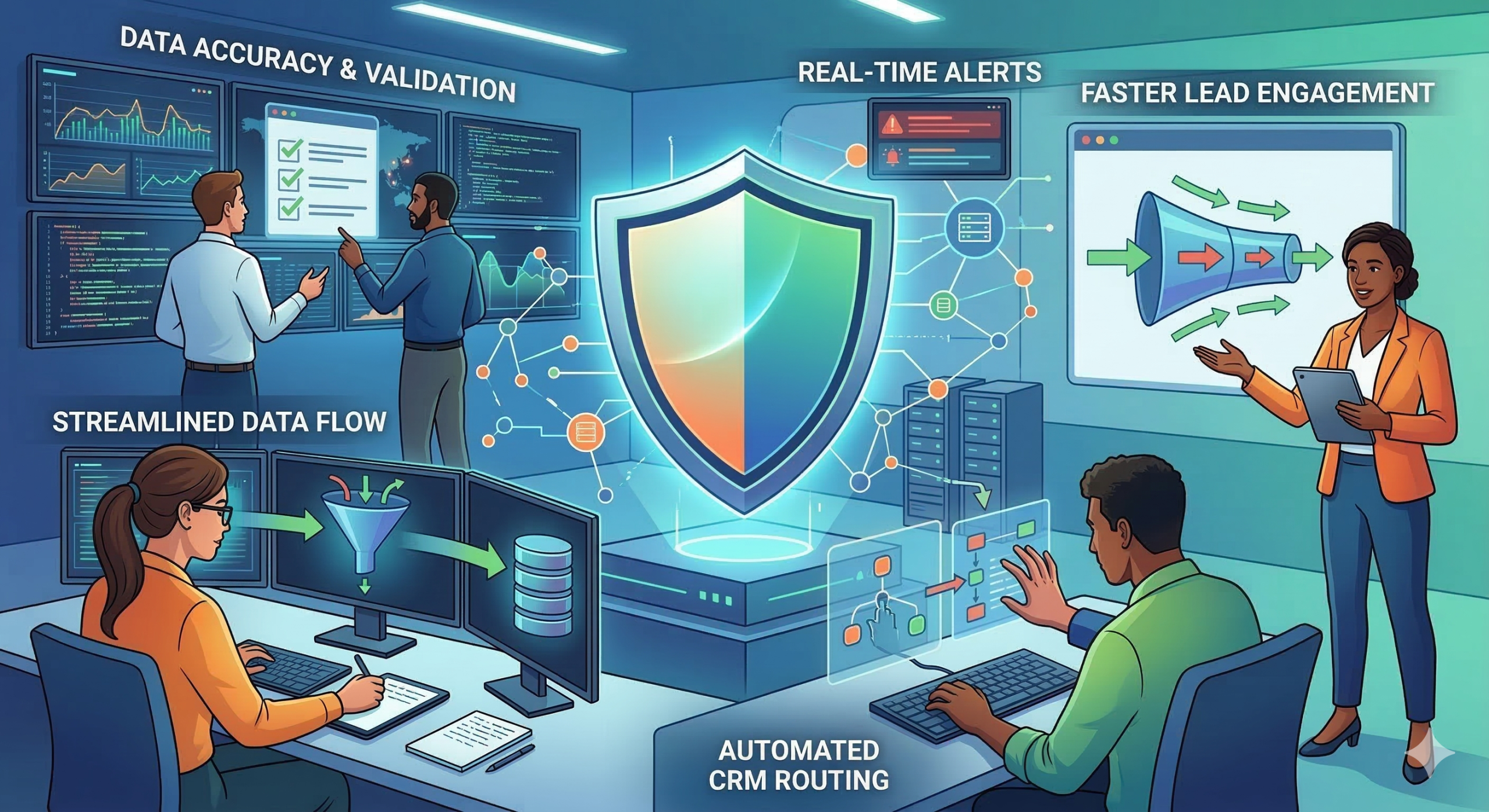
The advantages of linking your lead generation forms directly to an MSP-specific CRM extend far beyond speed. Automated data transfer means your marketing and sales teams gain immediate access to accurate, up-to-date lead information. This facilitates enhanced lead scoring and nurturing capabilities, allowing for more personalized outreach and, ultimately, an improved customer experience.
Moreover, real-time integration enables better analytics and reporting. You can track lead sources, conversion rates, pipeline velocity, and customer journey metrics with greater precision, empowering data-driven decision-making.
According to Salesforce, companies that utilize integrated CRM systems experience a 38% increase in sales revenue and a 27% increase in lead conversion rates. For MSPs, these improvements translate directly into heightened competitiveness and more efficient sales operations.
Additionally, direct integration helps reduce operational costs associated with manual data entry and error correction.
It streamlines collaboration between marketing and sales teams by providing a single source of truth and ensuring that everyone works with the same accurate data. This alignment improves internal communication and accelerates the sales funnel, enabling your MSP to close deals faster and with higher customer satisfaction.
For MSPs looking for reliable technical assistance during integration projects, it’s wise to contact trav-tech.com. Their IT helpdesk support team offers tailored solutions that ensure your systems communicate flawlessly, reducing downtime and minimizing technical glitches.
Their proactive support model helps maintain system integrity and provides peace of mind as your MSP scales.
Best Practices for Setting Up the Integration
Successful integration of lead gen forms with MSP-specific CRMs requires careful planning and execution. Begin by thoroughly mapping your lead gen forms’ data fields and verifying that they align perfectly with the CRM’s data structure. This alignment prevents data mismatches, duplication, and loss of critical information.
Next, select the appropriate integration method based on your CRM’s capabilities and your MSP’s technical infrastructure. Common approaches include API connections, webhooks, or native CRM plugins.
Each has its benefits and trade-offs: APIs offer flexibility and real-time data transfer, webhooks provide event-driven updates, and native plugins simplify setup but may have limited customization.
Testing is an essential step before going live. Simulate various lead scenarios, including different types of inquiries and data inputs, to confirm that data flows correctly and triggers the appropriate workflows inside your CRM. This includes ensuring that automated notifications, lead assignments, and follow-up tasks activate as expected.
After deployment, continuous monitoring is crucial to identify and resolve any issues promptly. Regular audits of data accuracy and system performance help maintain integration health.
MSPs should also plan for scalability, ensuring that the integration can handle increased lead volumes as their marketing campaigns grow. Research indicates that companies with mature data integration strategies are 2.5 times more likely to achieve revenue growth targets, highlighting the strategic value of robust integration.
Enhancing MSP Sales and Customer Engagement
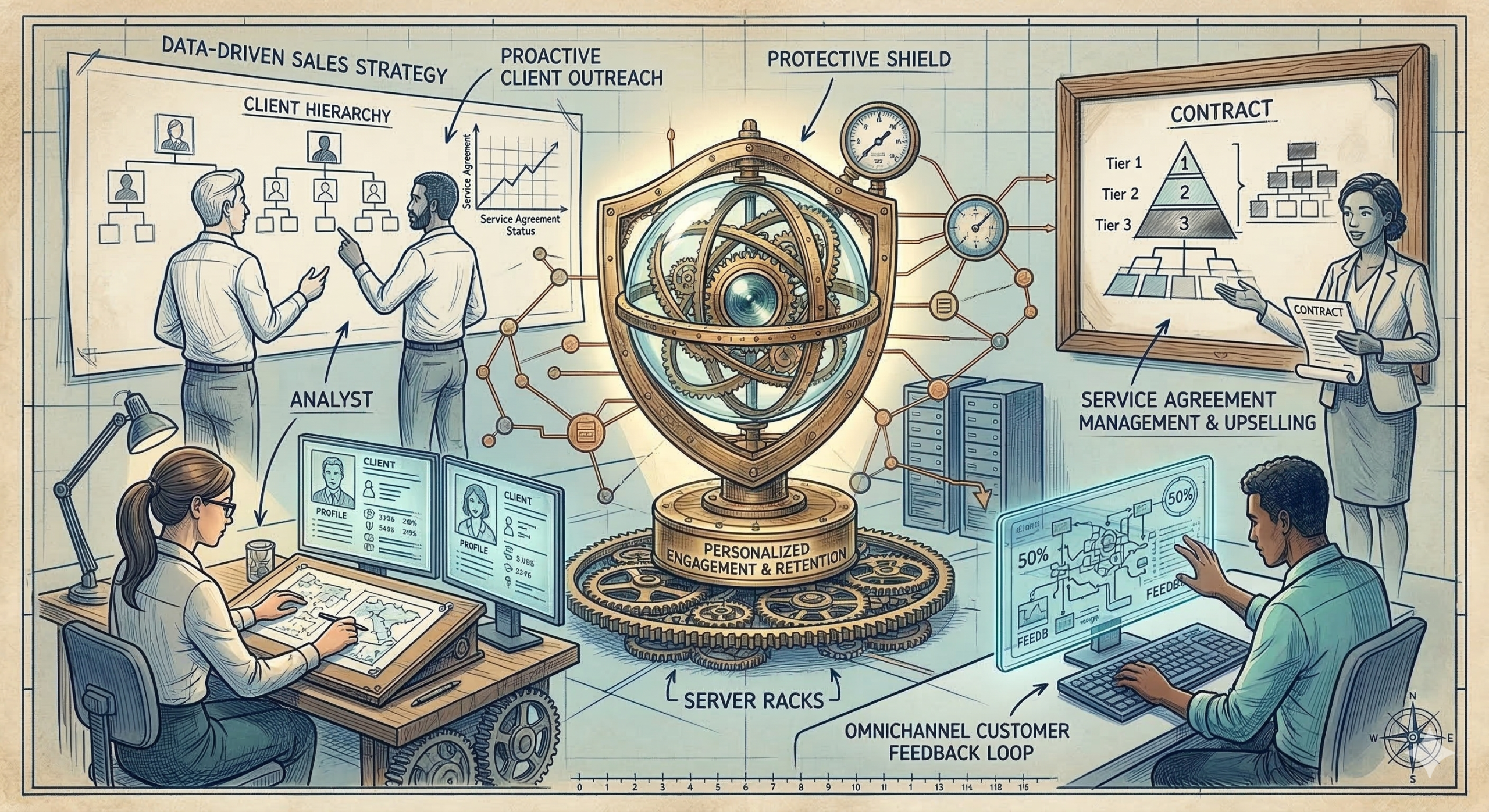
Beyond lead capture, an integrated MSP CRM supports a wide range of sales and customer engagement activities that reduce manual workload and improve efficiency.
Features such as automated follow-ups, appointment scheduling, contract management, and service ticket generation enable your sales and service teams to focus on building relationships rather than administrative tasks.
For example, automatic follow-up reminders triggered by lead form submissions ensure no prospect falls through the cracks. Appointment scheduling integrations allow prospects to book consultations directly, shortening the sales cycle and improving the customer experience.
Contract management modules simplify the proposal and signing processes, facilitating quicker deal closures.
These capabilities collectively contribute to a more efficient sales process and higher client satisfaction. As MSPs grow, these integrated systems also future-proof the business by providing scalable and adaptable solutions. They allow you to seamlessly incorporate new lead sources, marketing channels, or service offerings without introducing complexity or overhead.
According to Gartner, organizations that adopt advanced CRM and integration technologies see a 15% improvement in customer retention rates. This statistic reinforces the business value of investing in integrated lead management systems for MSPs focused on long-term growth.
Conclusion
For MSPs, connecting lead generation forms directly to MSP-specific CRMs is no longer a luxury but a necessity. It enables faster lead response times, improves data accuracy, and supports advanced sales and marketing strategies.
By partnering with experienced technology providers like the one and, MSPs can implement robust integrations that drive growth and competitive advantage.
In today’s fast-paced IT services market, seamless lead management powered by direct integration is a key differentiator.
Don’t let manual processes hold your MSP back-embrace integrated solutions that turn leads into loyal customers more effectively. With the right approach and expert support, your MSP can optimize its sales funnel, enhance customer engagement, and sustain long-term success.
About the Author