5 Digital Marketing Courses Focused on Real Campaign Setup Across SEO Ads and Email in 2026
In 2026, digital marketing roles are less about knowing definitions and more about building campaigns that actually run: setting up tracking, choosing the right channel mix, writing clean ad and email copy, and fixing what is not converting.
The best beginner-friendly options focus on real workflows like keyword research, landing page basics, paid search setup, and email automation.
The five courses below are picked for that practical angle, with clear outputs you can reuse in interviews and performance reviews.
Factors to Consider Before Choosing a Campaign-Focused Program
- Channel coverage: Make sure the course touches SEO, ads, and email, not only one channel.
- Setup skills: Look for tracking, audience targeting, and KPI selection, not only theory.
- Hands-on work: Prioritize guided projects, exercises, or case-based practice.
- Measurement habits: You should learn how to read results and adjust, not just publish campaigns.
- Time fit: A course you finish is better than a longer one you abandon halfway.
5 Digital Marketing Courses for Real Campaign Setup in 2026
1) Mastering Digital Marketing - Great Learning
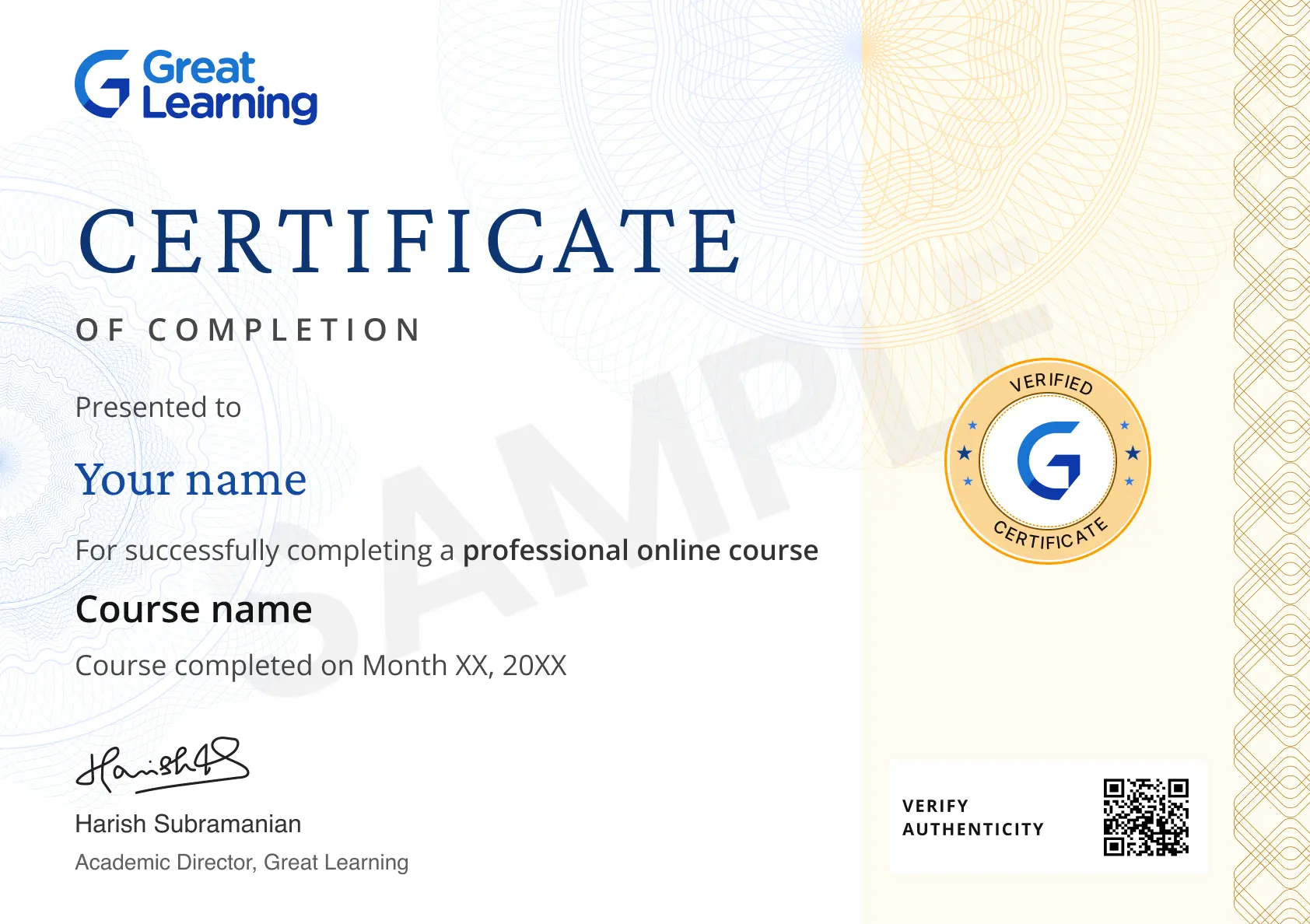
If you want a practical digital marketing course that connects SEO, paid ads, analytics, and growth strategy, this program is structured around campaign planning and execution.
It covers digital marketing fundamentals, organic marketing with content strategy and SEO best practices, paid digital marketing including display advertising and SEM, and growth-focused topics like retention, CRM, and measurement.
You also complete two guided projects that feel close to real work: one focused on identifying buyer personas for a luxury jewelry category, and another where you build a full digital marketing strategy for an organic skincare brand, including influencer planning, email ideas, and KPIs.
Program highlights
- Course outline split across fundamentals, organic, paid, and growth strategy modules
- Coverage includes SEO, content strategy, SEM, display ads, and social media advertising
- Two guided projects with step-by-step structure and project certificates
Learning outcomes
- Build a channel plan that combines SEO + ads + email in a realistic way
- Translate audience research into targeting, messaging, and campaign structure
- Define KPIs and measurement checks that keep campaigns accountable
2) Digital Marketing Certification Course - HubSpot Academy
This is a solid option if you want a structured overview of how channels support each other, especially how email can strengthen performance across website, content, SEO, and social distribution. It is designed to help you think in systems, not isolated tactics.
Program highlights
- Focus on connecting channels into a single strategy, not random tactics
- Certification-style structure (learn, practice, and validate)
Learning outcomes
- Build a simple end-to-end campaign plan with consistent messaging
- Understand how email, content, and SEO reinforce each other in execution
- Create a clearer campaign brief you can hand to designers or writers
3) Introduction to Digital Marketing - Great Learning
This free digital marketing course works well when you want the full picture fast: how search, social, email, affiliate, and paid tactics fit together. The syllabus includes content marketing, SEO, SEM, social media marketing, affiliate marketing, automated marketing, PPC, public relations, plus an intro to using ChatGPT for digital marketing tasks.
It is lighter on project depth than a premium program, but it does include quizzes and a demo-style learning approach to help you connect theory to basic SEO and SEM tasks.
Program highlights
- Concise, beginner-friendly format (about 3.75 hours)
- Broad channel coverage, including PPC and automated marketing concepts
Learning outcomes
- Understand which channel to use for traffic, leads, and retention
- Speak clearly about SEO vs SEM and how PPC supports search visibility
- Build a basic campaign checklist you can apply to small business scenarios
4) Google Ads Training and Certifications - Skillshop
If your weak spot is paid ads setup, Skillshop is useful because it is built around Google’s product workflows. The Google Ads training paths emphasize campaign measurement, setting up measurement solutions, understanding key metrics, and turning insights into actions, which is exactly what beginners miss when they only learn ad copy.
Program highlights
- Training and certification paths for managing and measuring Google Ads campaigns
- Measurement-focused learning that supports better reporting and optimization
Learning outcomes
- Understand the metrics that matter and how to read campaign performance
- Learn a cleaner setup mindset so tracking issues do not ruin reporting
- Build confidence with paid search concepts used in real account work
5) Email Marketing Certification - Mailchimp Academy
If you want email skills that go beyond writing subject lines, this path focuses on building marketing emails with a clear blueprint, measuring results, and testing improvements. It also covers metrics and how to test different parts of the email build process, which is what turns “sending emails” into actual lifecycle work.
Program highlights
- Structured email build approach with performance measurement and testing
- Self-paced learning inside Mailchimp Academy
Learning outcomes
- Plan email campaigns with clearer goals and stronger segmentation logic
- Use metrics and testing habits to improve results over time
- Create one repeatable automation-style workflow you can describe in interviews
Conclusion
If your goal is real campaign setup, do not pick a course based on titles alone. Pick one where you actually build something: a persona-based plan, a paid search measurement workflow, or an email blueprint with testing notes. Those outputs are what hiring managers trust, because they show how you work.
Start with one program, finish the exercises, and save your work as a small portfolio pack. After that, you can layer in free online courses to fill gaps like keyword research depth, ad measurement, or lifecycle email automation without starting over each time.
About the Author